A studio can feel like one big room where sleeping, eating, and relaxing all blur together. The fix is not a wall. It is a divider that marks where the living room starts — and stores something useful while it stands there.
These studio apartment living room storage divider ideas all do two jobs at once: they create a visible living-room zone, and they hold books, media, blankets, or plants. A good divider lets light through, keeps walkways clear, and can move when the layout changes.
1. Cube Shelving as a Wall
Turn a cube shelf sideways into a room edge. A 2-by-4 or 3-by-3 cube unit set across the room reads as a wall from the sofa side, while its cubes store books, baskets, and media gear. Face finished baskets toward the living room and plainer storage toward the sleeping side, and leave the top row partly open so light still passes over it.
2. Open Bookcase Divider
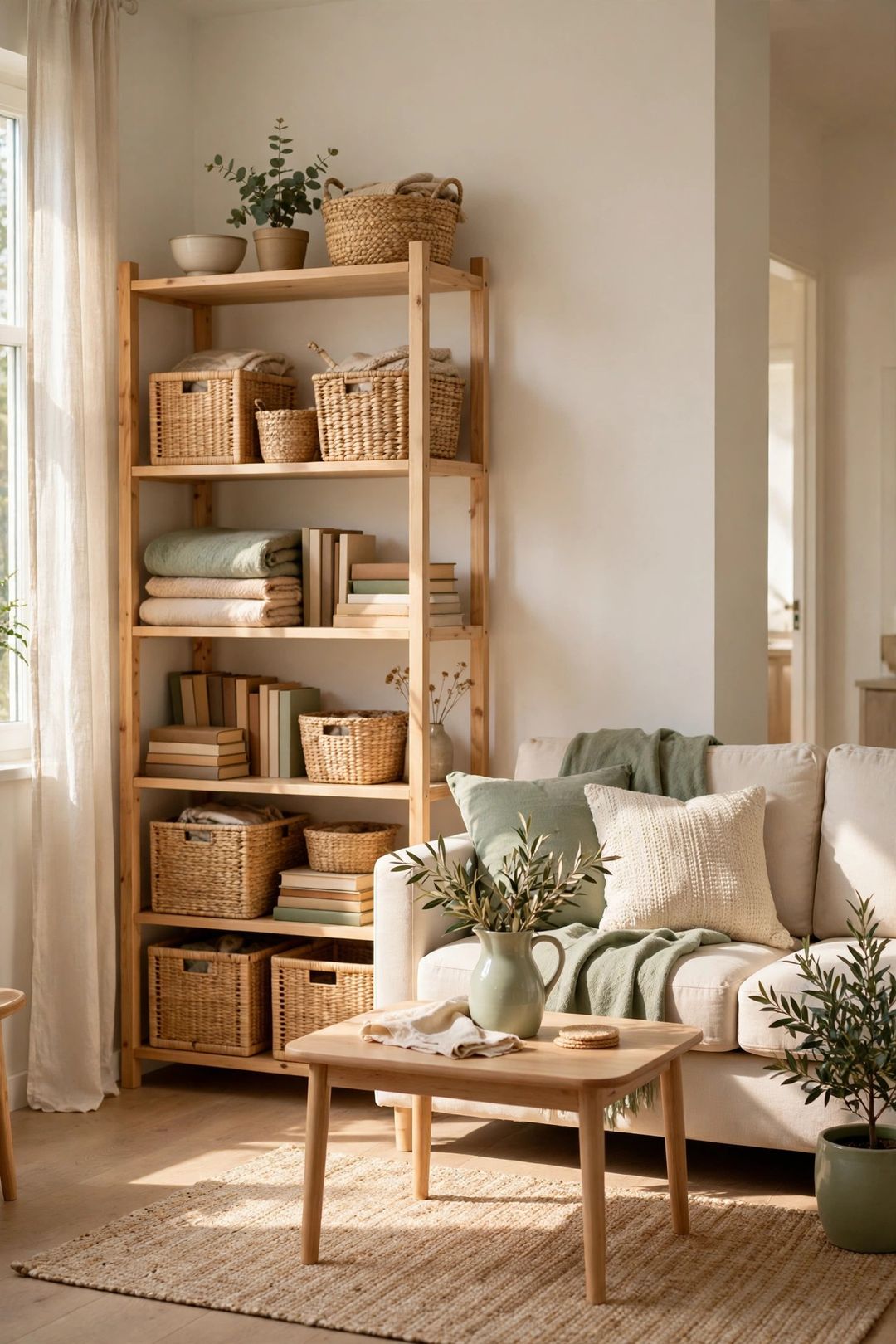
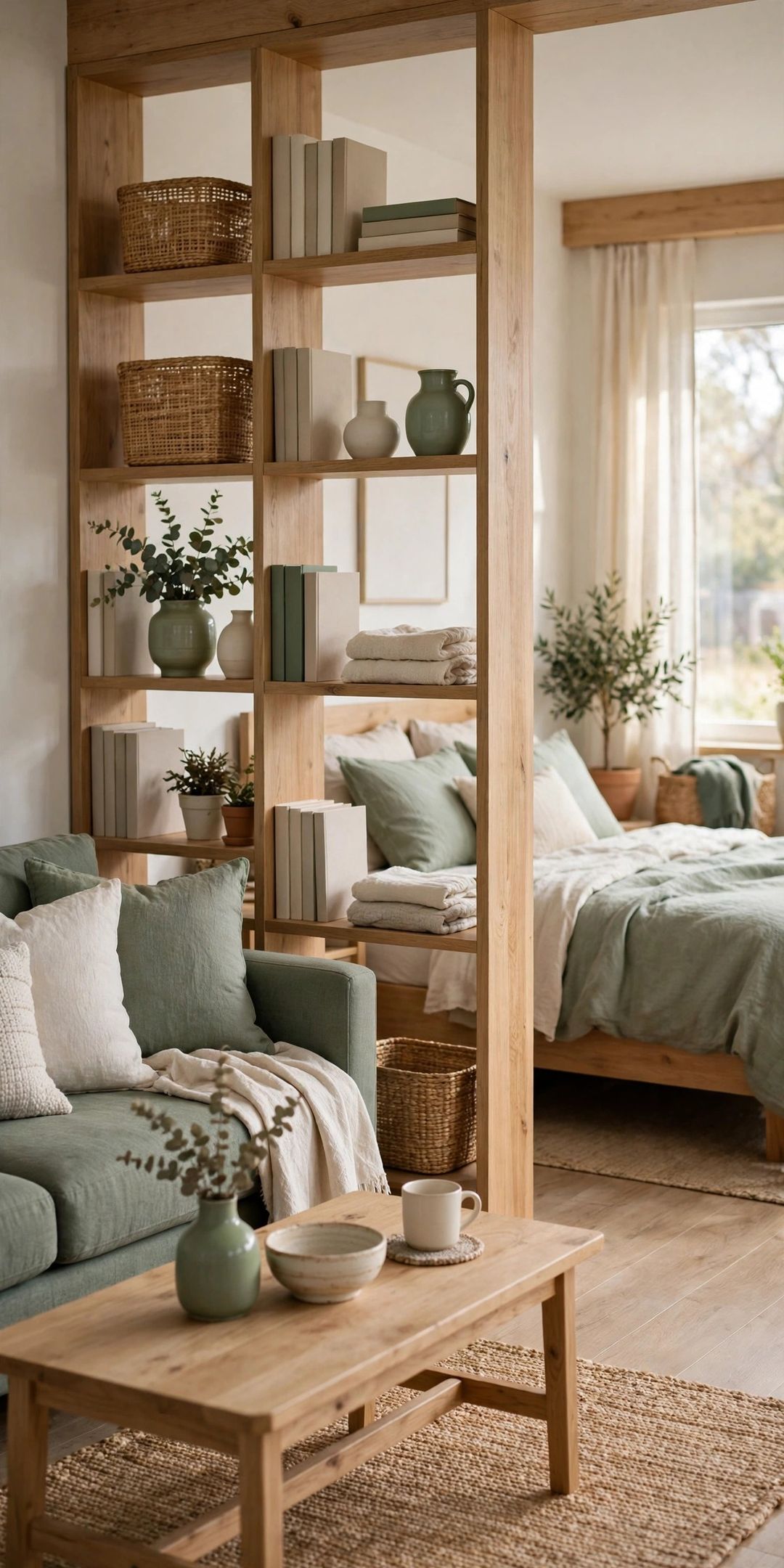
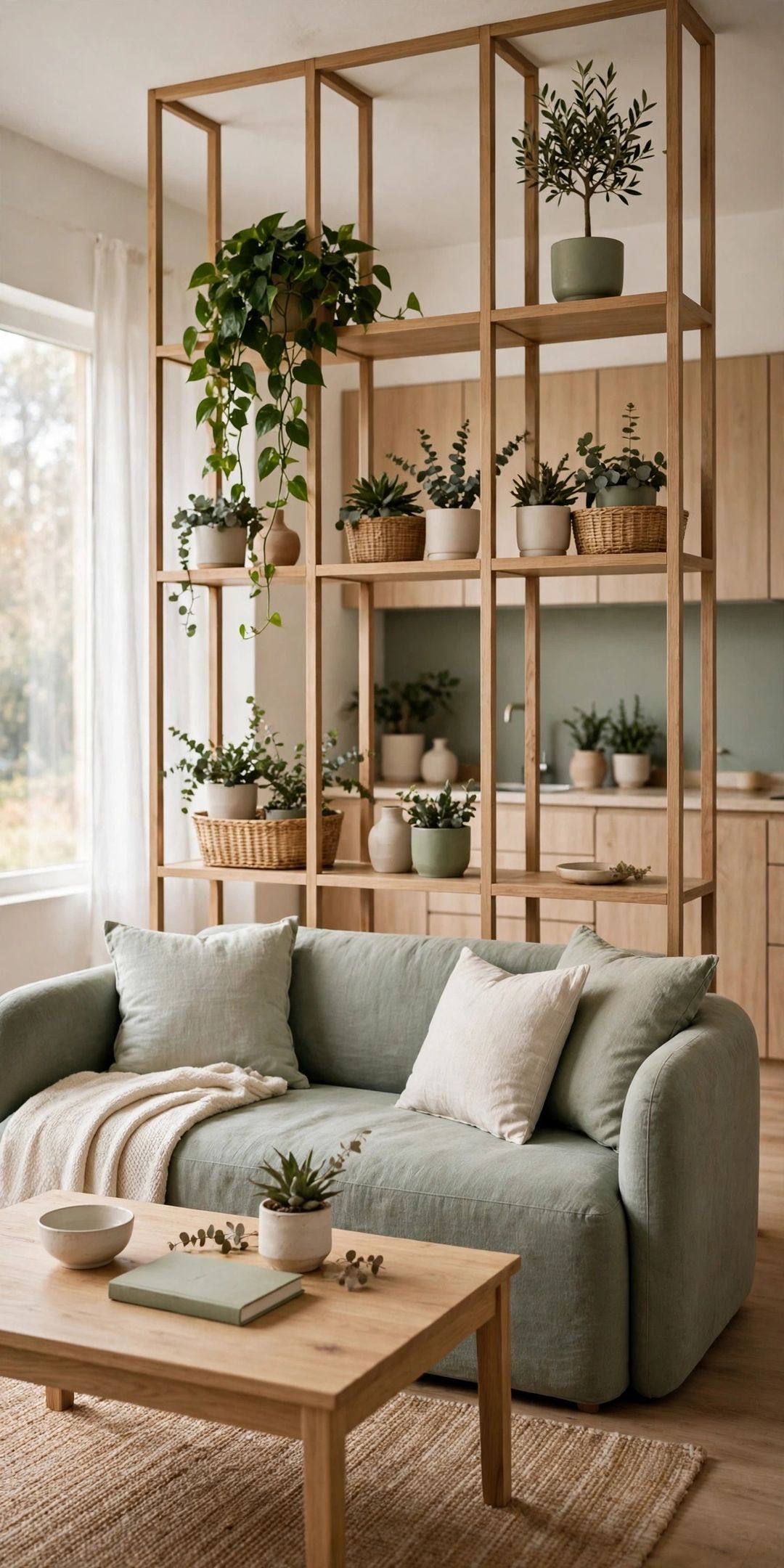
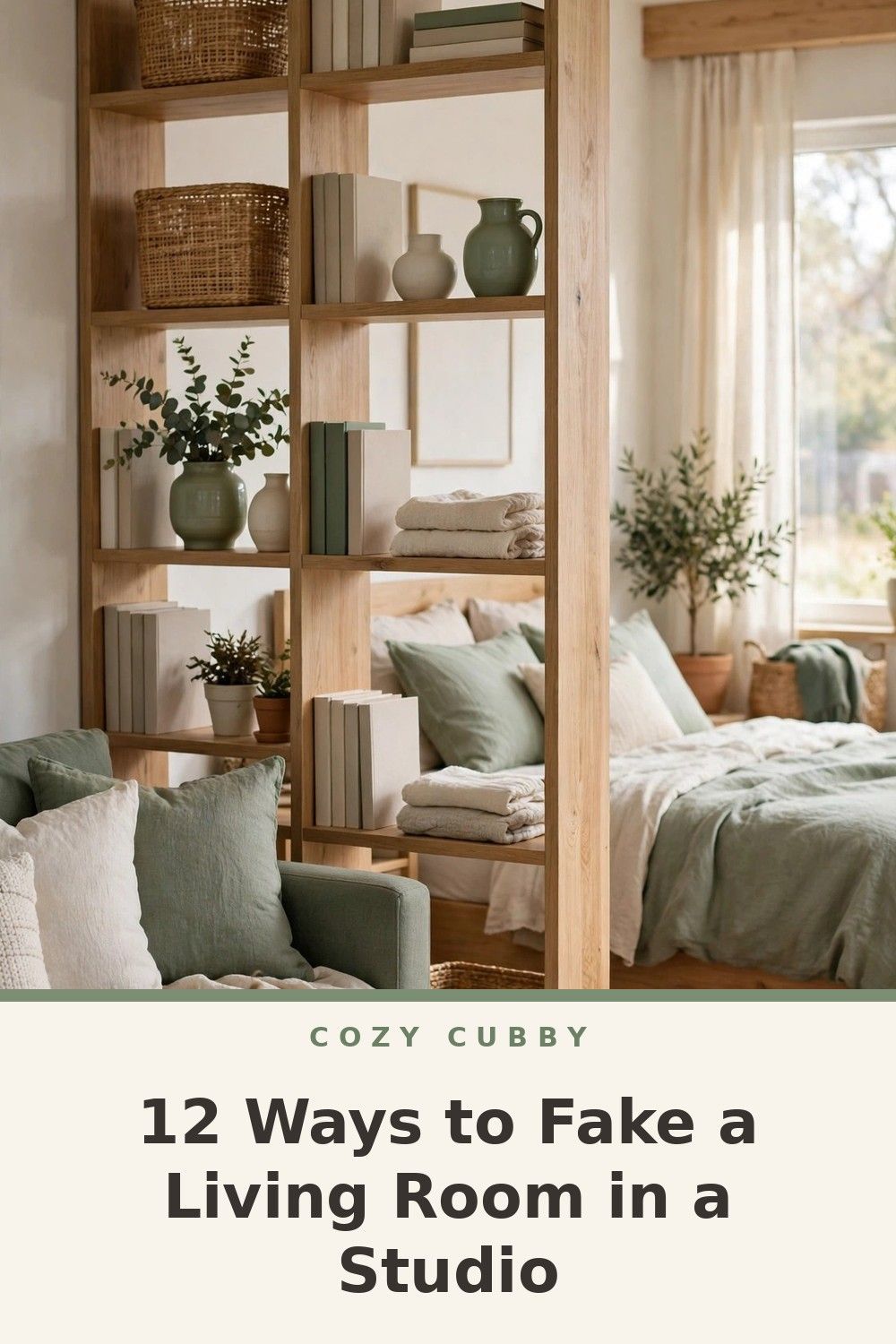
Use a tall open bookcase with no back panel. Unlike a solid wall, it divides the space while letting light through from both sides, so the studio stays bright. Style both faces, keep heavier items low for stability, and anchor it if the building allows it.
3. Sofa-Back Console Table
Push a narrow console right behind the sofa. The sofa already marks the living room edge; a console behind it makes that edge official and adds a shelf for lamps, remotes, and charging cables. Choose one no wider than the sofa, sitting just below or level with the sofa back, so the line looks clean from the bed side.
4. Curtain Plus Storage Combo
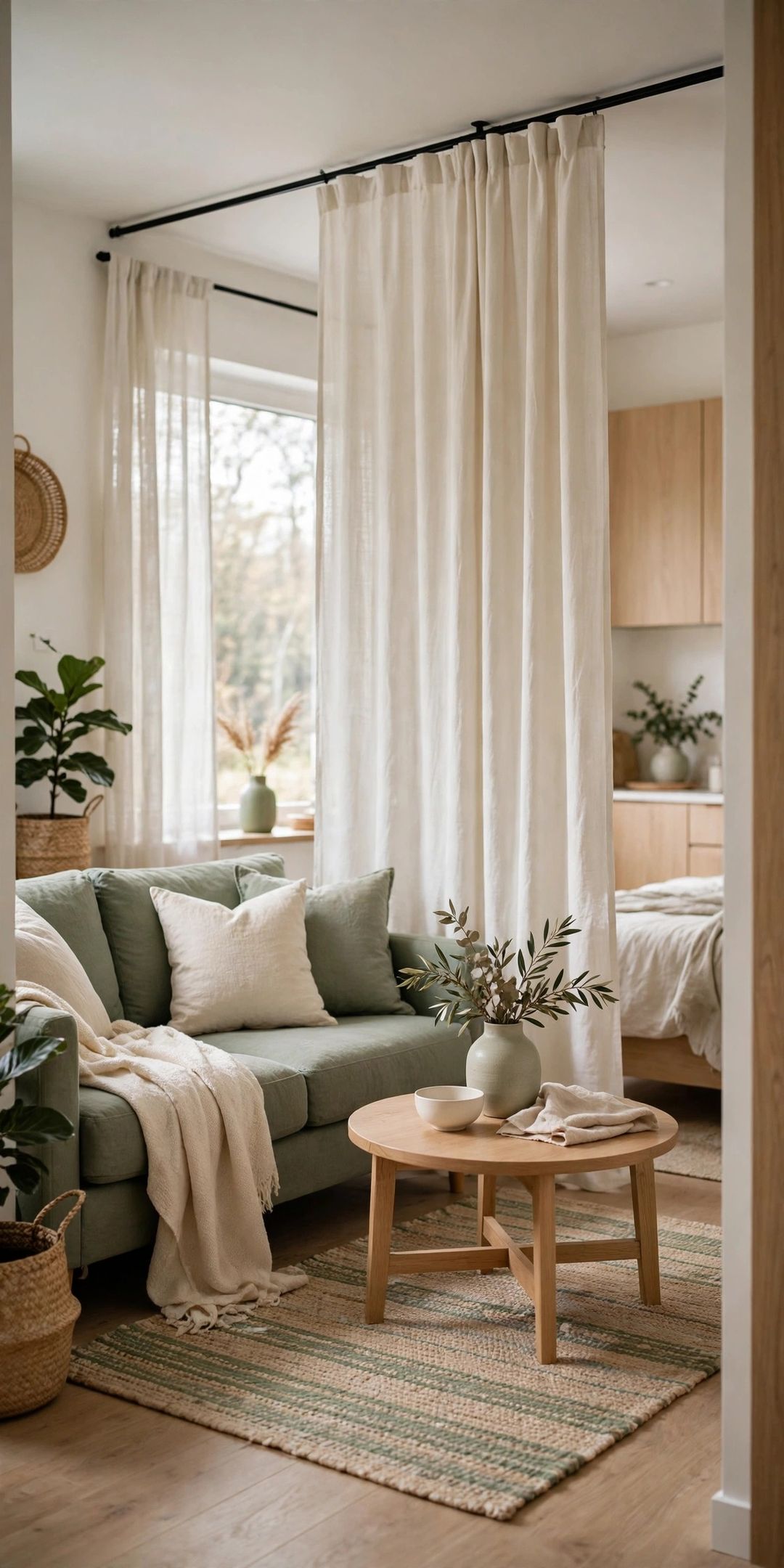
Hang a curtain beside a storage unit, not instead of one. A ceiling-mounted curtain on the living-room edge can close for privacy or movie nights, while a low shelf or basket bench below it holds throws and games. The curtain hides clutter fast, and the storage below keeps the floor clear when it is open.
5. Folding Screen With Shelves
Pick a folding screen that carries shelves or pockets. A screen folds away when guests arrive and unfolds to screen the bed from the sofa, and built-in shelves or pockets store magazines, remotes, and small plants. It suits renters because it needs no drilling, but it is light, so keep it away from busy walkways.
6. Dresser as a Divider
Let a low dresser do double duty between zones. A dresser placed with its back to the bed works as a living-room boundary and keeps clothes close at hand. Top it with a lamp and a tray for keys, and face the drawers toward the bedroom side. A low, wide shape works best, since a taller dresser can block light.
7. Plant Shelf Divider
Build a green edge with a tiered plant shelf. A plant stand or ladder shelf filled with trailing and upright plants marks the living room with life instead of furniture bulk, and still holds pots, watering cans, and books below. Keep sun needs in mind, and use trays under pots to protect floors.
8. Low Media Console Across the Room
Turn the TV stand into the boundary. A low, wide media console placed at right angles to the wall can face the sofa and mark the living-room zone, while its drawers hold media, games, and blankets. Because it stays low, sightlines stay open. Add cable management inside so cords never trail across the floor.
9. Rolling Kitchen Cart Divider
Roll a storage cart into the gap between living and sleeping areas. A sturdy cart with shelves and a butcher-block top adds counter space, stores cookbooks or barware, and wheels away when the layout changes. Lock the wheels once placed, and style the living-room side with a plant or tray so it reads as furniture.
10. Clothing Rack With a Storage Bench
Pair an open clothing rack with a bench below it. The rack screens the sleeping area with hanging clothes, while a bench beneath it holds shoes, bags, and out-of-season items in baskets. It works best near the bedroom side, where clothes storage is useful, and a curtain over the rack can hide clothes when guests visit.
11. Pegboard or Slat Wall Panel
Mount a freestanding pegboard panel as a light, useful screen. A panel on feet divides the room without blocking much light, and hooks and small shelves hold headphones, bags, art supplies, or plants. It restyles in minutes, but keep the load light and balanced so it stays steady.
12. Storage Bench as a Soft Boundary
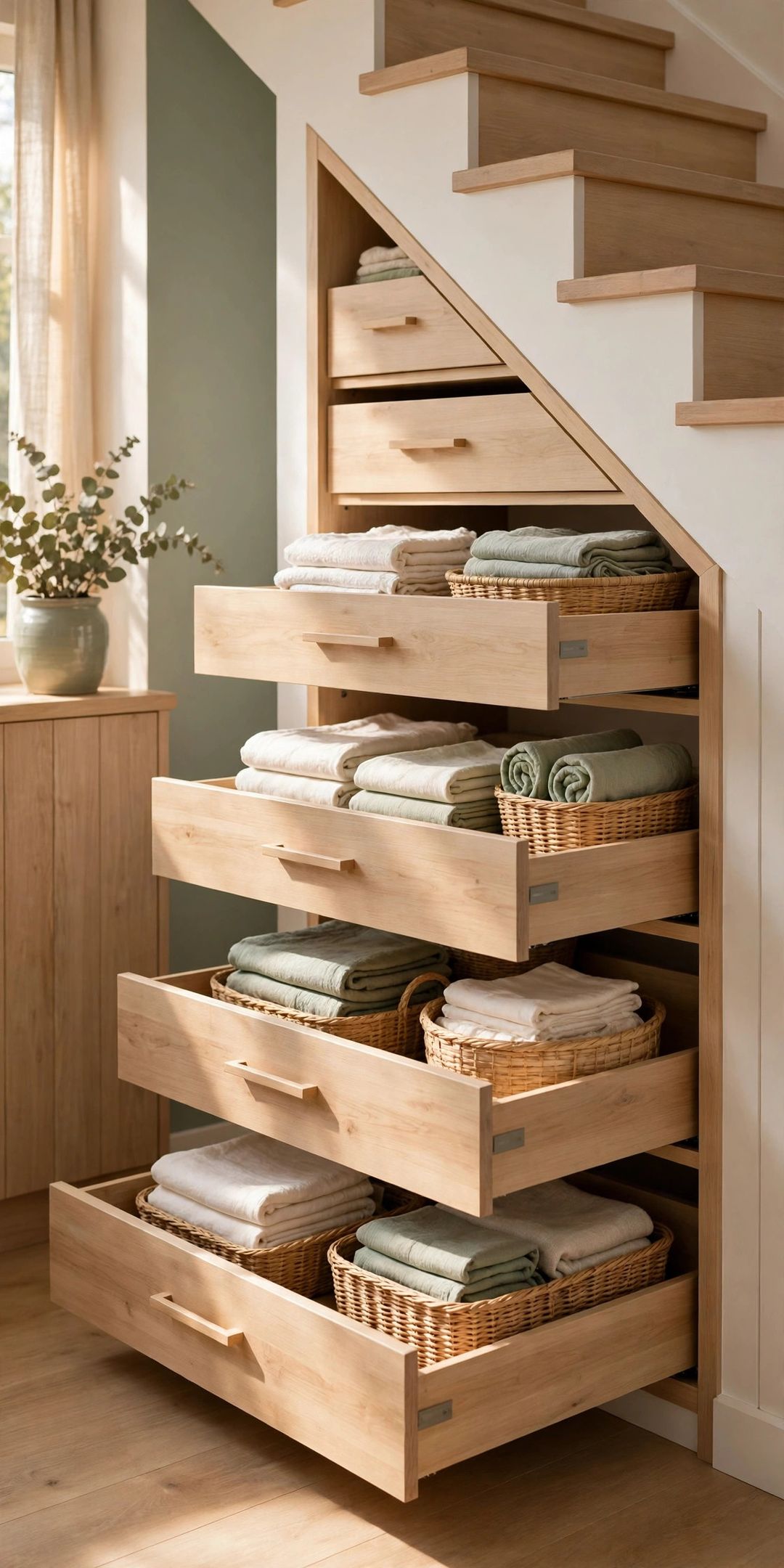
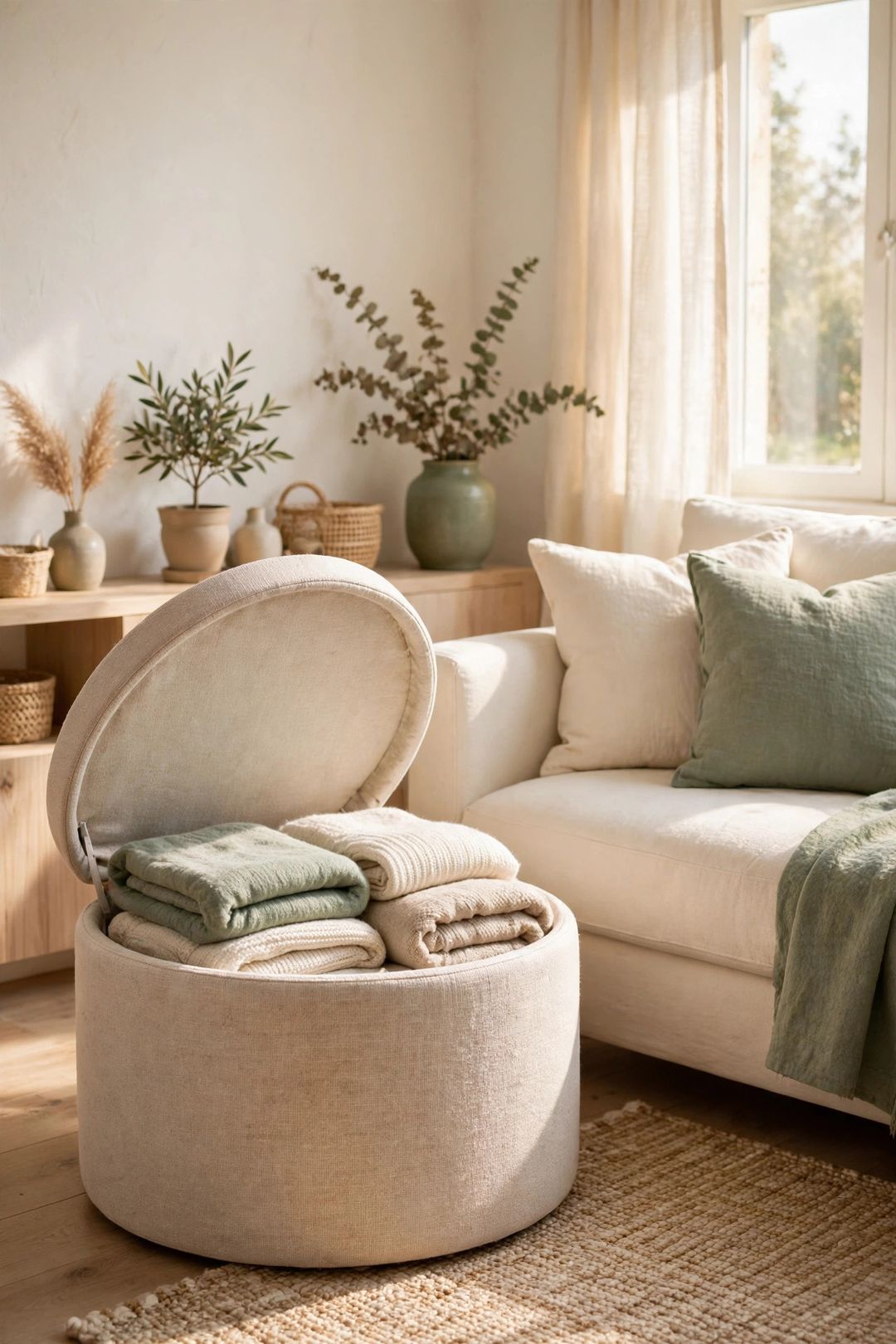
End the living room with a long storage bench. A bench with lift-up seats or cubbies marks the edge of the seating area, offers extra guest seating, and hides blankets, board games, and spare cushions inside. Add a cushion and throw so it feels like part of the living room, and leave a walking gap beside it.
What to Buy
A cube shelving unit, typically $60–$140. Pro: It divides and stores in one piece, and baskets hide clutter fast. Con: A tall unit can darken the room if packed solid. Skip if: The divider must fold away often.
A sofa-back console table, typically $50–$120. Pro: It sharpens the sofa edge with almost no floor space. Con: A deep console wastes walkway room. Skip if: The sofa already sits against a wall.
A folding screen with shelves, typically $70–$160. Pro: It needs no drilling and moves in seconds. Con: It is light and holds less than a bookcase. Skip if: The divider must hold heavy books.
A storage bench, typically $80–$180. Pro: It adds seating plus hidden storage at the room edge. Con: Lift-up seats need clearance above. Skip if: The living-room edge is also the main walkway.
Mistakes to Avoid
- Building a solid wall of furniture. A divider packed to the ceiling blocks light and shrinks the room, so leave open space above or through it.
- Blocking the only walkway. A divider that forces a squeeze past the sofa gets moved fast, so map the walking path first.
- Styling only one side. Both faces are visible in a studio, so finish the bedroom side too.
- Skipping anchoring on tall units. Tall bookcases can tip, so anchor them whenever the building allows it.
- Choosing storage with no daily use. A divider that only looks good soon fills with clutter, so give every shelf a job.
Frequently Asked Questions
How tall should a living-room divider be in a studio?
Waist to shoulder height keeps the room open and bright, while a taller open bookcase still works if light passes through it. Avoid a solid unit that reaches the ceiling.
Can a divider work without drilling into walls?
Yes. Cube shelves, sofa-back consoles, folding screens, storage benches, and rolling carts all divide a room with no drilling. Anchor tall units only if the lease allows it and the unit is top-heavy.
What divider works best in a very small studio?
A sofa-back console or a low storage bench adds a clear edge with almost no extra floor space, without adding a second piece of furniture to walk around.
How do you keep both sides of a divider tidy?
Give each side its own job and baskets: living-room items on the sofa side, bedroom items on the bed side. A short weekly tidy stops clutter spreading across the boundary.
Pick one edge for the living room, choose a divider that stores something the room already needs, and leave light and walkways open. Save this post to your small-space board on Pinterest so the twelve ideas are handy when layouts change.