Tax season feels stressful in many homes for one plain reason: the papers are everywhere. A form sits in a kitchen drawer, a receipt lives in a coat pocket, and an important letter hides in a stack on the desk.
A simple tax paperwork organization file system fixes the finding problem, which is the part you can control. One small file box, a handful of labeled folders, and a short weekly sorting habit mean every paper has a home long before you need it.
This guide covers organization only: where papers go, how to label them, and how long people commonly keep them in general terms. Questions about taxes themselves belong to a tax professional.
1. Set Up One Small File Box
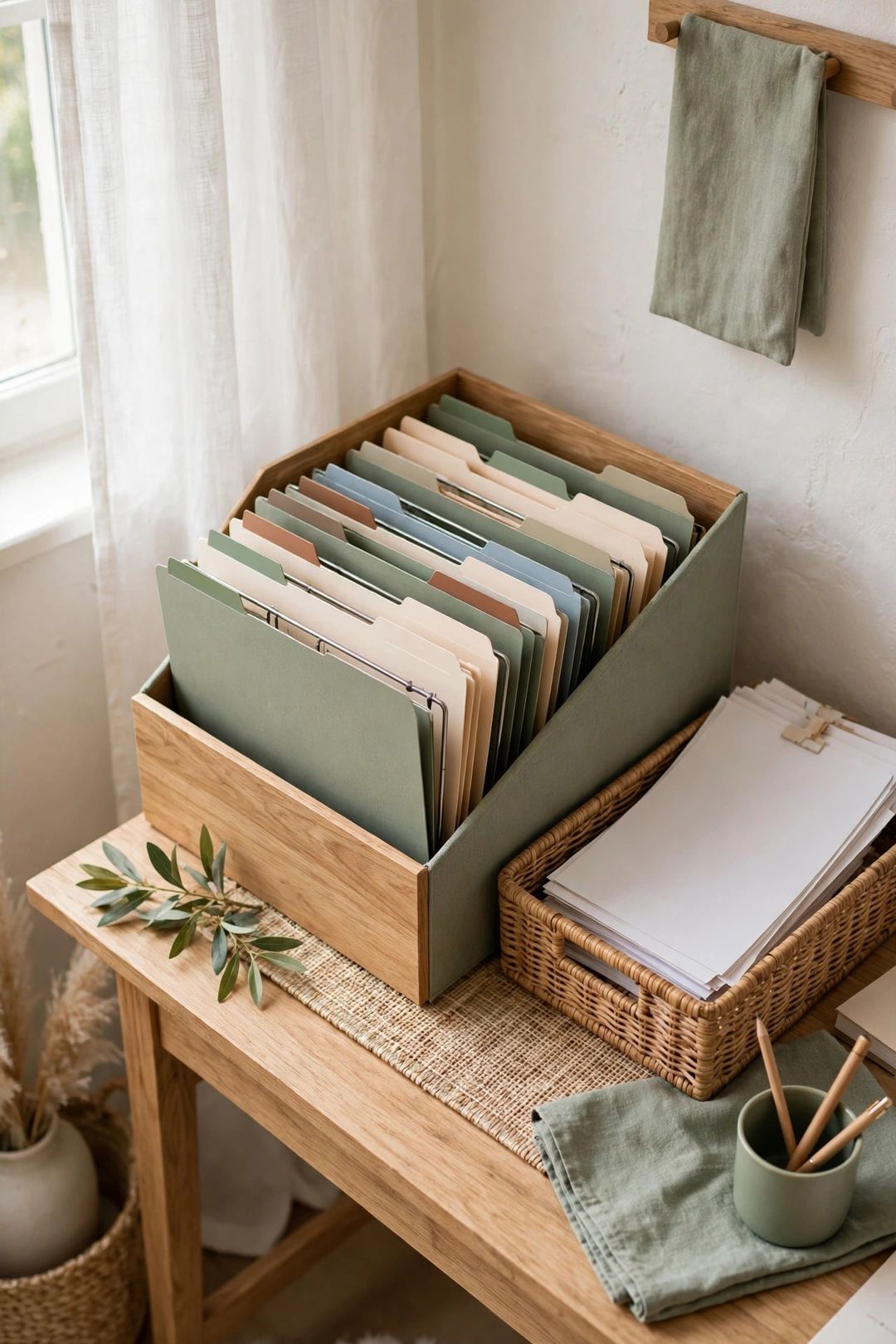
A small desk cannot hold a filing cabinet, and it does not need one. A single desktop file box holds a full year of household tax paperwork for most homes.
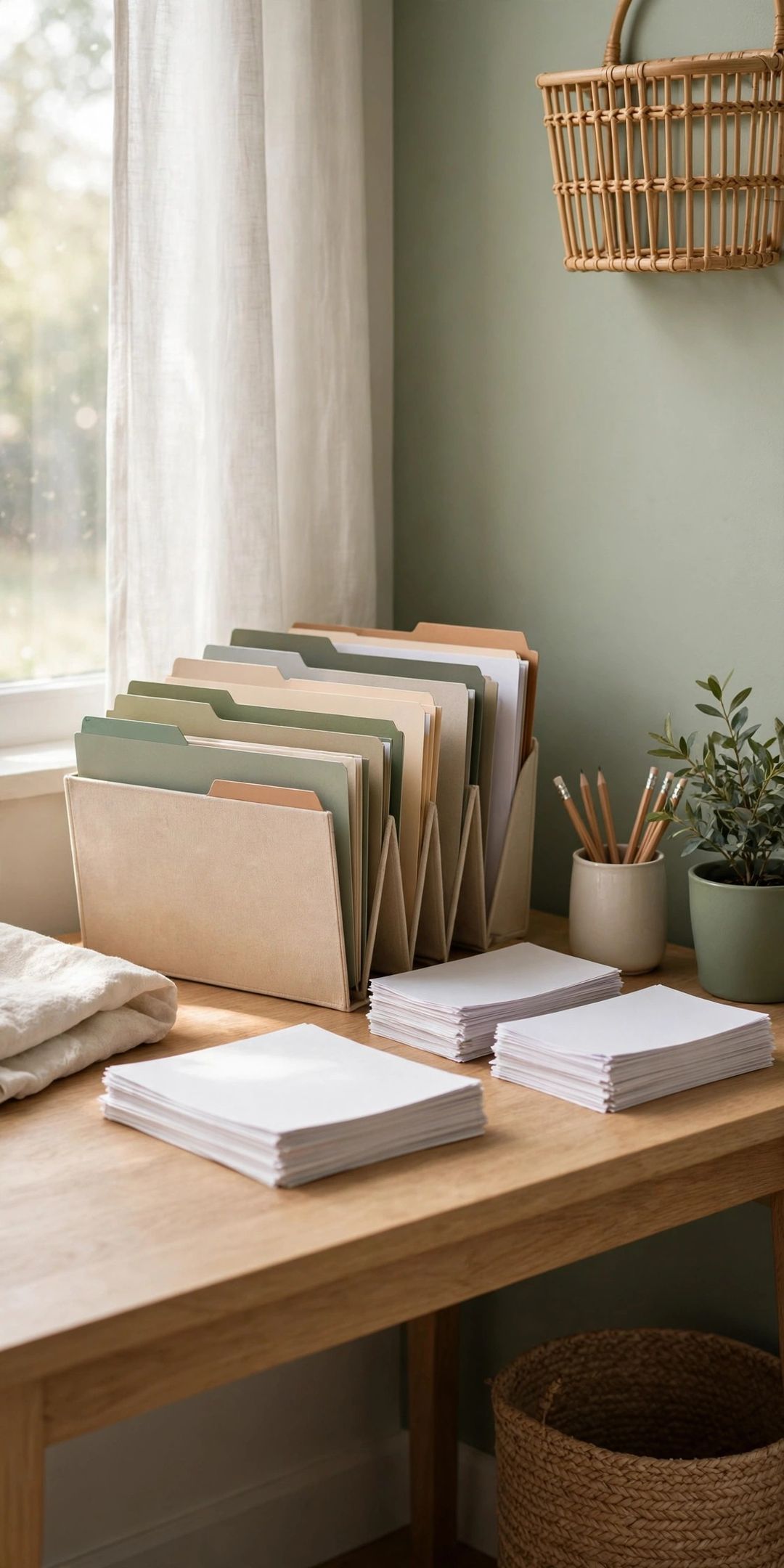
Choose a box that fits the desk corner. A file box the width of standard folders sits on a desk, a shelf, or the floor beside it. If it is easy to reach, papers actually get filed.
Use hanging folders with tabs. They stay upright, slide easily, and keep thin papers from slipping to the bottom. Tabs facing forward make the system readable at a glance.
Add one inbox tray on top. Every new paper lands in the tray first, never straight onto the desk. The tray holds the week's unsorted paper until sorting time.
2. The Five Core Folders
Five folders cover the tax-related paper that flows through most homes. Keep labels broad: a folder that fits many papers is easier to use than twenty folders that fit one each.
1. Income. Pay records, year-end wage and income forms, and statements showing money received during the year.
2. Receipts and spending records. Receipts, invoices, and payment confirmations you are keeping, sorted loosely by month with an envelope for each month.
3. Bank and account statements. Monthly statements and year-end summaries. If most are digital, this folder can hold a list of which accounts exist and where statements live online.
4. Home and major purchases. Papers for big purchases, appliance receipts, and invoices for major repairs. This folder often carries over instead of restarting each January.
5. This year's return. A copy of each completed return, with its related forms and letters, in a folder labeled by year. Separate years make any one year simple to pull out.

3. Sort Incoming Paper Once a Week
The system stays simple because sorting is short and scheduled. Ten quiet minutes once a week is enough for most households.
Step 1: Empty the inbox tray. Take the whole stack out. Nothing stays in the tray after sorting day.
Step 2: Make four quick piles. File it, act on it, scan it, or recycle or shred it. Most paper is handled in seconds once you are only choosing a pile.
Step 3: File by folder, not by perfection. Drop each paper into its labeled folder, newest on top. Exact order matters far less than the right folder.
Step 4: Shred what leaves the records. Papers with account numbers or personal details that you are not keeping should be shredded, not tossed whole.
4. Label Everything the Same Way
Labels are the difference between a file box and a box of paper. A few simple rules keep them useful all year.
Use the same format on every folder. Category first, then year: "Income — 2026" reads faster than a mix of styles. Plain words beat clever names.
Write the year on the folder. At year's end, the full set of year-labeled folders moves together into one archive box, and a fresh set starts.
Keep a one-page index on top. List your folders, any digital folders, and where archive boxes live. Anyone in the home can then use the system.
5. A Simple Retention Guide (General Guidance Only)
How long to keep records is a common question, and public guidance from sources like the IRS gives broad time frames. This table is general organization guidance only, in broad strokes — it is not tax advice, and a tax professional can confirm what applies to you.
| Paper type | General guidance on keeping it |
|---|---|
| Completed tax returns | Many people keep copies long term, often permanently, since they are compact. |
| Records supporting a return | General public guidance commonly suggests at least three years after filing; some situations call for longer, up to six or seven years. |
| Pay stubs | Commonly kept until the year-end summary arrives and is checked against them, then shredded. |
| Bank and account statements | Often about a year for everyday accounts, longer when tied to a tax year or major purchase. |
| Home purchase and improvement papers | Commonly kept for as long as you own the home. |
When a paper's time is up, shred anything with personal or account details before recycling. When in doubt about a specific record, keep it and ask a tax professional. One extra folder is cheaper than a missing document.
What to Buy
A desktop file box or crate, typically $12–$25. Pro: Holds a full year of folders in one desk corner. Con: Open-top styles collect dust. Skip if: A spare drawer can hold hanging folders.
Hanging file folders with tabs, typically $8–$15. Pro: Papers stay upright, visible, and easy to slide. Con: Cheap folders bend under heavy loads. Skip if: Your file box includes folders.
A label maker or folder labels, typically $10–$25. Pro: Clean, even labels make the system readable at a glance. Con: One more small device to store. Skip if: Neat handwriting on labels already works.
A cross-cut paper shredder, typically $35–$70. Pro: Handles sensitive papers safely at home. Con: Small models need breaks during big purges. Skip if: You use a local shredding service.
Mistakes to Avoid
- Building twenty folders for five kinds of paper. Narrow folders make filing slow and confusing. Broad folders with monthly envelopes sort faster.
- Filing straight onto the desk. Without an inbox step, unsorted paper spreads. Every paper lands in the tray first.
- Mixing years in one folder. Combined years make any single year hard to pull out. Label by year and archive each year as a set.
- Keeping everything forever, just in case. A box that never gets pruned becomes a box nobody opens. Use the general retention guide and shred on schedule.
- Tossing sensitive paper whole. Statements and forms with account numbers should be shredded, not recycled intact.
Frequently Asked Questions
What if the desk has no room for a file box?
Use a vertical file holder on a shelf, a folder frame inside a cabinet, or a slim archive box under the desk. The system is the folders and labels, not the furniture.
Should everything be scanned instead of kept on paper?
A hybrid works well for most homes. Keep paper originals of the most important records, and scan bulky or fading papers, like store receipts, into one digital folder per year.
Who can answer questions about what to keep for a specific situation?
A tax professional. This guide covers filing and organization only; questions about taxes or what the rules require belong to a qualified professional.
One small box, five labeled folders, and ten minutes a week can end the tax-season paper scramble. Save this post to your Home Organization board on Pinterest so the whole system is easy to find on setup day.