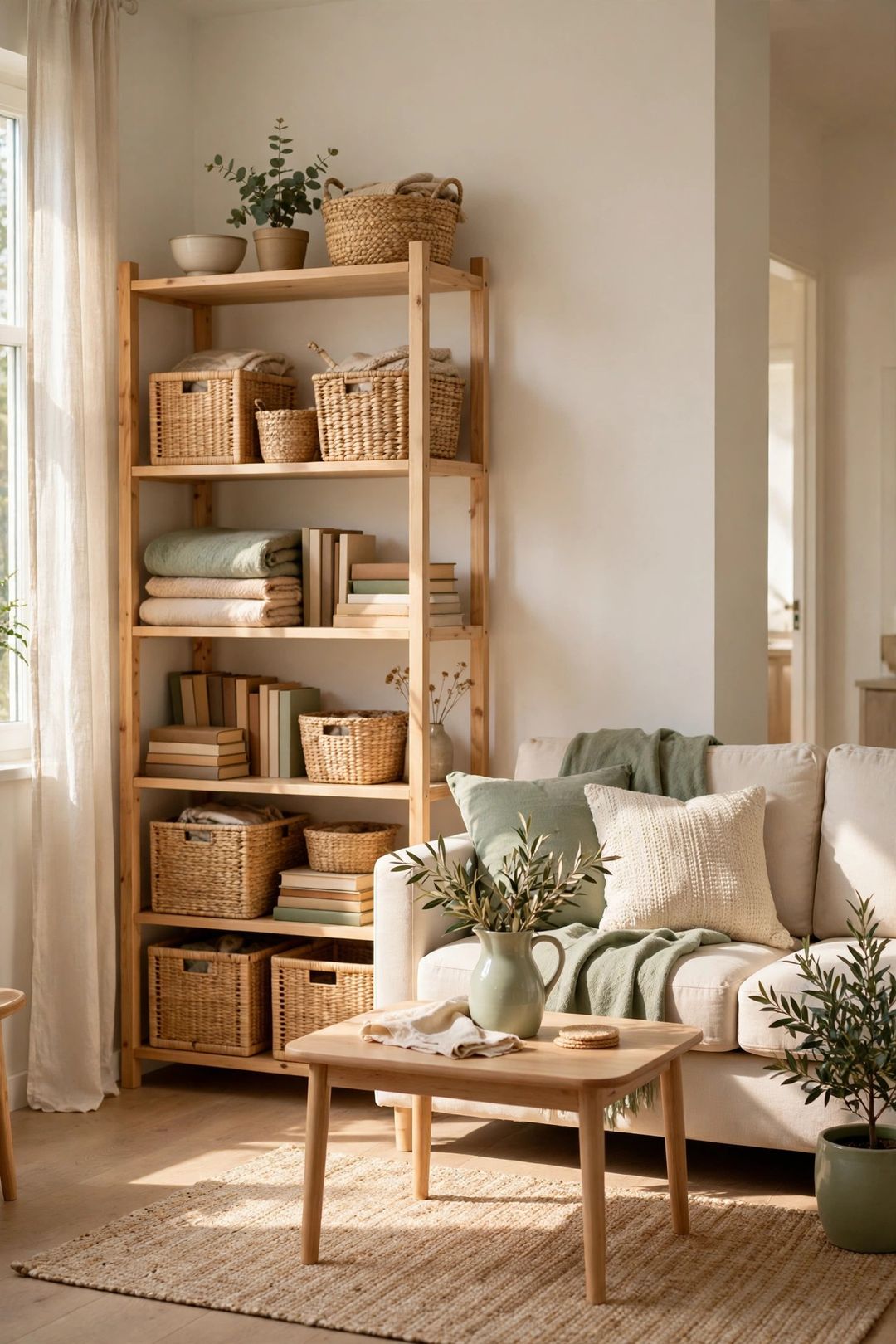
Small homes teach one lesson fast: every inch has to earn its keep. In a 200-square-foot home, there is no spare closet for the overflow, no junk drawer that stays hidden, and no room for furniture that does only one job.
These tiny house storage ideas gather the storage principles most widely used in small-footprint homes, from stairs with drawers to storage built into the floor itself. They work in tiny houses, but most of them also work in a small apartment, a studio, or one crowded room.
Pick the ideas that fit your space and budget.
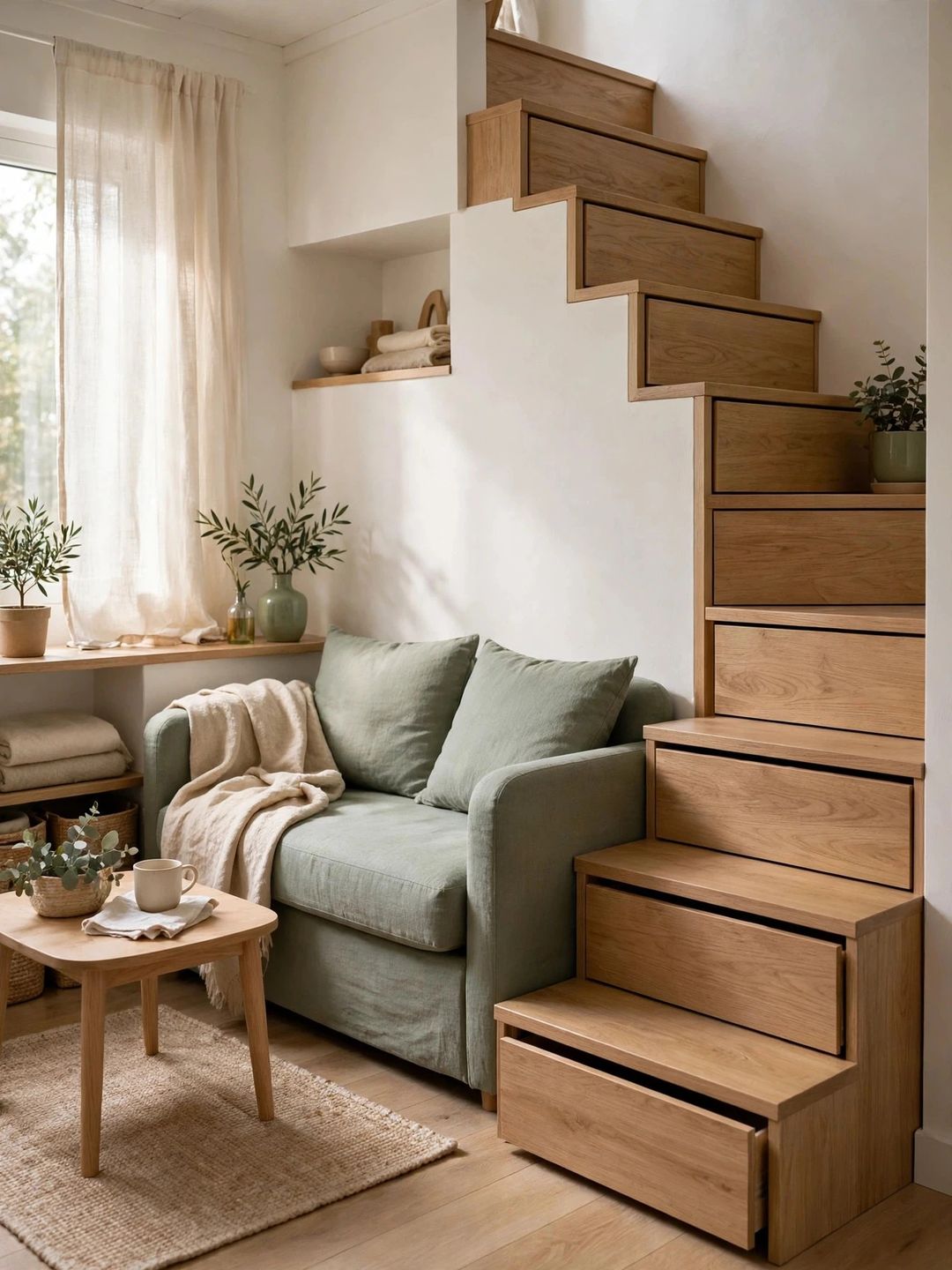
1. Stairs With Drawers
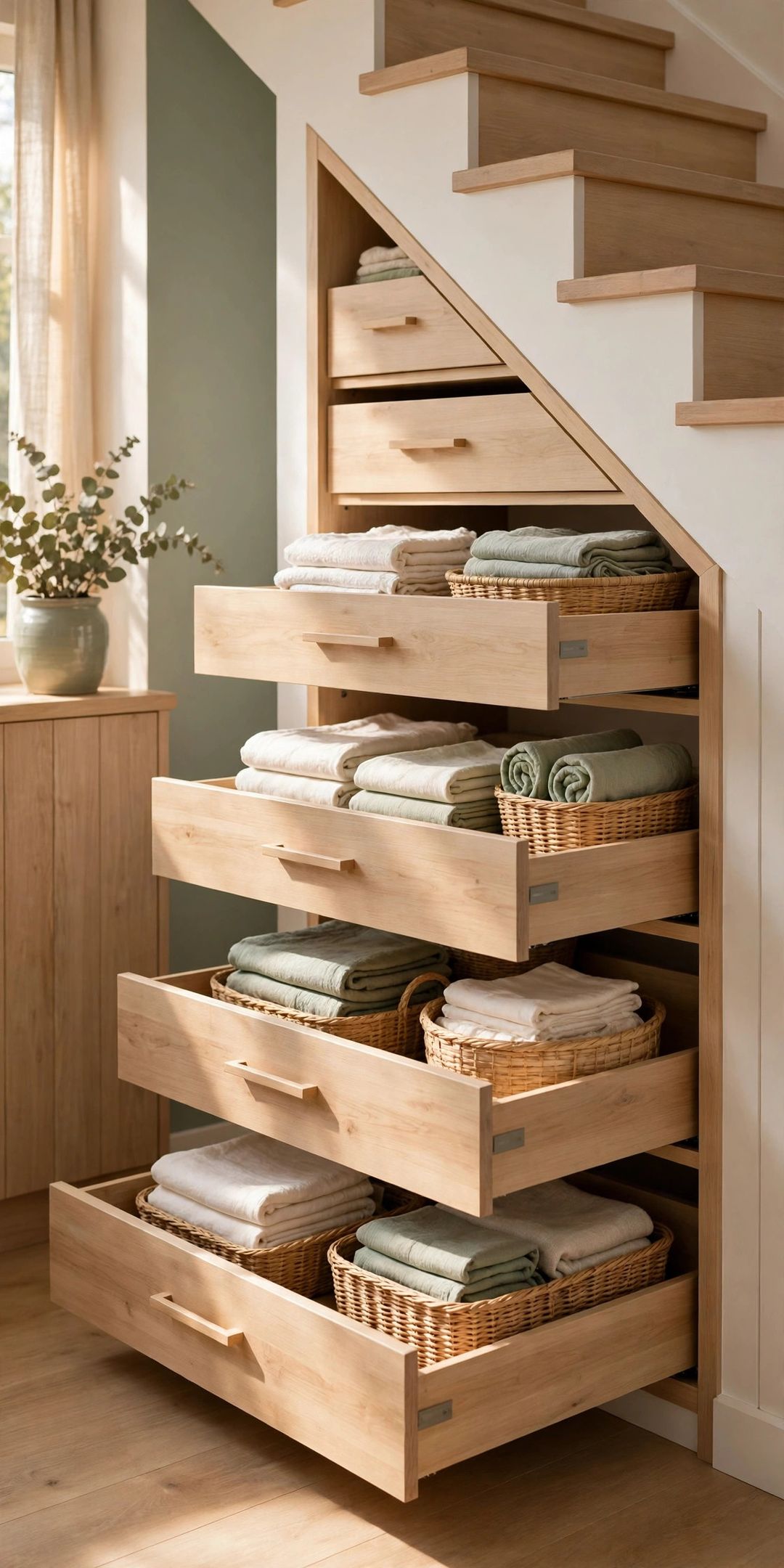
A standard trick in tiny homes is turning each stair tread into a pull-out drawer. The staircase already takes up floor space, so giving it storage costs nothing extra. Lower drawers hold shoes and bags, while shallow upper ones suit chargers and tools.
2. Toe-Kick Drawers
Small-footprint homes commonly use the recessed gap under kitchen cabinets and built-ins. A shallow toe-kick drawer slides out from that dead space and holds flat items like baking trays and placemats. It keeps clutter out of the main drawers.
3. Loft-Edge Storage
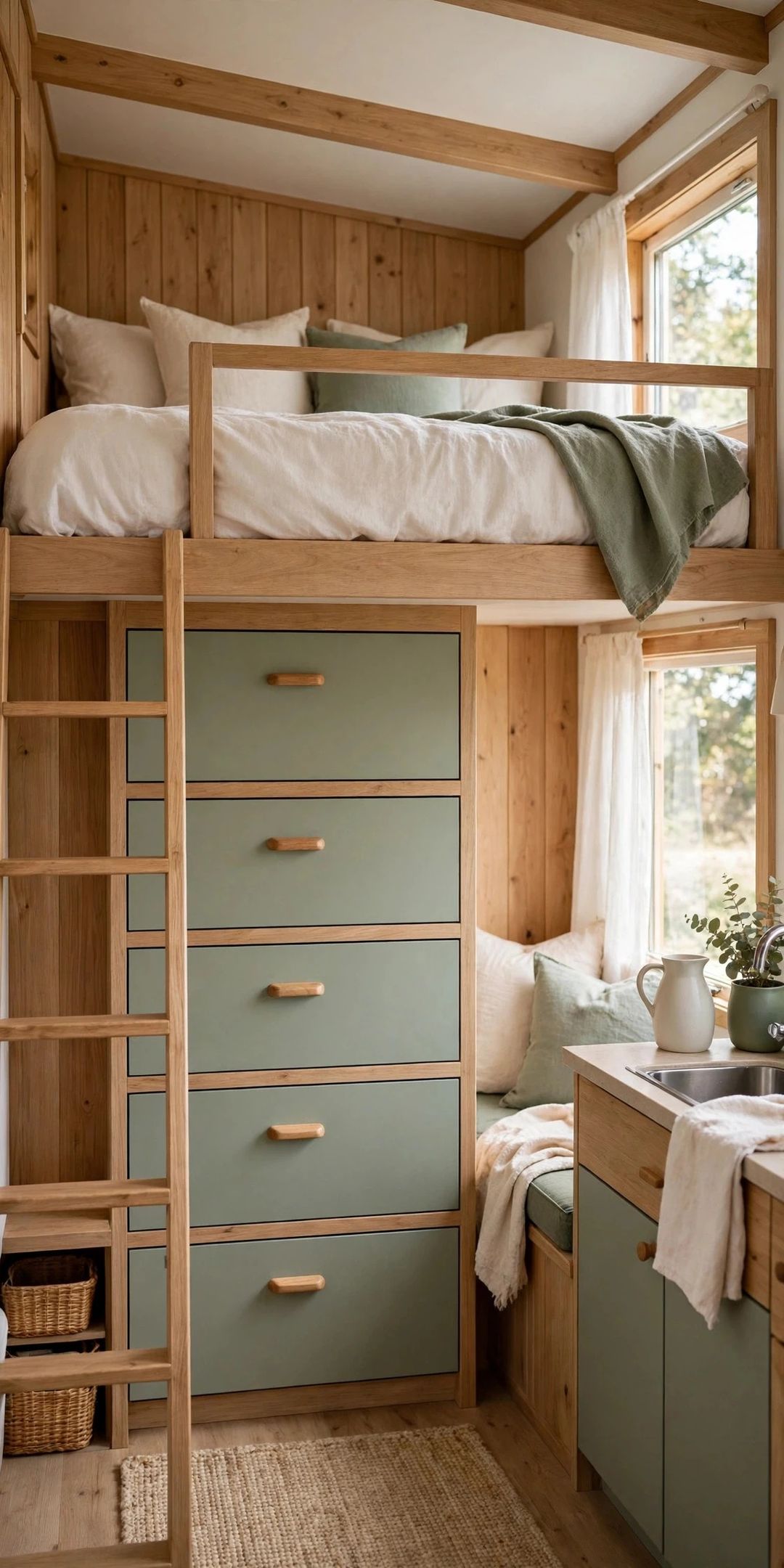
Where a sleeping loft meets the main room, the edge wall is prime storage space. Low shelves, a short bookcase, or a row of cubbies along the loft edge hold books, clothes, and bedding within arm's reach of the bed,
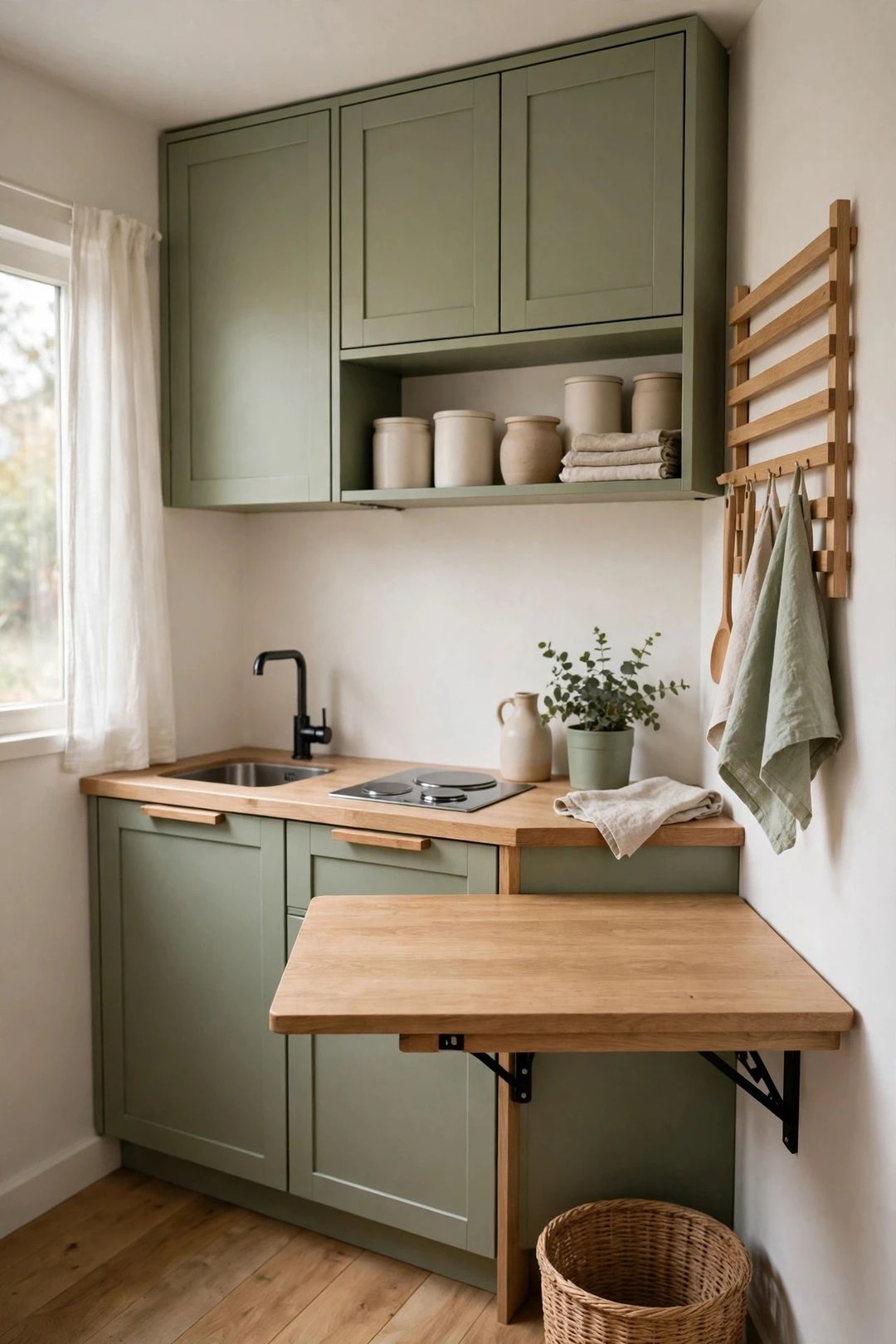
4. Fold-Down Tables
A wall-mounted table that folds flat when not in use is a classic tiny-home solution. Folded down, it seats two for dinner or work. Folded up, the wall is free again. Folding chairs hung nearby complete the setup.
5. Storage Headboards
A headboard with shelves, cubbies, or a shallow cabinet replaces a bedside table and a bookshelf in one move. Keep a lamp, a book, and a phone charger in the headboard, and the floor beside the bed stays clear.
6. Under-Floor Hatches
Some tiny homes build storage into the floor itself, with lift-up hatches over shallow compartments. These suit seasonal items, spare bedding, and rarely used gear. Keep a list of what lives under each hatch.
7. Wall and Door Backs
Every blank wall and door back is storage waiting to happen. Hooks, slim racks, and hanging organizers on door backs hold coats, bags, cleaning supplies, and pantry overflow.
8. Multi-Use Furniture
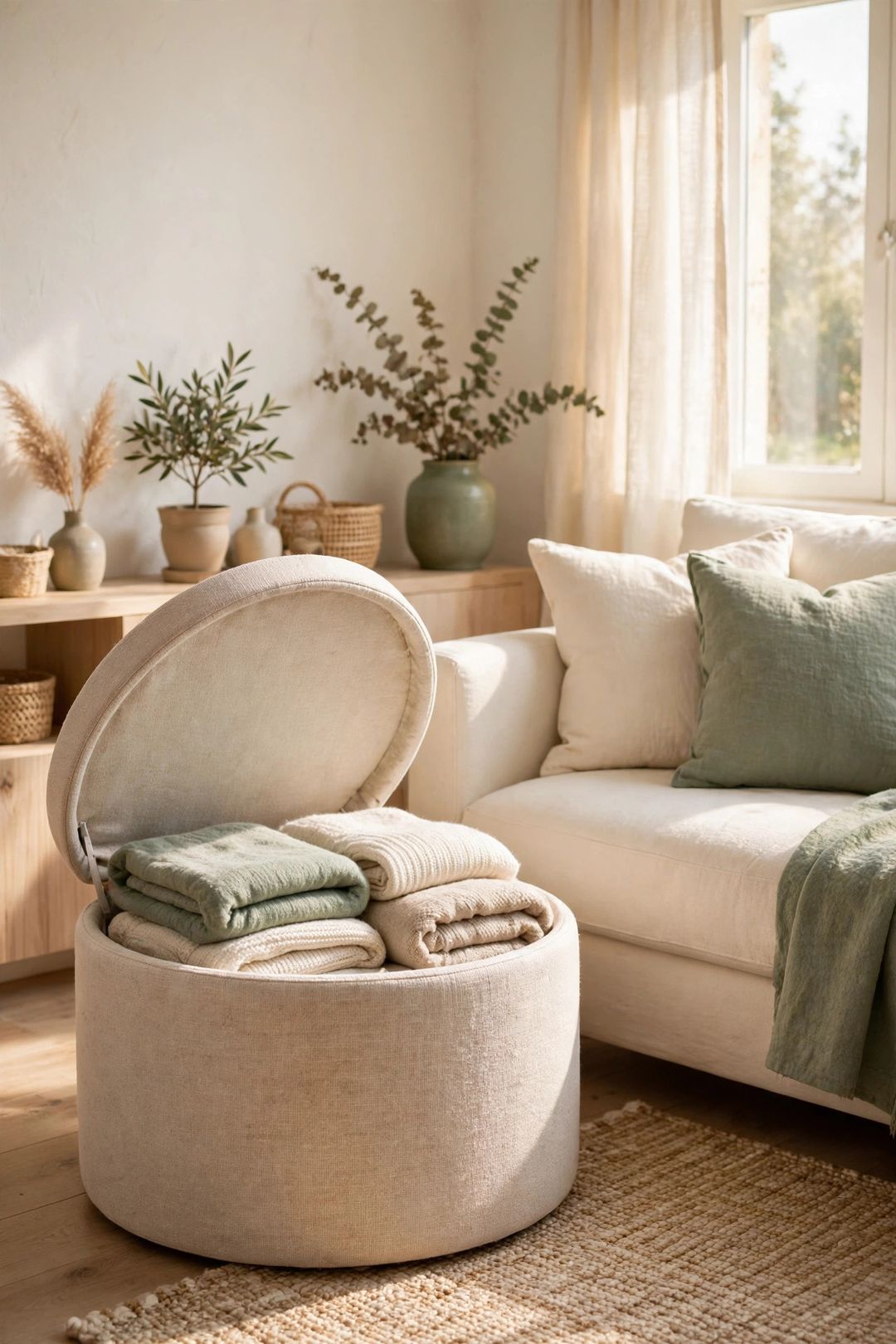
In a tiny home, nearly every piece of furniture does two jobs. A sofa hides a storage chest, an ottoman opens for blankets, and a coffee table lifts into a desk.
9. Vertical Bike and Gear Mounts
Bikes, skis, and outdoor gear eat floor space fast. Wall mounts lift them overhead, near the ceiling or high on a wall, where they stay out of daily paths.
10. Built-In Bench Seating
A bench along a wall gives seating, a dining spot, and a storage box in one. Lift the seat for blankets, board games, and off-season clothes.
11. Over-Door and High Shelving
Small homes commonly run a shelf above door frames and along the top of walls, where tall items and rarely used boxes can live. Label the boxes and reserve high shelves for things needed only a few times a year.
12. Rolling Storage Under Beds
The space under a bed is often the largest hidden storage zone in a small home. Low rolling bins or drawers on casters hold shoes, spare linens, and out-of-season clothes. Use lidded bins and label the front edge of each one.
13. Kitchen Rail Systems
A wall rail with hooks and small baskets frees up drawer and counter space in a tiny kitchen. Hang utensils, mugs, and measuring cups where they are easy to grab while cooking.
14. Hidden Pantry Pull-Outs
Narrow pull-out cabinets fit into gaps as small as six inches beside a fridge or oven. They hold spices, oils, and canned goods in a single visible row, so nothing hides at the back.
15. One In, One Out Rule
The most widely used tiny-home habit is not furniture at all: for every new item that comes in, one old item leaves. This rule stops storage from slowly filling up again after all the clever building work.
What to Buy
A wall-mounted fold-down table, typically $60–$150. Pro: It creates a dining or work surface that vanishes when not needed. Con: It needs solid wall fixings and holds less weight than a fixed table. Skip if: You already eat and work at a counter every day.
Under-bed rolling bins, typically $15–$30 each. Pro: They turn wasted bed space into easy-access storage. Con: Low clearance beds may not fit them. Skip if: Your bed frame already has built-in drawers.
A wall rail with hooks, typically $12–$25. Pro: It frees drawer space and keeps cooking tools visible. Con: It can look cluttered if overloaded. Skip if: Your kitchen already has plenty of drawer space.
Over-door hooks or rack, typically $10–$20. Pro: It adds storage with no drilling and no floor space. Con: Heavy loads can strain hinges. Skip if: Your doors are hollow-core and already sagging.
A storage ottoman, typically $25–$60. Pro: It seats, stores blankets, and doubles as a side table. Con: Soft lids sag under heavy use. Skip if: You already own a storage bench that covers the same job.
Mistakes to Avoid
- Adding storage before decluttering. New bins and shelves just hide the overflow. Remove what you do not use first, then measure what remains.
- Filling every wall to the ceiling. Wall-to-wall shelving can make a small room feel cramped. Leave some blank wall so the room can breathe.
- Storing daily items in hard-to-reach spots. High shelves and under-floor hatches suit seasonal gear, not the things you grab every morning.
- Choosing furniture for looks alone. In a small home, a pretty piece with no storage is a missed chance. Pick multi-use pieces first.
- Skipping labels. Hidden storage only works if you can find things again. Label bins, drawers, and high boxes clearly.
Frequently Asked Questions
Do these ideas work in a regular small apartment?
Yes. Most of them need no building work: door-back racks, under-bed bins, wall rails, storage ottomans, and the one-in-one-out rule all work in a rented apartment. Built-in options like stair drawers and under-floor hatches suit owned tiny homes better.
What is the cheapest tiny house storage idea to start with?
Start with door-back hooks and under-bed bins. Both cost little, need no tools, and free up drawer and closet space right away. Then add a wall rail or storage ottoman once you see which category still overflows.
How do you keep hidden storage from becoming a dumping ground?
Label every bin and drawer, keep a short list of what lives where, and review hidden spots once a season. If you cannot remember what is in a bin, open it and decide whether it still earns its space.
Is it better to build storage in or buy freestanding pieces?
Built-ins use space best, especially stairs, benches, and loft edges. Freestanding pieces cost less and move with you. In a rented home, choose freestanding; in a home you own, built-ins pay off over time.
Small homes stay livable by giving every surface a job and every item a home. Save this post to your Small-Space Storage board on Pinterest so these ideas are handy the next time a corner or a wall needs a better plan.