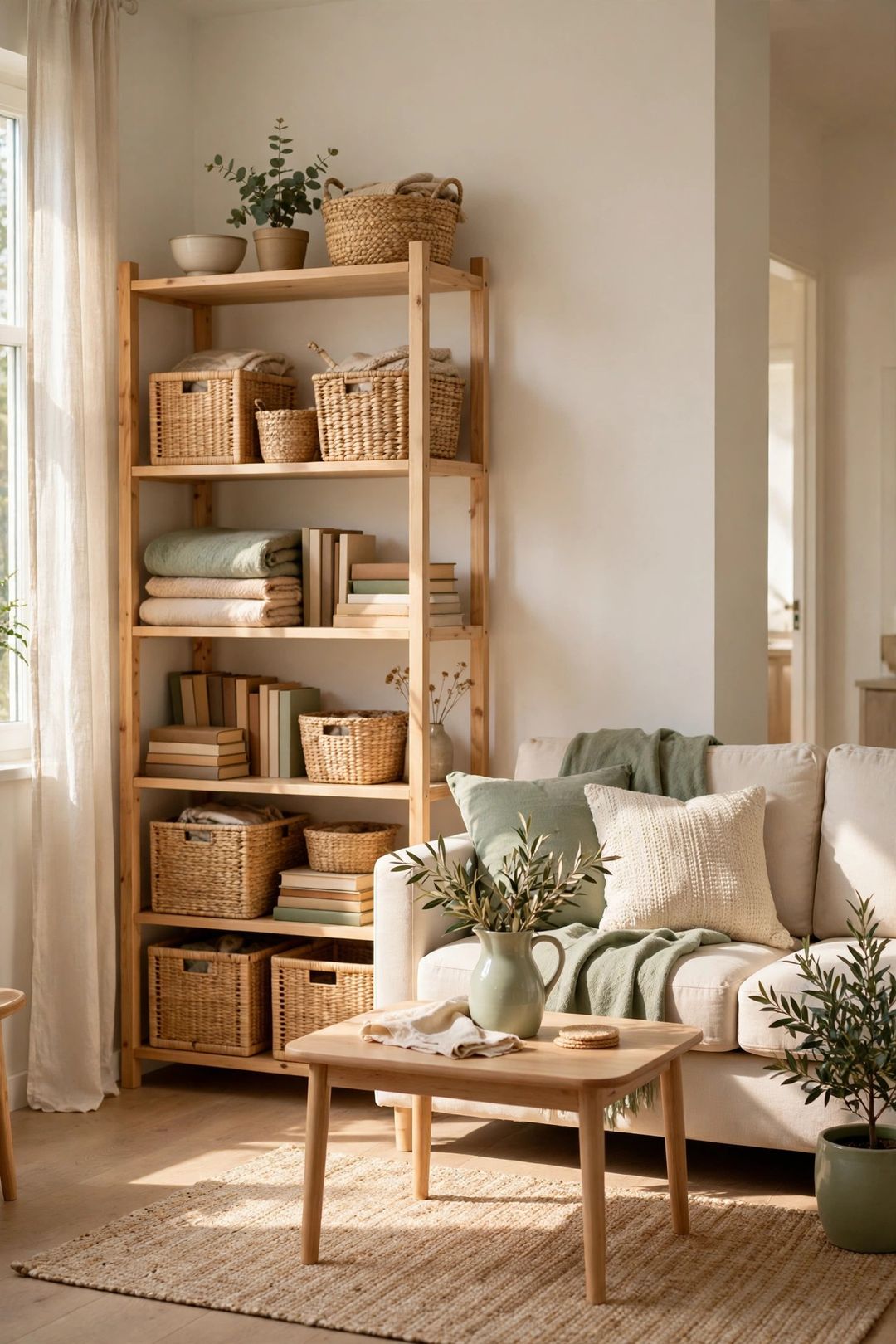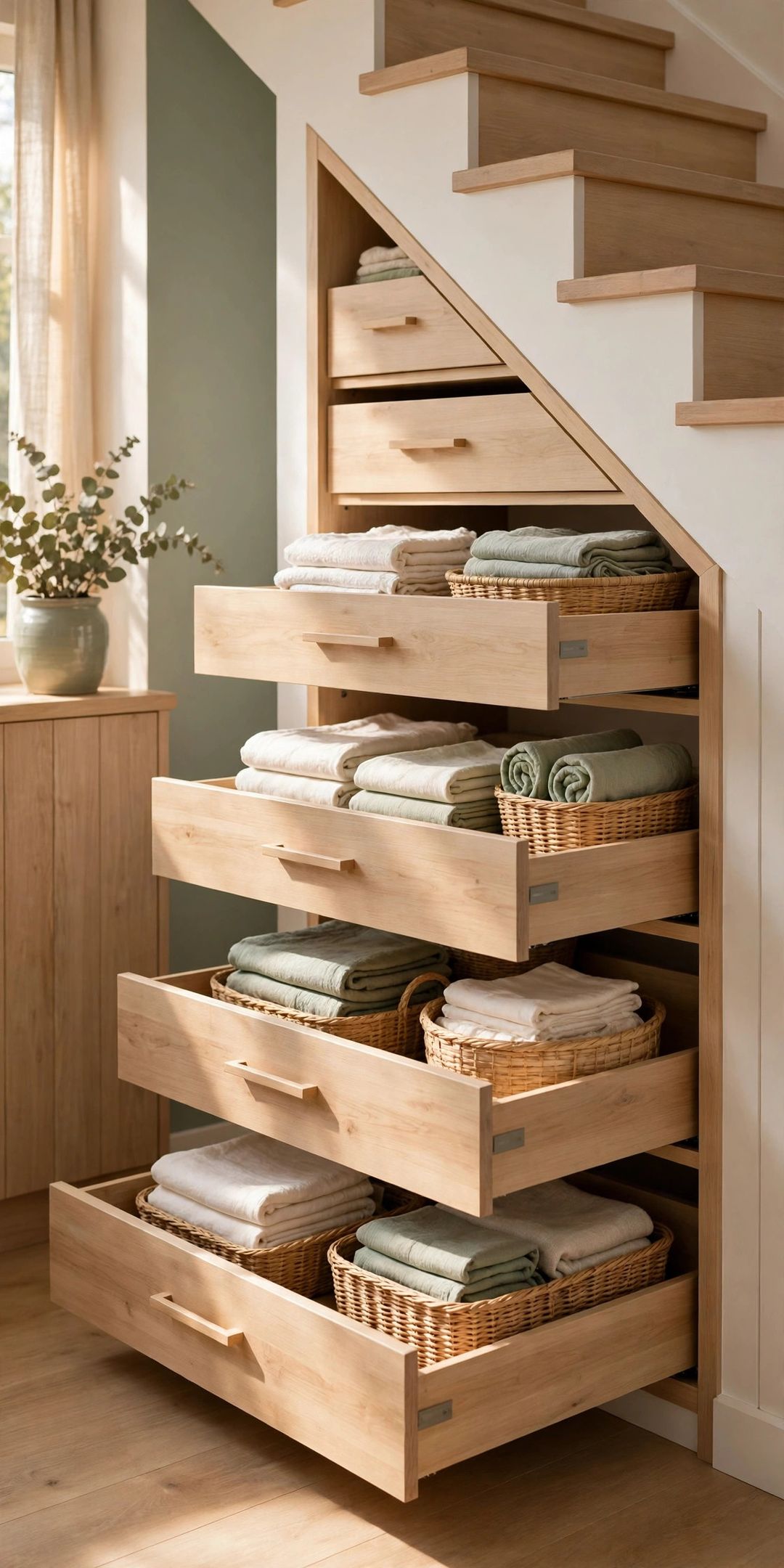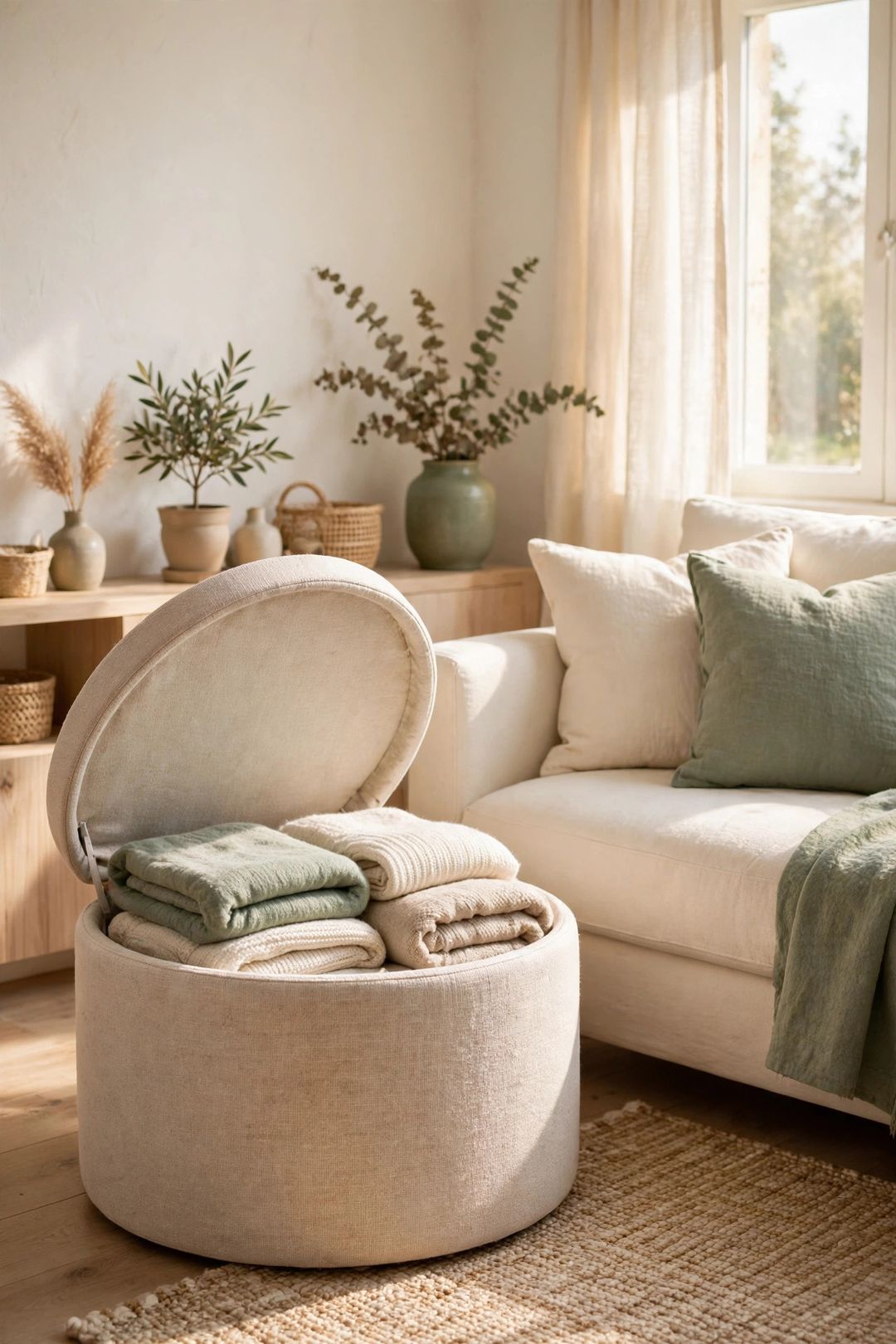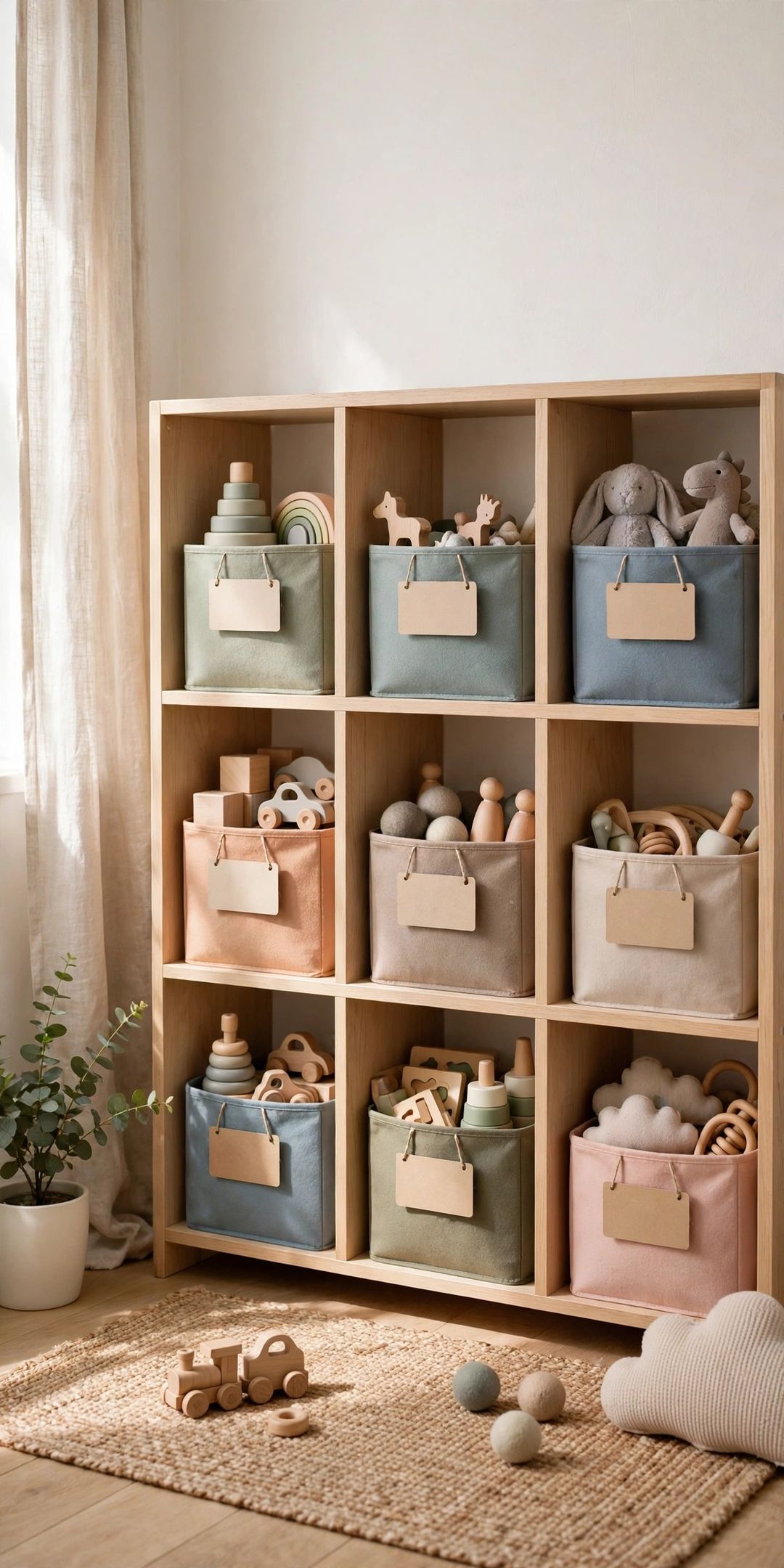
Toy mess is not a sign of failure. Toys are small, plentiful, and used in every room, so they spread faster than almost anything else in a home. These toy organization ideas work because they are simple enough for kids to follow and sturdy enough to survive daily play, not because they look perfect in a photo.
The rule behind all twelve is the same: every toy needs one clear home that is easy to reach and easy to put back into. If a bin needs a lid wrestled open, a shelf is too high, or a label a child cannot read, toys will end up on the floor instead.
Sort First, Then Label So Cleanup Is Obvious
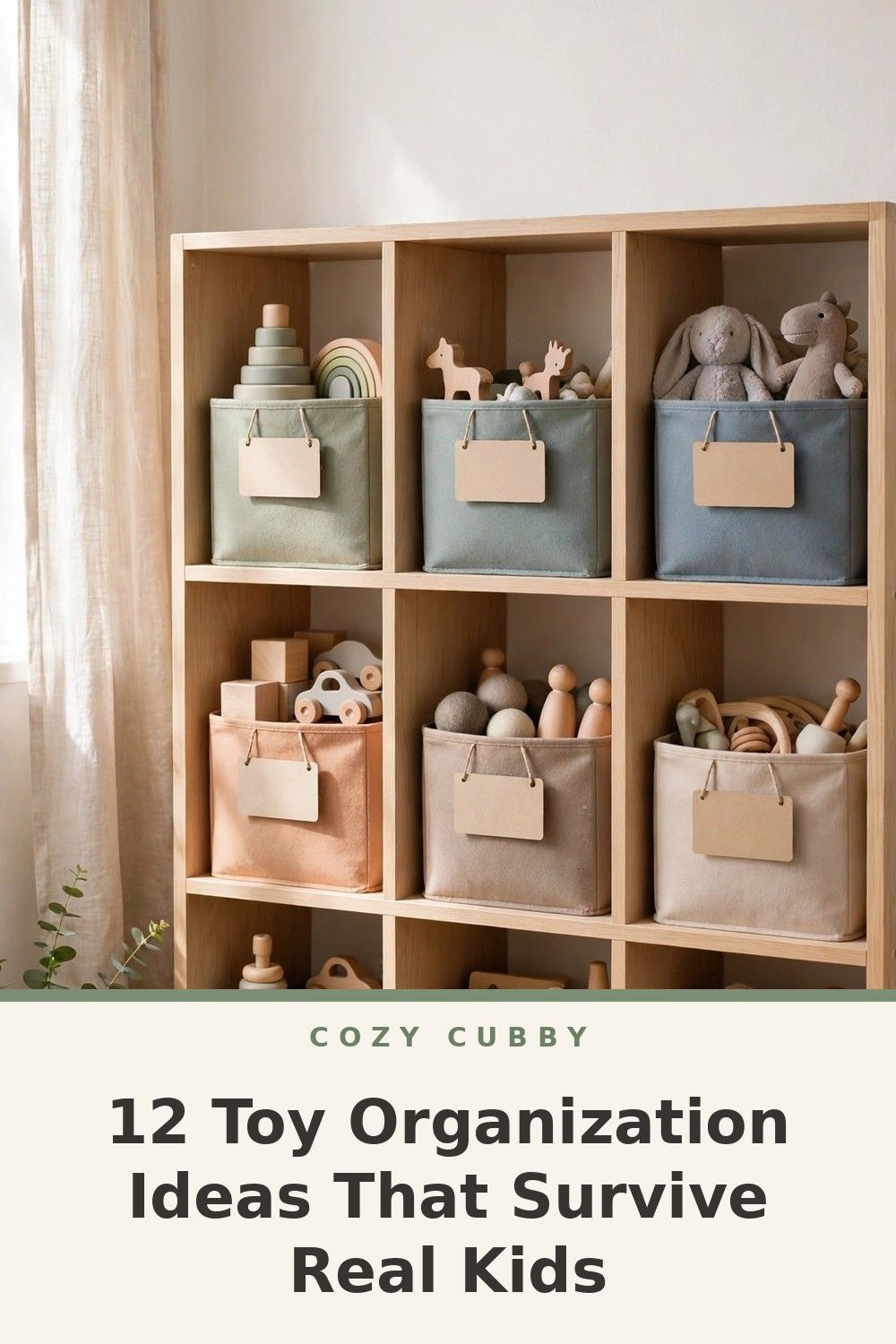
1. One bin per toy type. Sort toys into broad groups — blocks, vehicles, dolls, art supplies, puzzles — and give each group its own bin. Broad groups work better than tiny categories, because a child can decide in seconds where a toy belongs.
2. Picture labels on every bin. Tape or stick a photo or simple drawing of the contents on the front of each bin, alongside the word if children are learning to read. A child who cannot read yet can still match a toy to its picture, which makes cleanup possible without an adult directing every item.
3. A toy rotation box. Keep part of the toy collection in a box in a closet and swap a few items in and out every couple of weeks. Rotation means fewer toys are out at once, so cleanup is shorter. The box itself needs a label and a set spot, or rotated toys simply become a second pile.
Make Shelves Low, Open, and Kid-Proof
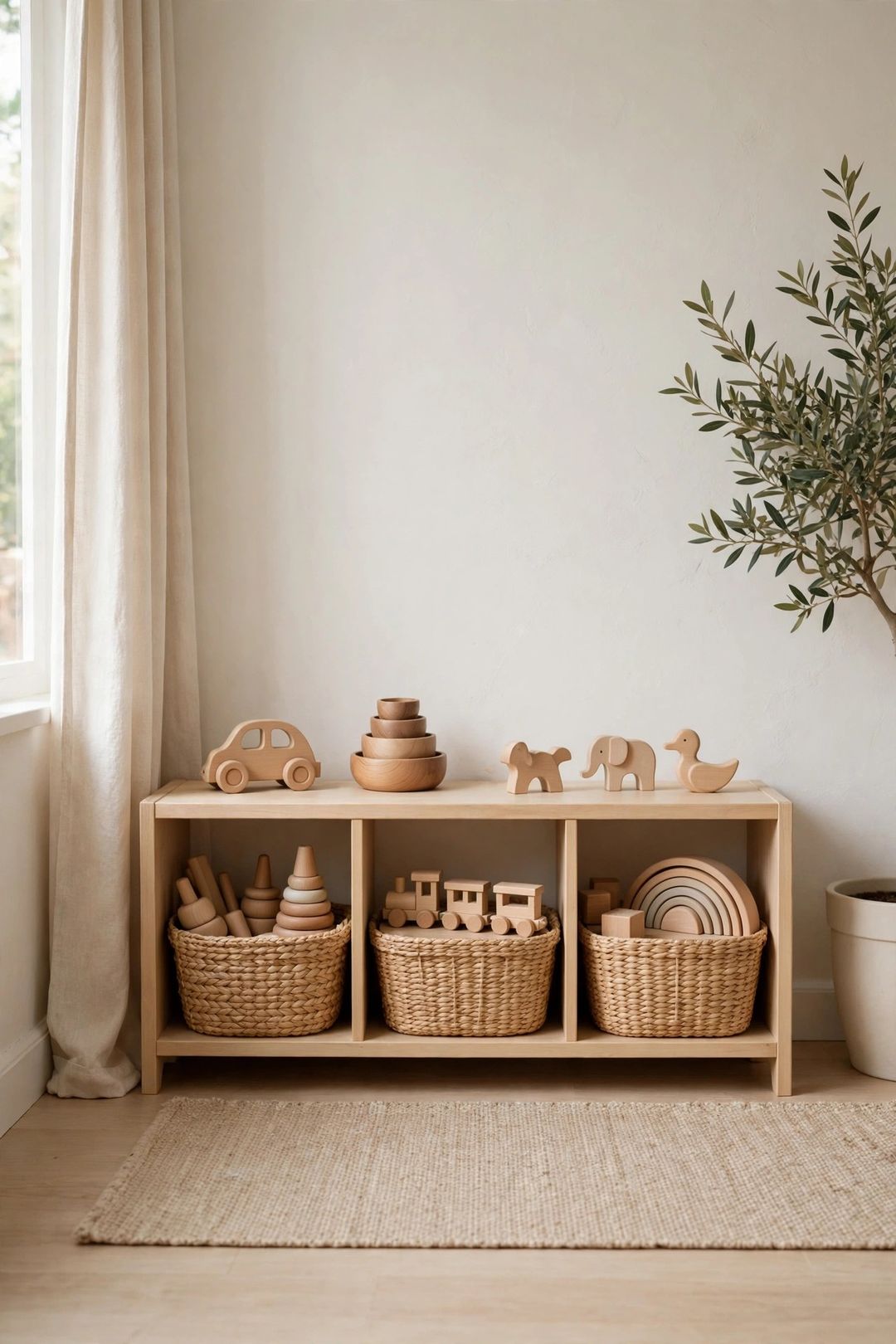
4. Low, open shelving at child height. Bins on low shelves let children reach toys on their own and put them back without climbing or asking for help. Open fronts beat doors and drawers here, because a door is one more step between a child and cleanup.
5. A dump-friendly big bin for blocks and bricks. Building blocks and bricks are played with in bulk and cleaned up in bulk, so they deserve one large, sturdy bin with no lid to fight. A child can tip the bin out to play and scoop everything back in at the end. Small, fiddly containers for blocks only slow both steps down.
6. Forward-facing book bins. Books stored spine-out in a row are hard for young children to browse, so they pull out a whole shelf to find one title. Low bins that show book covers facing forward let children pick a book and slide it back into place.
Contain the Tricky Categories
7. Lidded containers and zip pouches for small parts. Small pieces — tiny figures, game tokens, craft beads — vanish fastest and cause the most floor mess. Give each set a small lidded container or a zip pouch, and store all the pouches together in one bin. Keep sets with very small parts out of reach of younger children.
8. A limit rule for stuffed animals. Stuffed animals multiply quickly and fill beds, chairs, and floors. Pick one home for them — a large basket, a net, or a hammock — and set a simple limit: when the home is full, one must leave before a new one stays. The limit matters more than the container, because no basket is big enough for an endless collection.
9. Zip pouches for puzzles and board games. Puzzle and game boxes tear, and loose pieces end up in other boxes. Store each puzzle or game in a labeled zip pouch, with the box lid or a photo of the finished picture tucked inside for reference.
Keep the Daily Flow Going
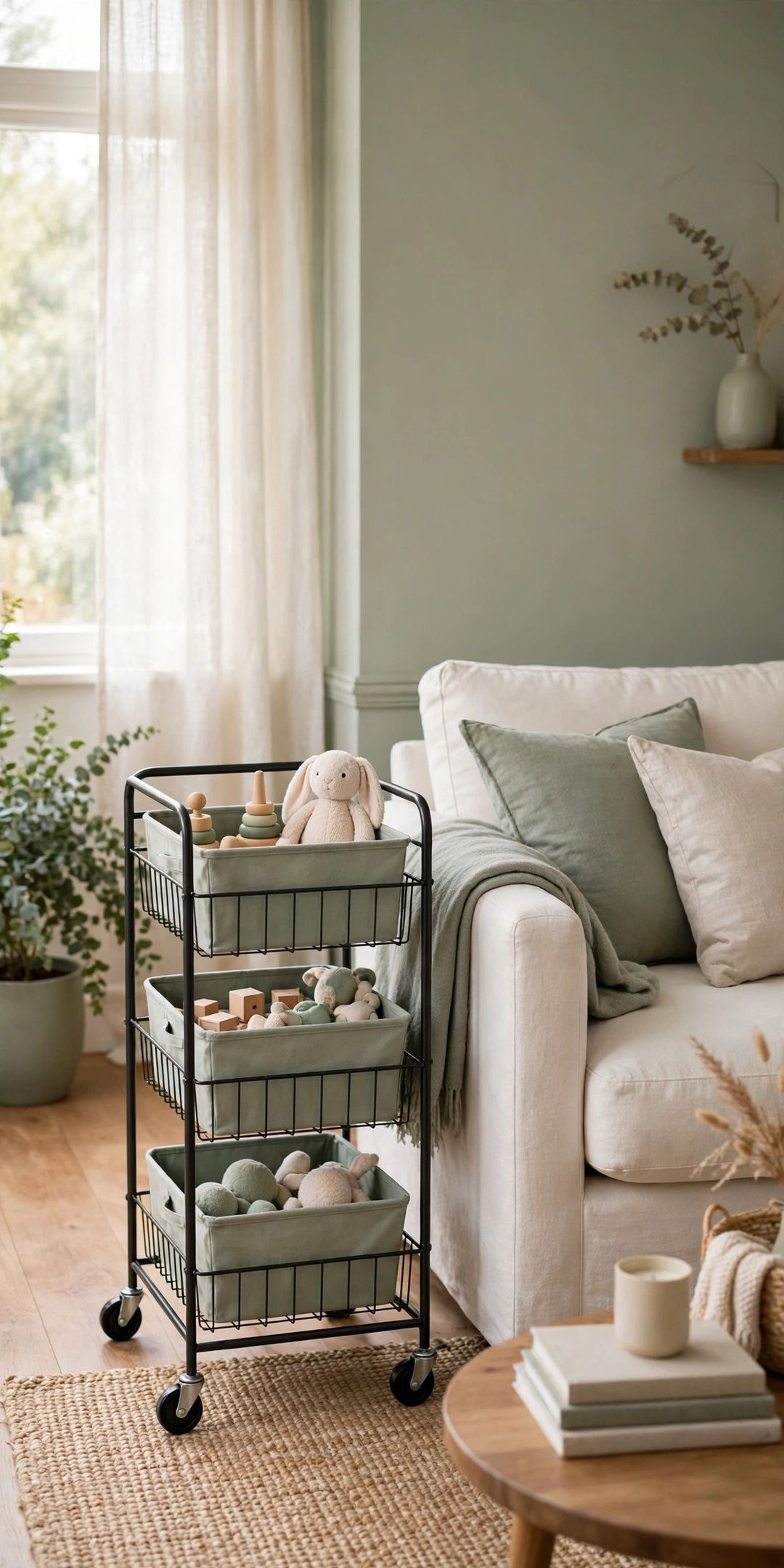
10. One art station, not art supplies in every room. Crayons, markers, paper, and glue spread fast when they live in several places. Gather them into one rolling caddy or single shelf station that can be carried to the table and put away after use.
11. A drain basket for bath toys. Bath toys stay wet after bath time, so they need a basket or net that drains and dries instead of a closed bin that traps water. Hang or suction the basket where it can drip dry, and empty it regularly so no toy sits damp for days.
12. An outgrown bin plus a one-in, one-out rule. Keep one bin for toys that are broken, outgrown, or no longer played with, and pass its contents along or recycle them on a regular schedule. Pair it with a simple household rule: when a new toy arrives, an old one leaves. Without an exit route, every new toy adds to the pile, no matter how good the bins are.
What to Buy
Open bins in one matching size — the best first buy, because matching bins stack neatly on low shelves and one size fits most toy groups. Add picture labels to the front of each bin.
A low, sturdy shelf unit — the best buy for a shared play space, because bins at child height let children get toys out and put them away on their own.
Small lidded containers and zip pouches — the best buy for small parts, puzzles, and games, since they keep pieces together and stop one set from mixing into another.
A drain basket or net for bath toys — the best buy for the bathroom, because wet toys need airflow to dry instead of a closed bin.
Mistakes to Avoid
- Buying bins before sorting. Containers bought first rarely fit the toys that need them. Sort into groups, measure the piles, and then choose bins.
- Sorting into categories that are too small. A separate bin for every tiny toy type confuses children and slows cleanup. Broad groups work better.
- Using lids and doors everywhere. Every lid, latch, and door is one more step before cleanup. Use open bins for daily toys and lids only for small parts and wet items.
- Storing toys too high for children to reach. Toys on high shelves need an adult every time, so they stay on the floor instead. Daily toys belong at child height.
- Skipping the exit route. Without an outgrown bin and a regular clear-out, new toys keep arriving and no system can hold them all.
Frequently Asked Questions
How many toys should be out at once?
Fewer out at once means shorter cleanup. Try one bin per toy type on the shelves and the rest in rotation, then adjust based on cleanup time.
What is the best way to label bins for children who cannot read yet?
Use a photo or drawing of the contents on the front of the bin. A child can match a toy to its picture even before reading, and adding the written word alongside the picture helps as reading skills grow.
How often should toy rotation happen?
Every couple of weeks works well for many families, or whenever play seems stale and the same toys sit untouched. Swap only a few items at a time so the change feels fresh without a full re-sort.
What should happen to broken or outgrown toys?
Keep one outgrown bin and check it on a regular schedule. Recycle broken items where possible, and pass along outgrown toys that are still in good condition. Clearing the bin regularly is what keeps the system from overflowing.
Start with sorting and picture labels this weekend, add one shelf children can reach, and let the routine settle before buying more. Save this post to your Toy Organization board on Pinterest for the next toy cleanup.