In a small home, the living room is also the playroom — that is not a failure, it is just the floor plan. The goal of good toy storage ideas small living room setups is not to banish toys, but to give them furniture-grade homes so the room returns to "living room" in about five minutes every evening.
The pattern that works: closed storage for the bulk, one small open display for the current favorites, and a rotation habit that keeps the total volume flat. The 15 ideas below group into those three moves, plus the reset that keeps them true.
Closed Storage That Reads as Furniture
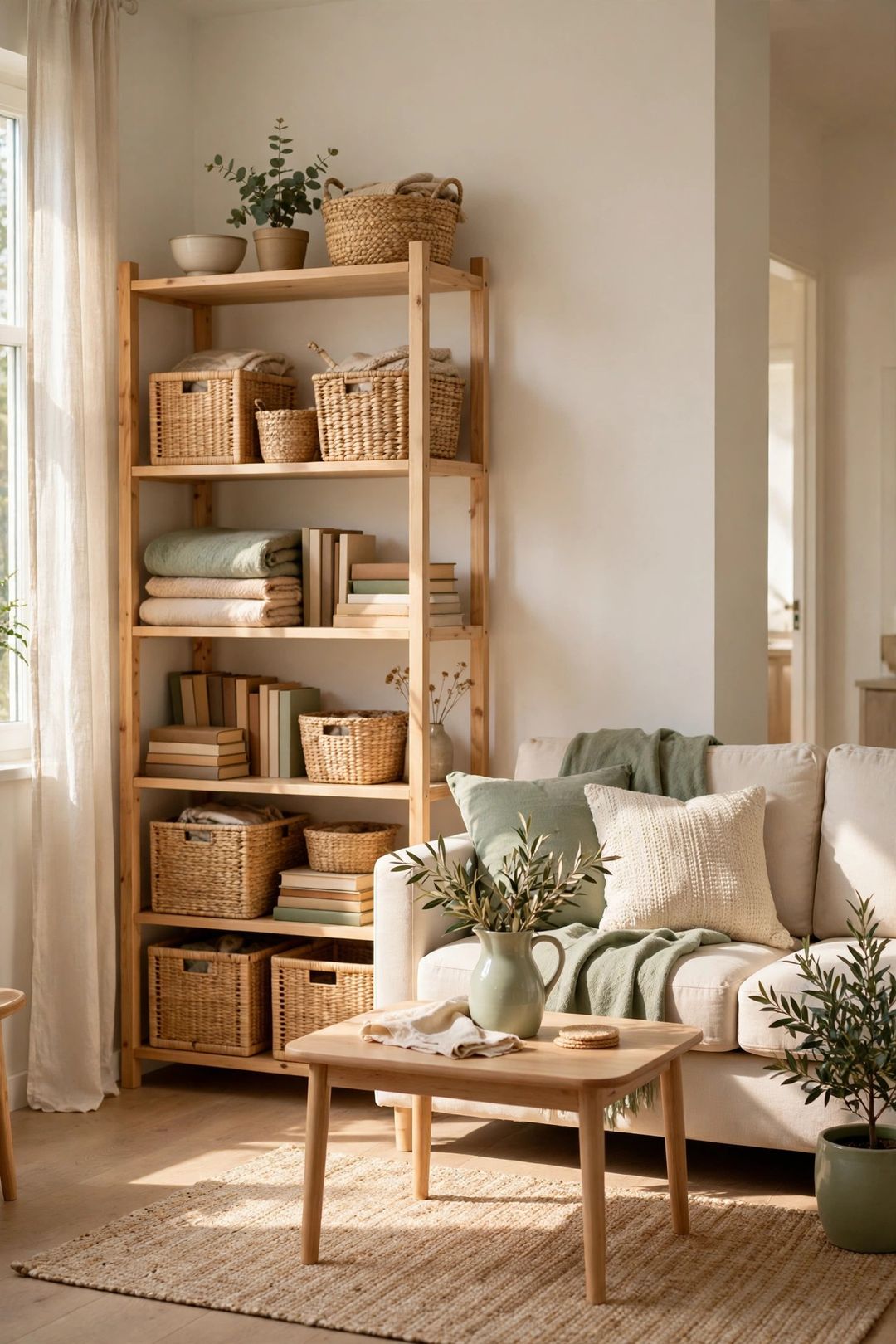
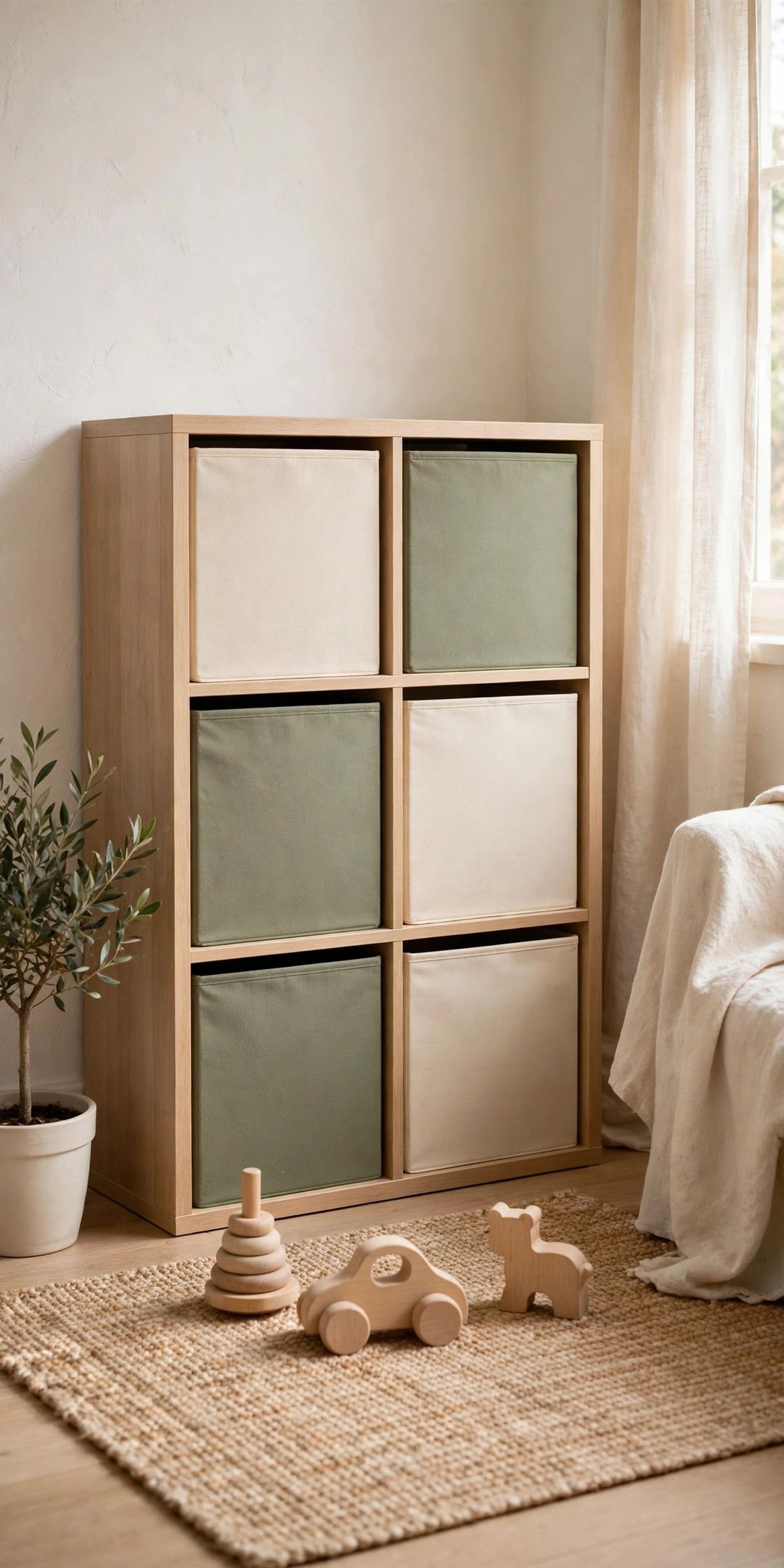
1. Lidded baskets on the low shelf. Two or three large lidded baskets (about 15 to 18 inches wide) on the bottom shelf of a bookcase hold soft toys, balls, and dress-up gear. Lids are the whole trick: closed, the shelf reads as decor; open, kids can dig freely.
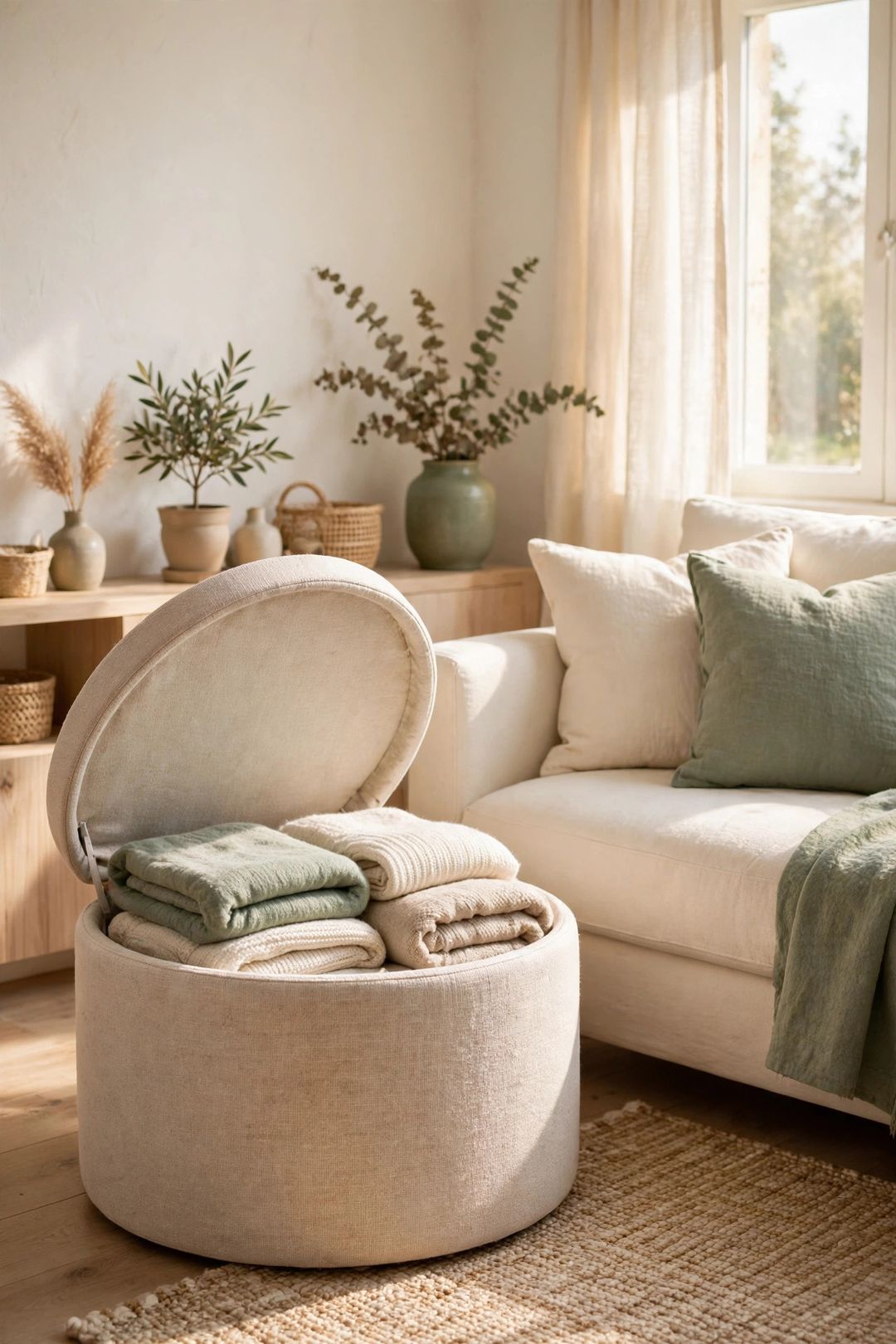
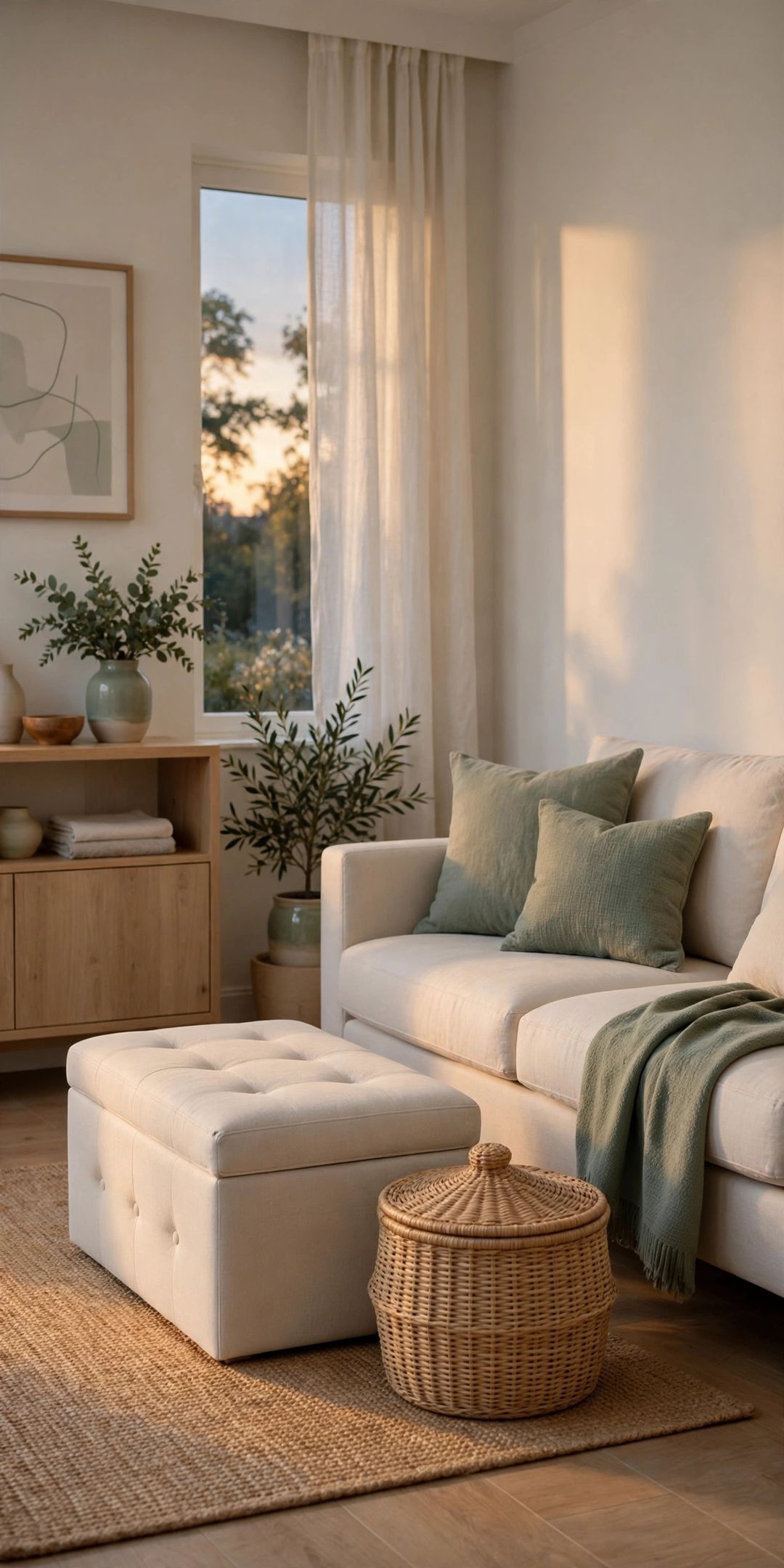
2. A storage ottoman as the toy vault. An upholstered ottoman (roughly 30 inches wide) swallows the big overflow — stuffed animals, blankets for forts — and still works as a footrest or extra seat. Choose a fabric that matches the sofa so it visually disappears.
3. Sideboard or low cabinet bins. If a sideboard or TV console has doors, assign one section to toys in two open-top bins inside. Doors closed, the room is calm; doors open, everything is at kid height.
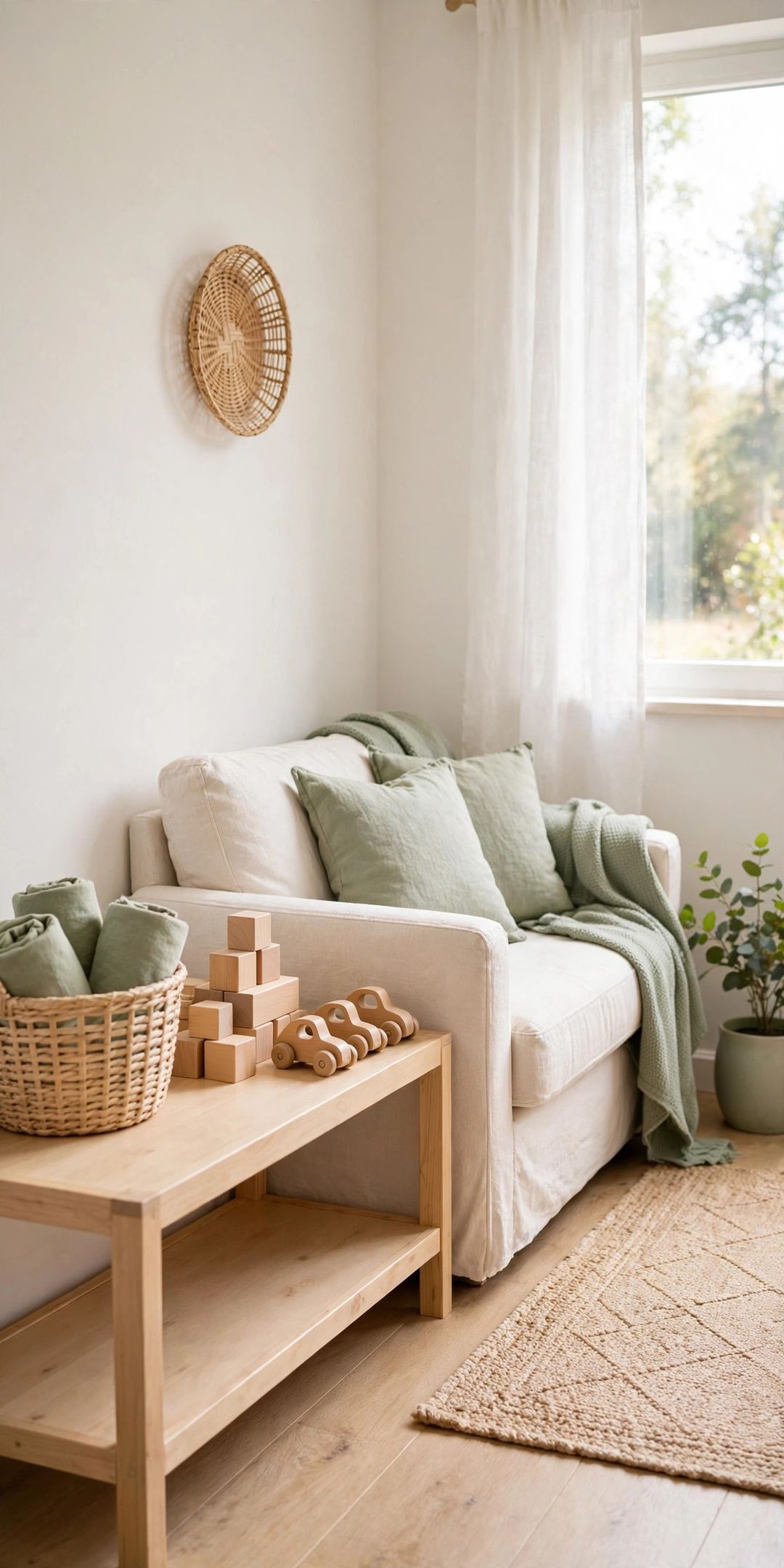
4. A trunk or blanket box as the coffee-table swap. In very small rooms, a lidded trunk can replace the coffee table outright: surface on top, toy storage inside, and one less piece of furniture to walk around.
The One-Shelf Toy Library
5. Limit shelf toys to one shelf. Designate exactly one low shelf or cube unit as the toy library. If it does not fit the shelf, it rotates out. The limit is the system — it makes "tidy" a five-minute job instead of an archaeological dig.
6. Rotate toys monthly. Keep a closet bin of off-duty toys and swap the shelf contents monthly. Rotation makes old toys feel new again and keeps the living room count stable without buying or purging constantly.
7. Picture labels for pre-readers. A simple photo or drawing of each bin's contents taped to the front lets toddlers put things back in the right place — the cleanup habit starts when the system can be read without words.
8. Book sling or forward-facing book bin. Picture books stored cover-out in one low bin take a quarter of the space of a stuffed bookshelf row and are easier for small hands to flip through and re-shelve.
Open Storage by Age and Play Type
9. One open bin for toddlers. For the under-3 crowd, a single open basket of large, washable toys beats a sorting system. One bin, everything in, lid optional — cleanup is a single scoop.
10. Closed bins for older kids' small pieces. Building sets, game pieces, and craft kits go in small closed bins with lids, because one spill of tiny pieces across a shared living room floor ends the experiment. Small bins also stack inside the bigger closed storage.
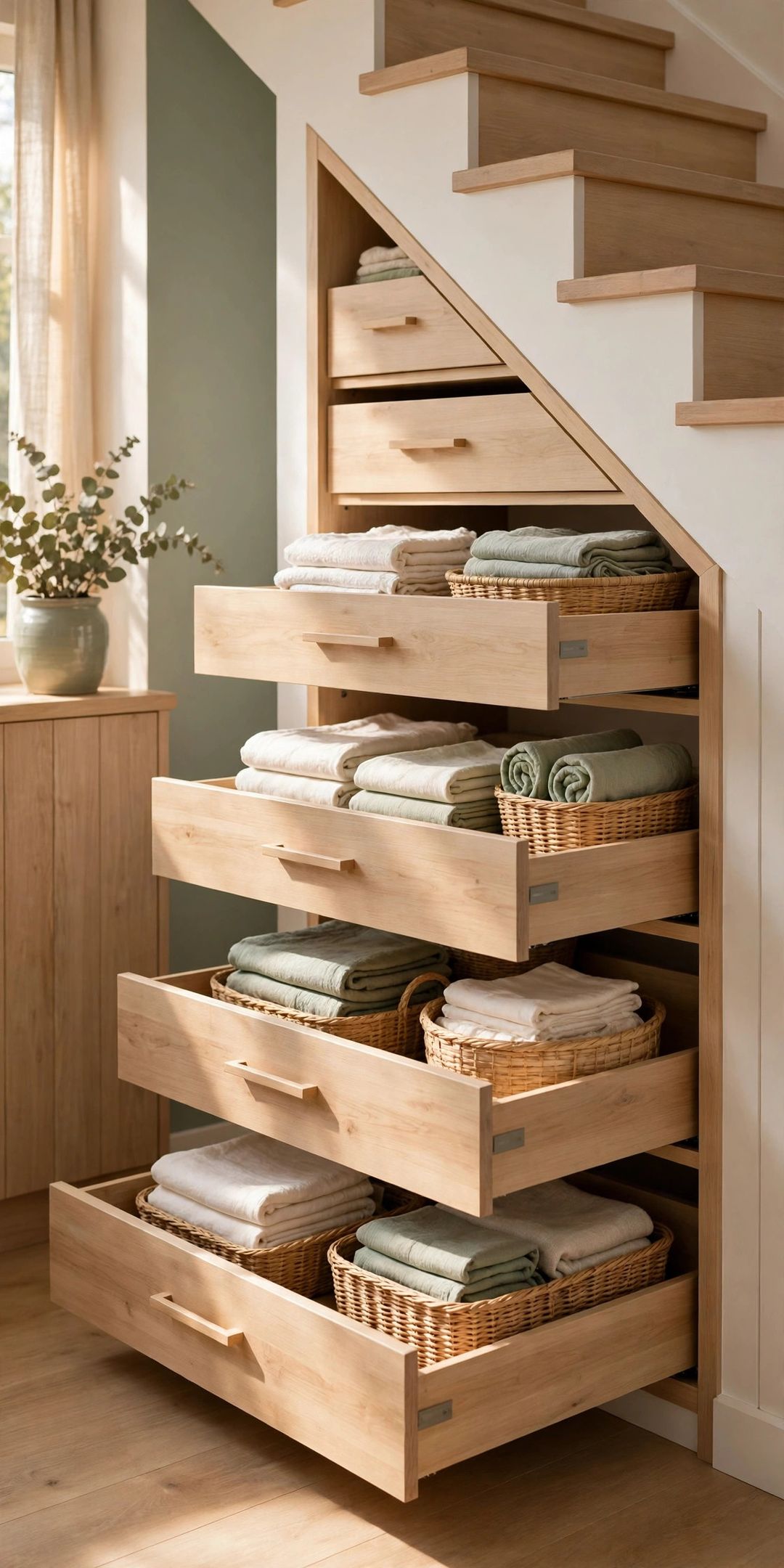
11. Under-sofa trays for flat toys. Shallow trays (about 2 inches high) slide under the sofa holding puzzles, coloring books, and board games flat. Measure the sofa's floor clearance first — many sit 3 to 5 inches high underneath.
12. A rolling cart for craft supplies. A slim 3-tier cart parks beside the sofa during craft time and rolls into a closet after. Art supplies are the category that migrates most; wheels give the migration a route.
The Reset That Keeps It True
13. The 5-minute nightly reset basket. Keep one medium basket as the nightly sweep: anything toy-shaped on the floor goes in it, and it gets sorted back to homes every few days. The nightly pass is what keeps the system from decaying by weekends.
14. A door rule for new toys. New toys enter through the shelf: one in means one rotates out or gets donated. Applied at birthdays and holidays, this rule is why the toy count stays flat year after year.
15. A "company coming" speed stash. Designate the ottoman or trunk as the five-minute stash for the pieces that defy sorting when guests are imminent. It is allowed to have one cheat — as long as it gets properly sorted within the week.
What to Buy
Large lidded baskets, typically $15–$30 each. Pro: The fastest route to a calm-looking shelf; natural materials suit adult decor. Con: Flexible sides bulge when overfilled. Skip if: Your shelves already hold closed bins that match the room.
A storage ottoman, typically $40–$90. Pro: Furniture and toy vault in one footprint — the small-room ideal. Con: The priciest item here; measure the lid swing and seat height before buying. Skip if: A lidded trunk or blanket box already serves the room.
Shallow under-sofa trays, typically $8–$16. Pro: They monetize dead space under the biggest piece of furniture you own. Con: Useless if your sofa sits flat to the floor — measure the gap first. Skip if: Puzzles and games already have a cabinet home.
Small lidded bins for tiny pieces, typically $5–$12 each. Pro: Contain the spill-prone categories and stack inside bigger storage. Con: Many tiny bins can become their own clutter system. Skip if: Zipper pouches or jars already corral the small stuff.
Mistakes to Avoid
- A toy box with no categories at all. One giant mixed bin teaches digging, not tidying, and pieces migrate to the floor daily.
- Open display for everything. A living room where every toy is visible always looks like a playroom, no matter how neat the rows.
- Storage kids cannot operate. Heavy lids, high shelves, and complicated sorting mean adults do the cleanup forever.
- Letting the toy volume grow shelf by shelf. Without the one-in-one-out door rule, every holiday adds a new "temporary" pile.
- Skipping the nightly reset. Five minutes nightly beats an hour weekly; small messes compound faster than big ones get cleaned.
Frequently Asked Questions
How many toys should stay in the living room?
As many as fit the one shelf, the ottoman, and the baskets — the containers set the number, not a rule from outside. For most small living rooms that works out to a focused set kids actually play with, plus the rotation bin in a closet.
What about big items like play kitchens or ride-ons?
Give one floor corner to the current big item and park it there as "furniture." When a new big item arrives, the old one rotates to another room, a relative's house, or donation. Two big items is usually the ceiling for a small living room.
How do I keep it looking adult in the evening?
Closed storage does the work: lids on, doors shut, ottoman closed. Keep the palette of baskets and bins close to the room's textiles, and the toy system reads as part of the furniture once the kids are in bed.
Will rotation really make kids play with old toys?
Generally, yes — a toy absent for a month is greeted like a new one, because novelty is the trigger, not newness. Rotation fails only when the stored bin is visible and raid-able, so keep it behind a closet door.
One shelf, one ottoman, one basket for the nightly sweep — that is a living room that hosts both playtime and grown-up evenings. Save these ideas to your Small Space board on Pinterest before the next toy influx arrives.