Good trash and recycling storage small kitchen setups use space that already exists: inside a cabinet, on a door, or in a narrow gap. Floor space stays open for cooking and walking, and bags stay out of sight. The key is to match the bin to the amount of trash a home makes each day.
Capacity math helps in plain terms. A small 2 to 3 gallon bin fills fast and means more trips to the outside bin, sometimes daily for a busy home. A 7 to 10 gallon pull-out bin holds more but needs a wide, deep cabinet. Local recycling rules vary by city, so check what the local program accepts before setting up a sorting system.
Inside Cabinets
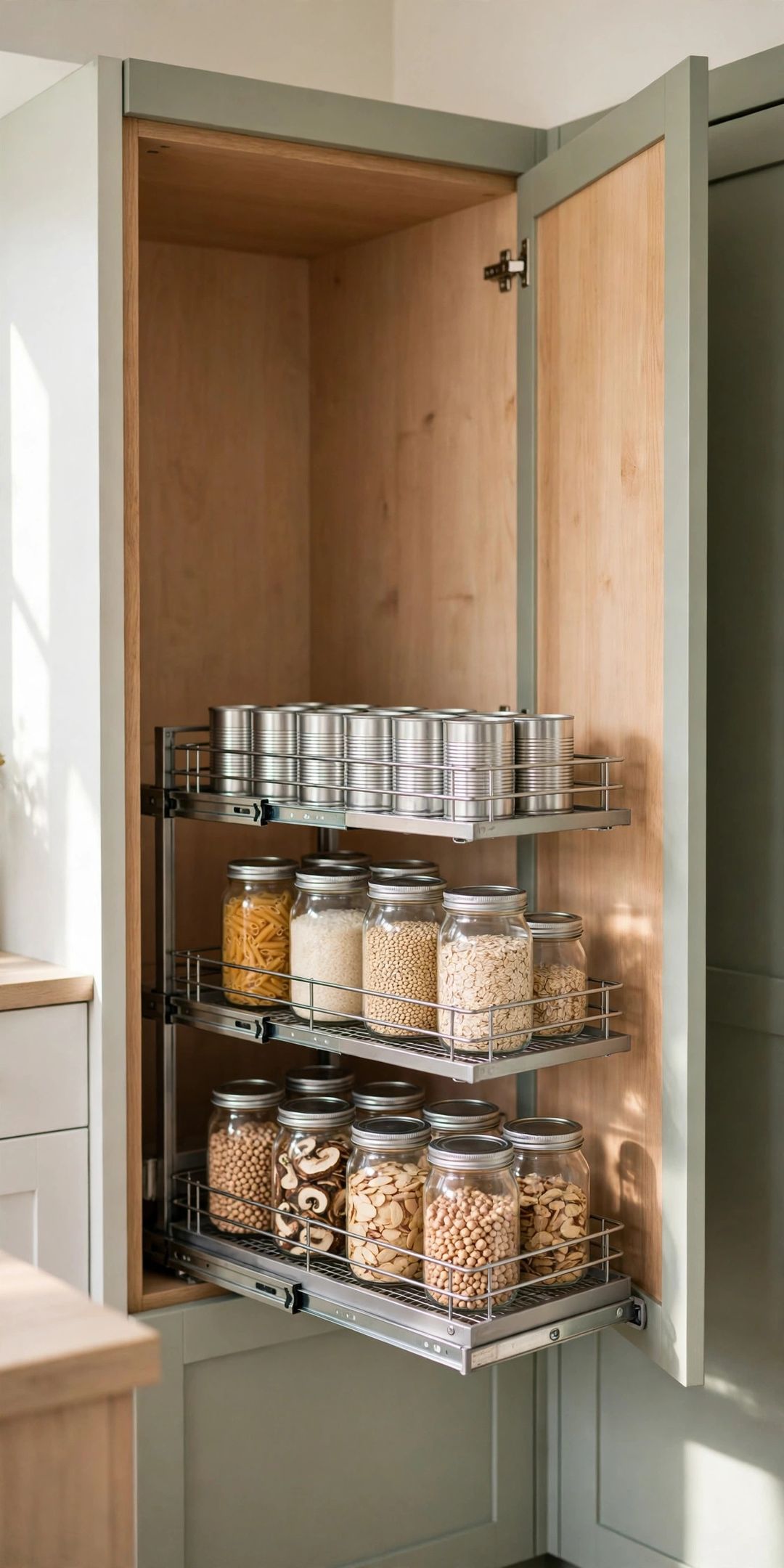
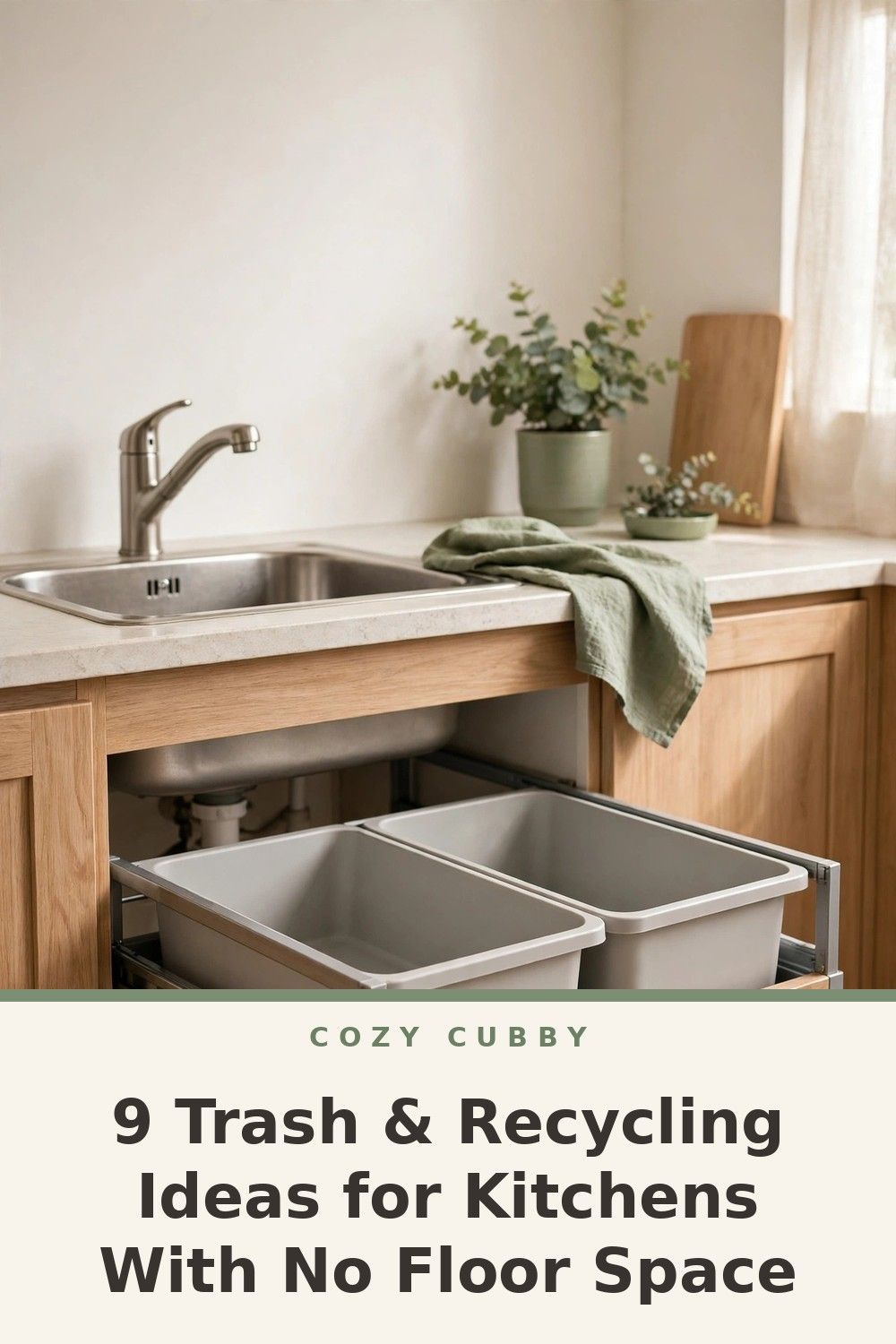
1. Pull-out cabinet bin frame. A metal frame with sliding tracks mounts inside a base cabinet and holds one bin that pulls out like a drawer. Measure cabinet width, depth, and hinge side first, since a door hinge or pipe can block the track. The setup hides trash well, but install takes tools and time. Typically $40–$90 for the frame and bin.
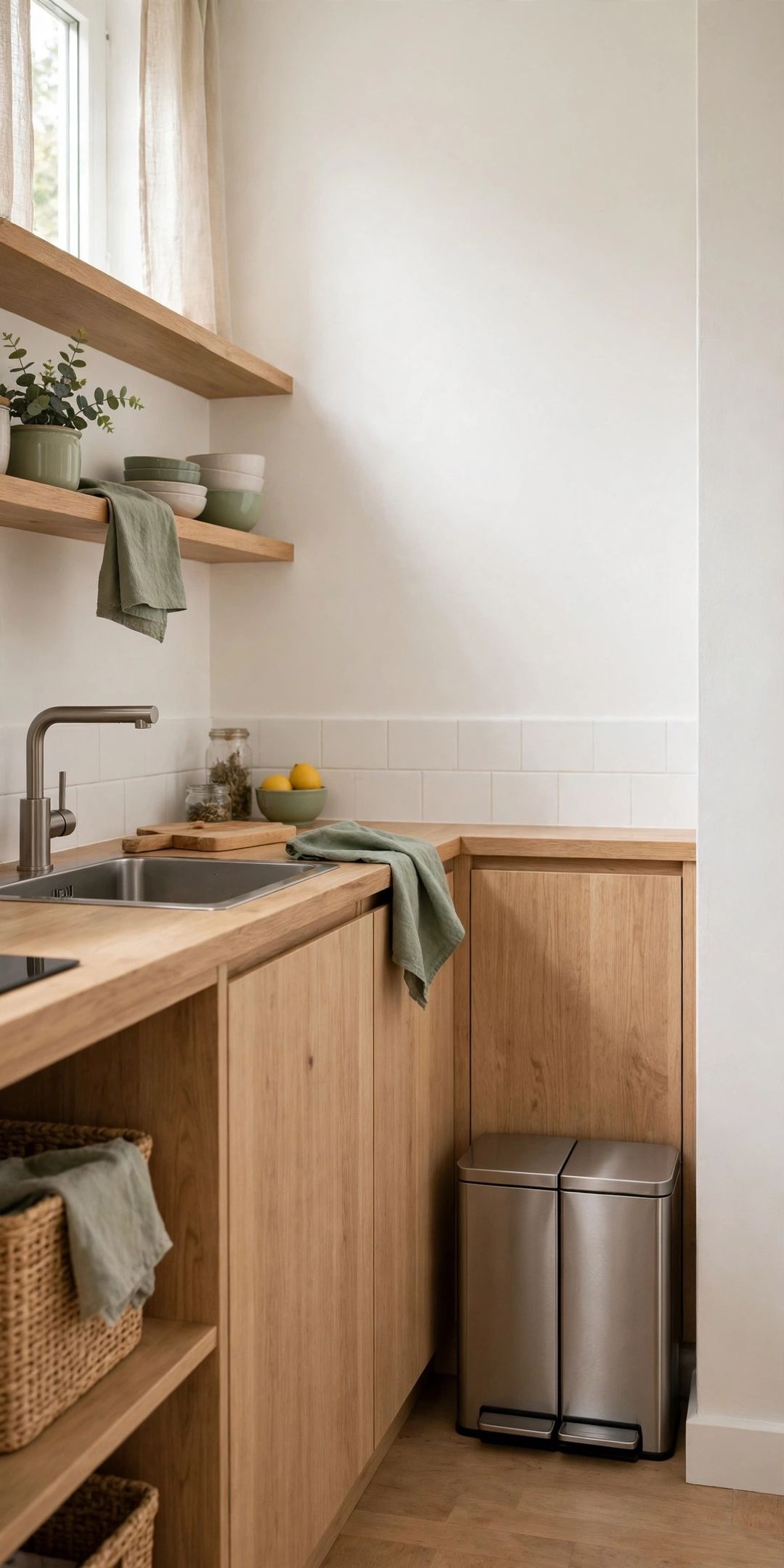
2. Double-bin pull-out for trash and recycling. This frame holds two bins side by side or front to back, often 7 to 8 gallons each, so trash and recycling sort at the source. A wide cabinet, usually at least 15 to 18 inches, is needed for a comfortable fit. Two smaller bins fill faster than one large bin, so trips out happen more often. Typically $80–$160.
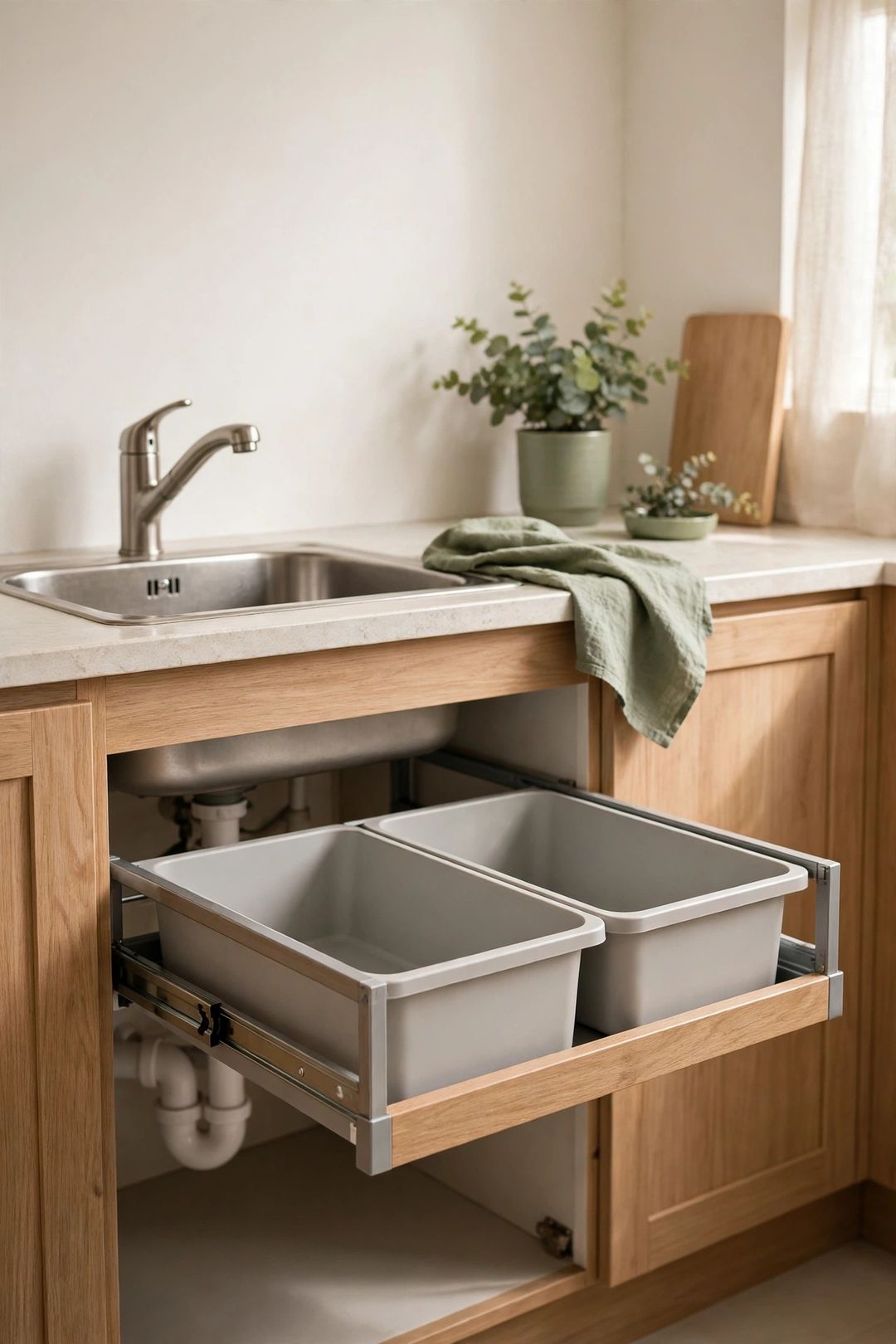
3. Under-sink sliding bin on a track. A low bin on a sliding track or tray fits under the sink and pulls forward for easy access. Short bins near 5 gallons suit the low height and the pipes in that cabinet. Leaks under a sink can reach the bin area, so a waterproof tray under the track adds useful protection. Typically $25–$55.
On Doors, Walls & Rails
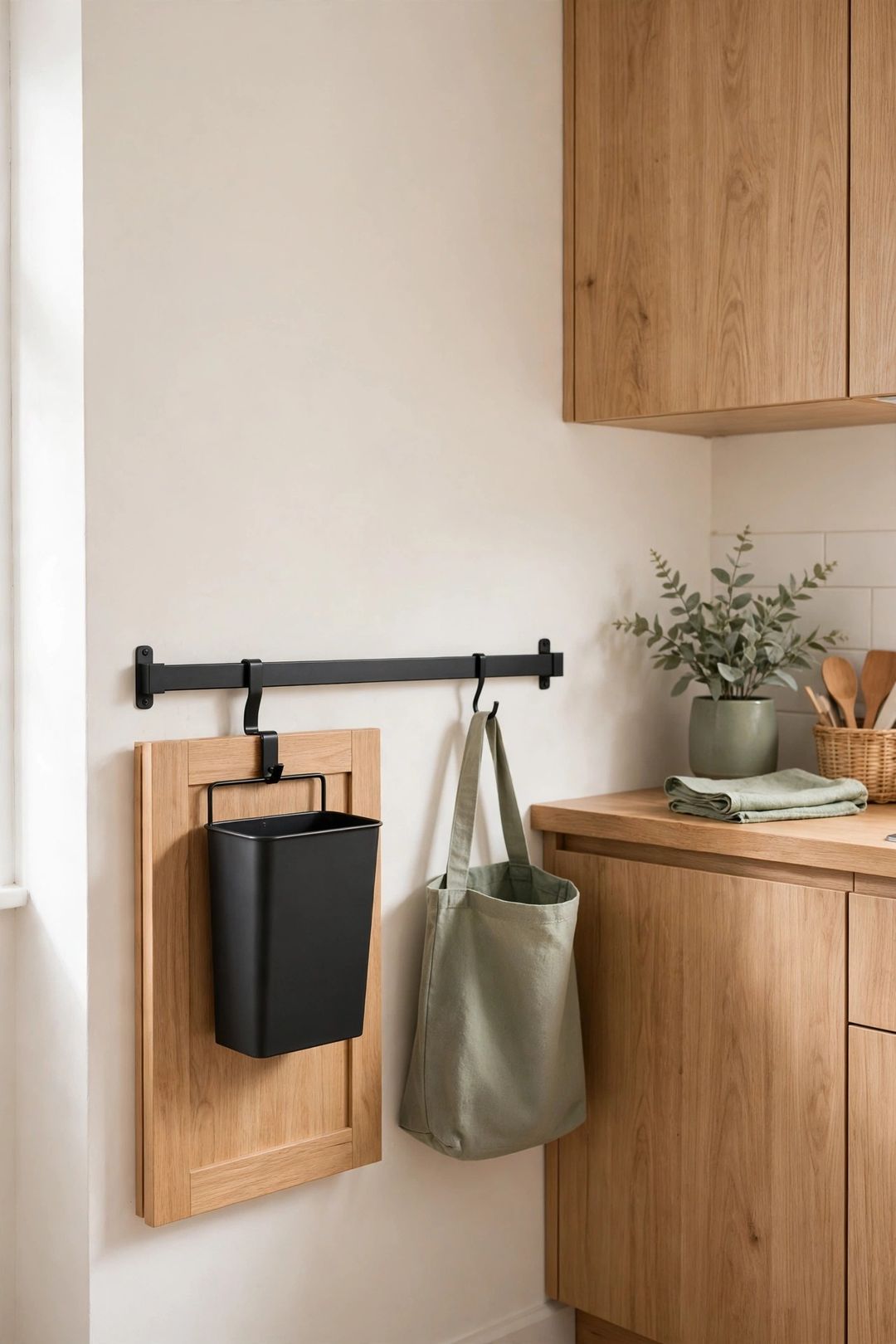
4. Over-cabinet-door mini bin for prep scraps. A small bin, often 1 to 2 gallons, hangs over a cabinet door below the cutting board area. Peelings and scraps sweep straight in during prep, then the bin empties into the main trash or compost. The small size fills in minutes during big meals, and thick doors may not close well with the hook in place. Typically $12–$25.
5. Hanging bag holder for recycling staging. A simple hook or frame on a wall, door, or cabinet side holds a bag open for cans and bottles during the day. The full bag then goes to a larger bin outside or in a closet. Bags can tear if glass gets heavy, so empty the holder before the load gets too weighty. Typically $8–$20.
6. Bag dispenser mounted inside a cabinet door. A slim holder screws or sticks inside a cabinet door and stores plastic or reusable bags in one neat roll or stack. Bags stop clogging a drawer, and a fresh liner sits right near the bin. Adhesive mounts can fail in heat or steam, so screws give a firmer hold on solid doors. Typically $10–$22.
Slim Gaps & Sorting Stations
7. Slim bin in the fridge-to-cabinet gap. A tall, narrow bin slides into the gap beside a fridge or stove. Realistic gap widths are tight, often just 5 to 8 inches, so measure at the narrowest point, including baseboards. A bin near 2 to 3 gallons suits this spot. The narrow shape tips more easily and holds little, so light recycling fits better than heavy trash. Typically $20–$40.
8. Countertop compost caddy with a lid. A small caddy, often under 1 gallon, sits on the counter for fruit scraps, coffee grounds, and eggshells. A lid helps contain smells, but odor still builds fast in a warm kitchen, so empty the caddy often, at least every day or two. As a no-cost option, a bowl in the freezer holds scraps with almost no smell until drop-off day. Typically $15–$30.
9. Two smaller bins instead of one big one. Two slim bins, each about 3 to 5 gallons, can split trash and recycling in a pantry corner, under a table, or at the end of a counter run. Sorting stays simple and each bin stays light to carry. The trade-off is clear: smaller bins mean more trips out, and two lids take a bit more time each day. Typically $15–$35 per bin.
What to Buy
Start with a pull-out frame for the main trash spot if a base cabinet can spare the room. The frame hides the bin, keeps odors out of sight, and uses dead cabinet space. Typically $40–$90, or $80–$160 for a double-bin version.
Add a slim bin for recycling if a 5 to 8 inch gap exists near the fridge or stove, and a small door bin for prep scraps near the cutting board. Both items cost little and solve daily mess points. Typically $20–$40 for a slim bin and $12–$25 for a door bin.
Finish with a countertop compost caddy only if scraps get collected for compost pickup or a garden bin. A lidded caddy near 1 gallon suits most counters. Typically $15–$30.
Mistakes to Avoid
- Skipping cabinet measurements. Width, depth, hinge side, and pipes all affect a pull-out frame. A frame that is half an inch too wide will not install.
- Buying a bin that is too small. A tiny bin looks neat but fills by midday in a busy home. Match bin size to daily trash, not just to the empty spot.
- Ignoring local recycling rules. Rules vary by city for glass, plastic types, and bag use. Check what the local program accepts before buying sorting bins.
- Blocking doors and drawers. A door bin or dispenser can stop a cabinet door from closing. Test the fit with the door shut before final mounting.
- Letting compost sit too long. A lidded caddy still builds odor in a warm kitchen. Empty scraps often or use a freezer bowl instead.
Frequently Asked Questions
What size trash bin works best in a small kitchen?
A 7 to 10 gallon pull-out bin suits most small kitchens with daily cooking. A 2 to 3 gallon slim bin works as a second bin for recycling, but the small size means more trips to the outside bin.
How can recycling fit with no floor space?
Use a double-bin pull-out inside a cabinet, a hanging bag holder on a door, or a slim bin in a narrow gap. Each option keeps recycling off the floor and close to the prep area for fast sorting.
Does a compost caddy smell?
A lid slows odor but does not stop odor. Scraps in a warm kitchen start to smell within a day or two. Empty the caddy often, wash the caddy each week, or store scraps in a freezer bowl.
Can a pull-out bin fit under any sink?
No. Pipes, disposals, and water filters take up much of the under-sink space. Measure the clear width, depth, and height first, and pick a short sliding bin made for tight under-sink cabinets.
Save this post to your kitchen organization board on Pinterest so these trash and recycling ideas stay handy for the next small kitchen fix.