Large tumblers are the hardest cups to store. They are tall, wide at the base or the rim, and they do not stack the way mugs do. Add a lid and a straw for each cup, and a single cabinet shelf can turn into a noisy avalanche every time a door opens.
This guide to a tumbler storage organizer cups and lids setup covers nine organizer types for large 30–40 oz tumblers, the size often described as Stanley-size. Each pick is a type of organizer, not a single product, so the ideas work in cabinets, drawers, and on countertops of different sizes. Measure first: note the height between shelves, the depth of the cabinet, and the diameter of the widest tumbler before buying anything.
Start by counting what needs a home: every tumbler, every lid, and every straw. Lids need their own plan, because a lid stored on top of a tumbler adds height, while a lid stored loose slides to the back of a shelf. The picks below solve both problems, one zone at a time.
Cabinet Shelf Organizers
1. Adjustable stackable shelf riser. Best for tall cabinets with wasted air above short items, this riser adds a second level so tumblers can stand on two heights instead of crowding one shelf. Look for a riser tall enough to clear a large tumbler plus its lid, and wide enough that cups do not touch. One honest drawback: a riser that is too short forces lids off, which defeats the purpose. Typically $15–$30.
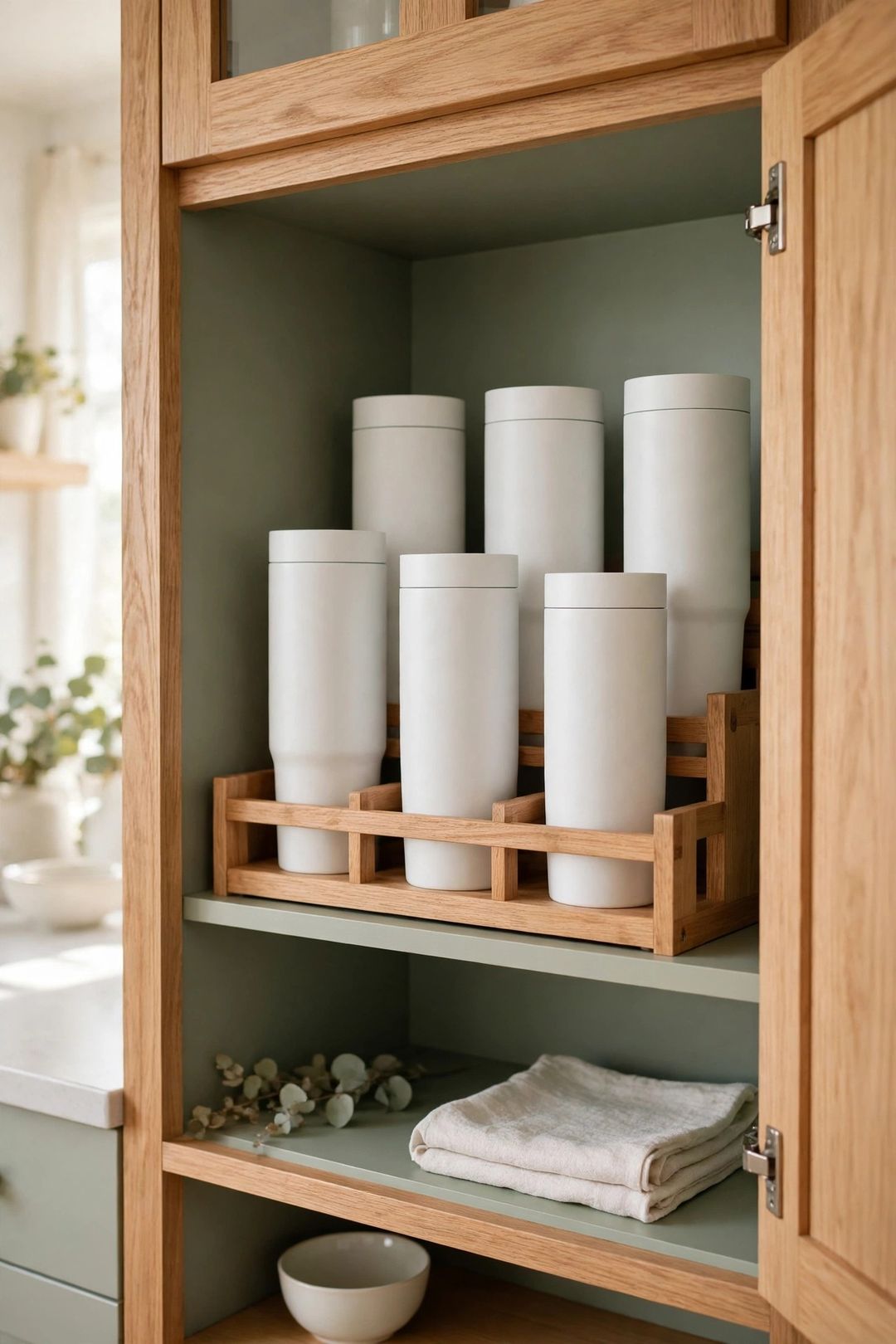
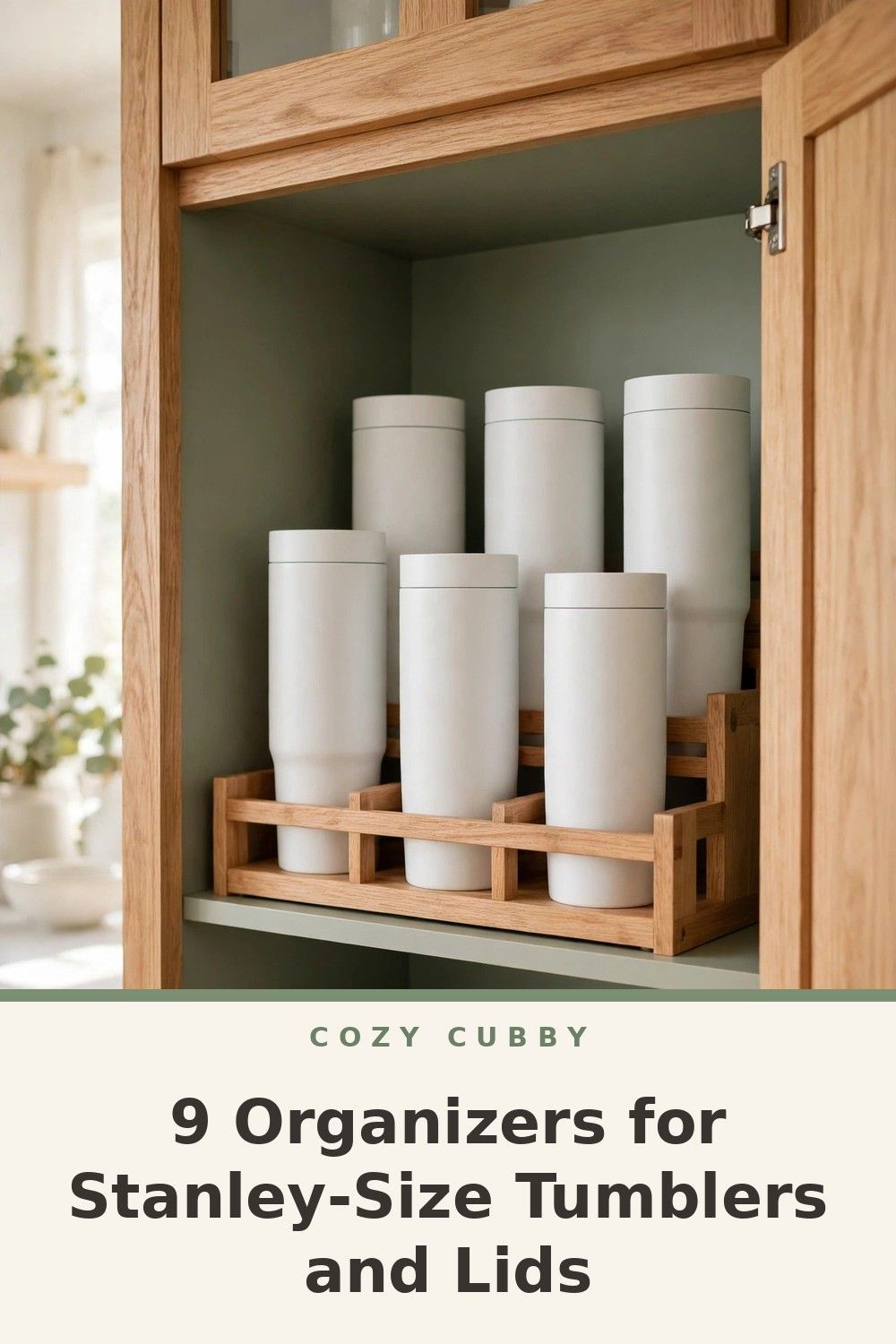
2. Vertical tumbler holder with upright slots. Best for keeping large tumblers standing in a neat row, this holder grips each cup upright in its own slot so cups cannot tip into each other. It works well on a deep shelf where tumblers would otherwise roll. The drawback is width: each slot is sized for a wide cup, so a holder for four tumblers takes up more shelf space than loose cups. Typically $18–$32.
3. Under-shelf hanging tumbler rack. Best for cabinets with an unused shelf underside, this rack hooks over a shelf and hangs tumblers below it by their rims or handles, freeing the shelf surface itself. It is a good fix when the shelf above is too low for standing cups. The drawback: hanging cups swing when the door opens, and heavy filled cups should never hang here. Typically $12–$25.
Drawer and Countertop Organizers
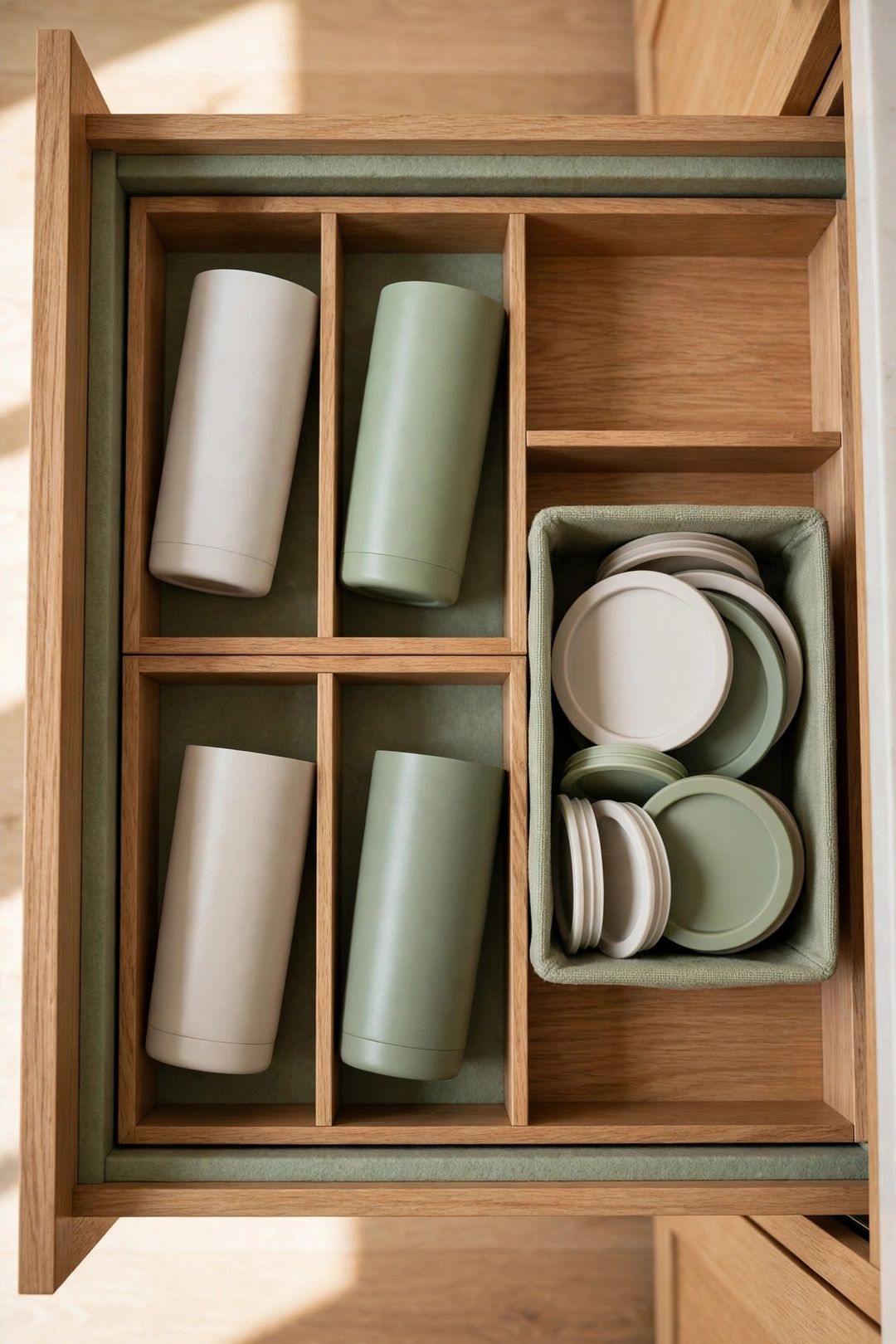
4. Deep-drawer tumbler divider insert. Best for kitchens with a deep drawer to spare, this insert divides the drawer into wide channels so each large tumbler lies on its side without rolling. Lying flat uses drawer depth well and keeps tall cups out of cabinets entirely. The drawback is drawer size: shallow drawers cannot fit a wide tumbler, and the drawer loses space for other tools. Typically $20–$38.
5. Rotating countertop tumbler carousel. Best for the tumblers used every day, this turntable-style stand holds several cups upright on a counter and spins so the right cup comes forward. It keeps daily cups visible and reachable without opening a cabinet. The drawback is counter space: a carousel for large cups has a wide footprint, and it collects dust and splashes near a sink. Typically $22–$40.
6. Countertop tumbler tree stand. Best for drying and storing cups together, this stand holds tumblers upside down on pegs or arms so air can circulate inside each cup. It suits kitchens where cups are washed often and need a landing spot between uses. The drawback: a full tree is top-heavy, and very wide tumblers may not fit every peg spacing. Typically $18–$35.
Lid, Straw, and Door Organizers
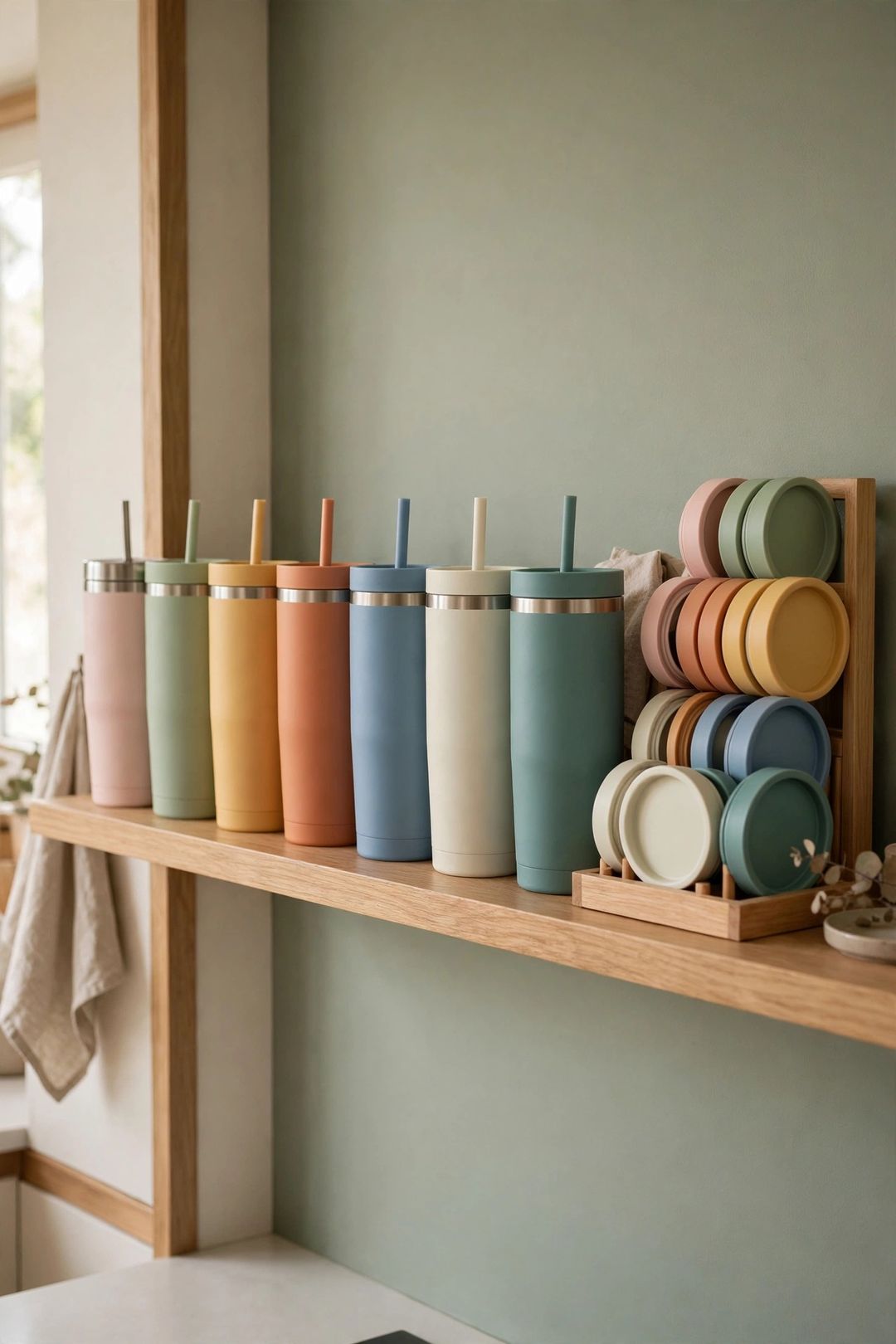
7. Vertical lid file rack. Best for the lid pile, this rack files lids upright like folders, sorted by size, so the right lid can be pulled without lifting a stack. It fits inside a cabinet, on a shelf, or in a deep drawer. The drawback is lid shape: flat lids file neatly, while domed or handled lids may not sit straight in narrow slots. Typically $10–$22.
8. Over-door lid and straw rack. Best for small kitchens with no spare shelf, this rack hangs inside a cabinet or pantry door and holds lids in slots with a small cup or pocket for straws and cleaning brushes. It turns dead door space into a lid station. The drawback: a loaded door rack can stop a door closing flush, so check door clearance and hinge strength first. Typically $14–$28.
9. Lidded small-parts caddy for straws and seals. Best for the small pieces that vanish first, this divided caddy holds straws, straw brushes, silicone seals, and spare stoppers in separate sections, with a lid to keep dust out. Keep it beside the tumbler zone so every part stays with its cups. The drawback: a caddy only helps if straws and seals go back in it after washing, which takes a short daily habit. Typically $8–$18.
What to Buy
Adjustable stackable shelf riser — the best first buy for most cabinets, because it doubles usable height for tall tumblers without any installation. Typically $15–$30.
Vertical lid file rack — the buy that ends the lid hunt, since filed lids are visible at a glance and the rack fits almost any cabinet or drawer. Typically $10–$22.
Over-door lid and straw rack — the best buy for tight kitchens, because it adds a full lid station to space that was doing nothing. Typically $14–$28.
Mistakes to Avoid
- Buying before measuring height. Large tumblers with lids need more clearance than the cup alone, so measure shelf height with the lid on.
- Stacking tumblers inside each other. Nested cups wedge tight, trap moisture, and scratch finishes, and the bottom cup is hard to pull out.
- Storing lids in a loose pile. A pile hides the lid needed and lets small seals slide to the back of the shelf.
- Forgetting straws and seals. A tumbler without its straw or seal is only half stored, so give small parts a caddy beside the cups.
- Overfilling one shelf. A crowded shelf tips cups when one is pulled out, so leave a finger-width gap around each tumbler.
Frequently Asked Questions
How tall does a shelf need to be for a large tumbler?
Measure the tumbler with its lid on, then add about an inch of clearance so the cup lifts out without scraping the shelf above. Large 30–40 oz tumblers are often 8 to 10 inches tall with a lid, so many standard shelves need a riser change or a different zone.
Should tumblers be stored with lids on or off?
Either way works if the plan is consistent. Lids on keep cup and lid together but add height. Lids off save height and let cups air out, but only if lids live in a file rack or door rack right beside the cups.
What is the best way to store tumbler lids?
File lids upright in a rack, sorted by size, rather than stacking them flat. Upright filing shows every lid at once and stops the bottom lid from being trapped under the pile.
Where should straws and cleaning brushes go?
Keep them in a small divided caddy or a door-rack pocket next to the tumblers, not in a general utensil drawer. Straws stored with their cups get used and washed, instead of being bought again.
Count the tumblers, measure the tallest one with its lid on, and pick one shelf fix plus one lid fix to start. Save this post to your kitchen organization board on Pinterest so the nine organizer types and their sizes are handy when you shop.