A coat closet near the kitchen is often wasted space. It holds a few jackets, a vacuum, and a pile of bags, while food crowds the kitchen counters and cabinets just a few steps away.
Learning how to turn a closet into a pantry small kitchen style can solve that problem without a remodel. A closet pantry puts food in one visible place, close to the stove, with shelves sized for real groceries instead of coat hooks.
Follow these steps in order, from measuring to stocking. Most of the work is simple, and renters can use no-drill options at the steps where drilling would normally be needed.
1. Measure the Closet and the Doorway
Measure height, width, and depth, plus the doorway and the path to the kitchen. Write down every measurement before buying shelves, bins, or a door rack.
Check for vents, pipes, and baseboards that could block a shelf, and measure the door opening too.
2. Clear Everything Out and Decide What Stays
Empty the closet completely, then sort every item into keep, move, or remove. Coats and gear that belong elsewhere should move to a bedroom closet, a hall hook, or another storage spot.
If coats stay mixed in with cans, the shelves fill up fast and the pantry stops working.
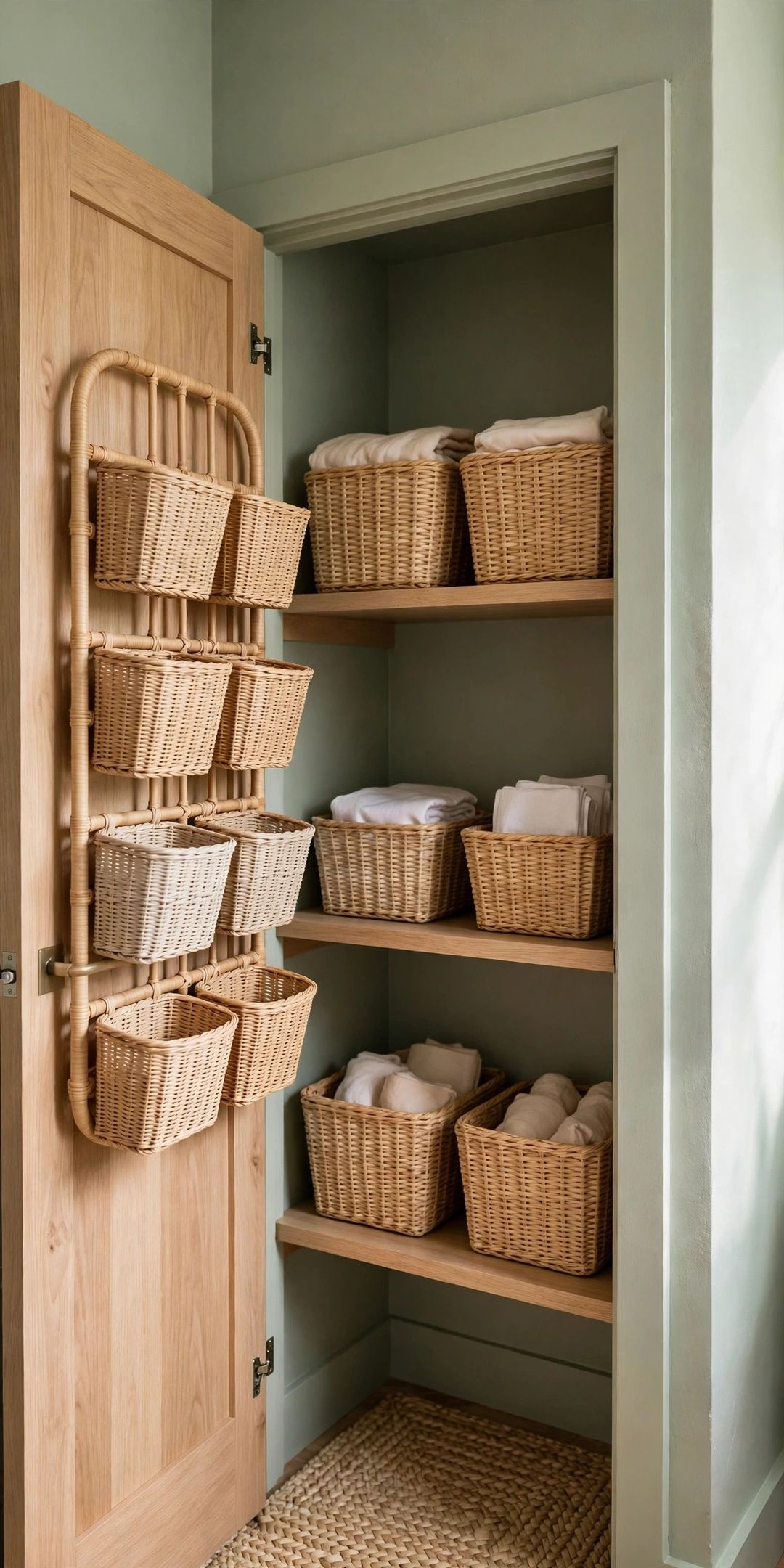
3. Clean the Closet From Top to Bottom
Wipe shelves, walls, and the floor, and vacuum dust from corners and tracks. A clean closet keeps food fresh and makes paint and labels stick better later.
Check for damp spots or peeling paint before adding food, and fix small issues first.
4. Paint and Freshen the Inside
Paint the inside a light color to brighten the small space and make labels easy to read. A light wall color helps a dark closet feel open, even before lighting is added.
Let paint dry fully before adding shelves or food. Renters can use removable wallpaper instead.
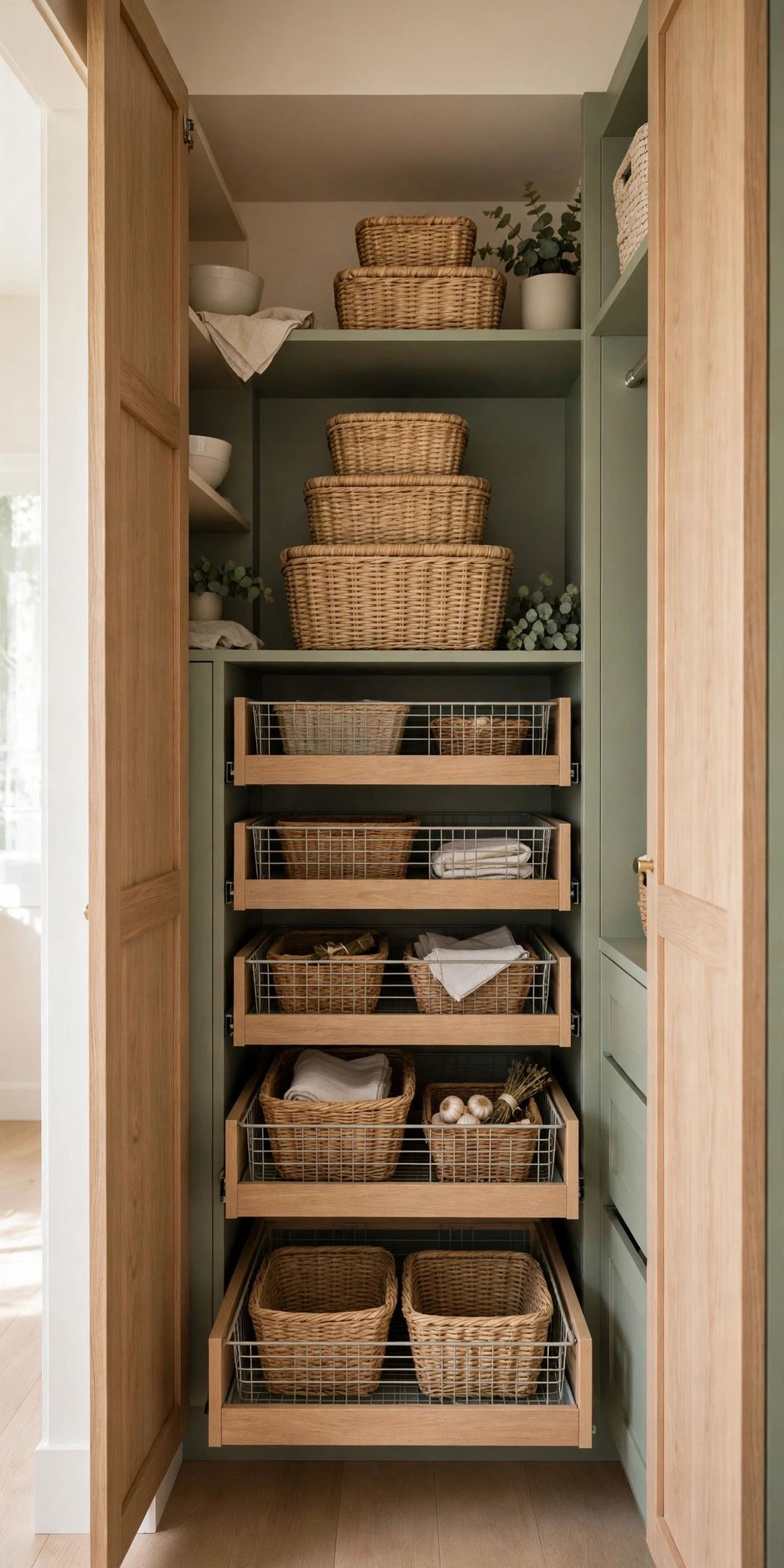
5. Plan Shelf Heights for Real Groceries
Sketch shelf heights around the tallest items, such as cereal boxes, oil bottles, and large cans. Varied heights waste less space than shelves spaced evenly from top to bottom.
Give daily items a tall, easy-to-reach shelf, and reserve short shelves for cans and jars.
6. Add Shelving at Varied Heights
Install sturdy shelves at the planned heights, starting from the bottom and working up. Test each shelf with a few heavy cans before loading it fully, to make sure it feels solid.
Renters can use freestanding shelf units or stackable risers that need no drilling.
7. Add Door Storage for Small Items
Use the inside of the door for spices, wraps, packets, and small bottles. Door storage turns a wasted surface into useful space and keeps small items from getting lost on deep shelves.
Pick a rack for flat items and light jars, and check that the door still closes. Renters can use an over-door rack with no screws.
8. Create Simple Pantry Zones
Group food by use: daily cooking, breakfast, baking, snacks, and backstock. Put daily cooking at eye level, breakfast nearby, baking higher up, and backstock on the lowest or highest shelf.
When every category has a shelf, finding ingredients takes seconds.
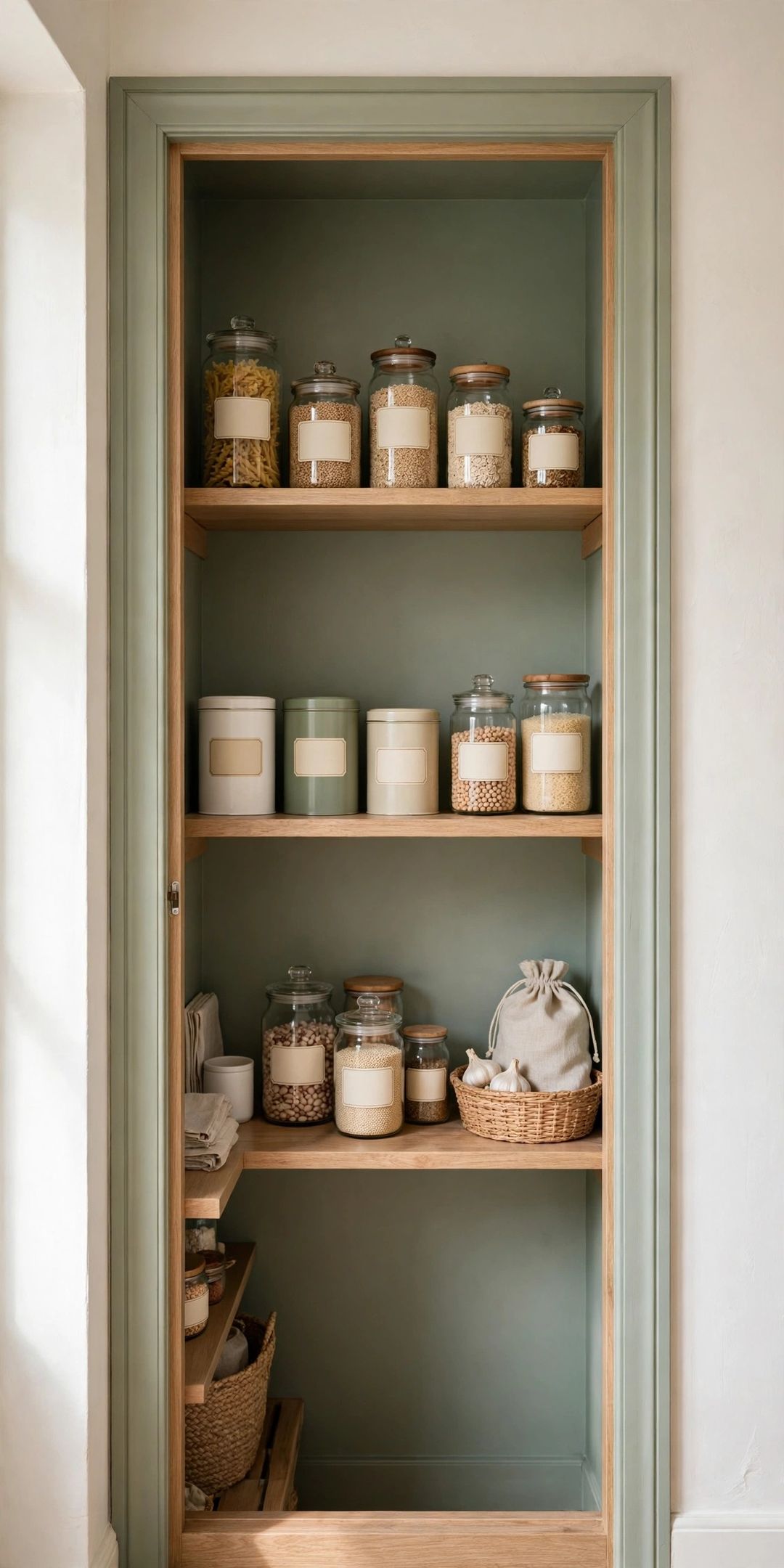
9. Label Every Shelf and Bin
Label shelves, bins, and containers with clear names that everyone in the home can follow. Labels keep zones in place, even when someone else puts groceries away.
Date opened containers too, so older food gets used first.
10. Add Lighting So Every Shelf Is Visible
Add a light that reaches every shelf, especially the top and bottom rows. A dark closet pantry hides food, and hidden food gets bought twice or forgotten.
Battery lights with adhesive backing need no wiring, a good renter-friendly choice.
11. Stock in Order, Heaviest First
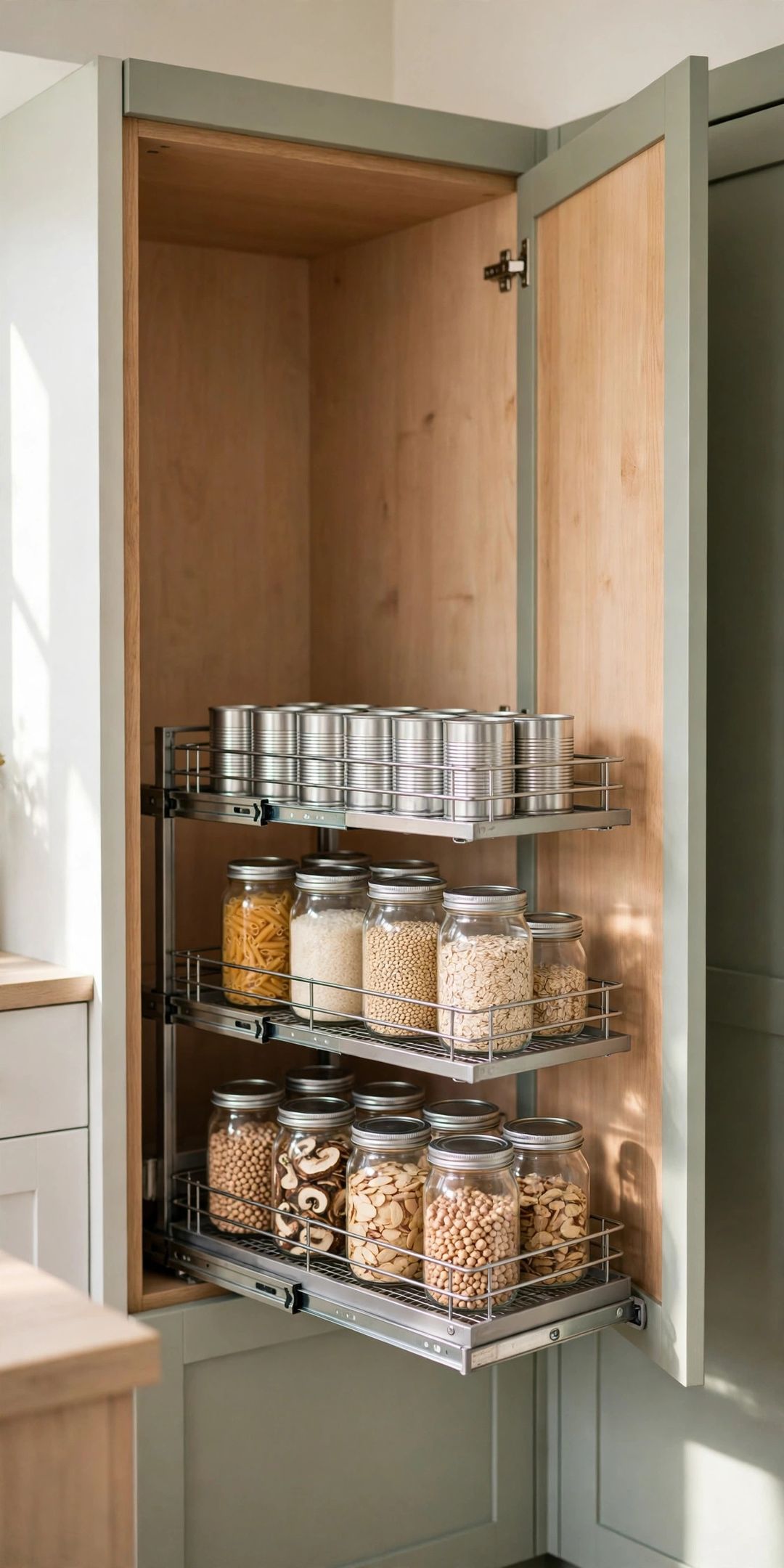
Stock the pantry from the bottom up, with heavy cans and large bags low and light items high. Place new items behind older ones, so the oldest food gets used first.
Start with daily cooking at eye level, then fill the other zones, and adjust one shelf now if a zone feels cramped.
What to Buy
A freestanding shelf unit, typically $35–$70. Pro: It adds varied shelf heights with no drilling, ideal for renters. Con: It may not use every inch of a custom closet. Skip if: Fixed wall shelves already fit the closet well.
An over-door pantry rack, typically $18–$30. Pro: It adds storage for spices and small items without using shelf space. Con: It can rattle if overloaded with heavy jars. Skip if: The closet door is sliding or bifold and cannot hold one.
Clear storage bins, typically $12–$25 for a set. Pro: Bins group snacks and packets so they stay in their zone. Con: Deep bins can hide items at the back. Skip if: Shelves are shallow and items stay visible without bins.
Battery lights with adhesive backing, typically $10–$20 for a set. Pro: They light every shelf with no wiring or drilling. Con: Batteries need replacing over time. Skip if: The closet already has a working built-in light.
A label set, typically $6–$14. Pro: Clear labels keep zones in place for everyone in the home. Con: Labels need updating when contents change. Skip if: A marker on painter's tape already gives readable labels.
Mistakes to Avoid
- Buying shelves before measuring. Shelf depth and height decide what fits. Measure first, or shelves end up stored elsewhere instead of in the closet.
- Keeping coats mixed in with food. A half-pantry, half-coat closet fills up fast and hides food behind jackets. Move coats out before stocking.
- Spacing every shelf evenly. Even spacing wastes space above short cans and crowds tall bottles. Vary heights around real groceries.
- Skipping lighting. A dark closet pantry hides food on the top and bottom shelves, which leads to duplicate buying and forgotten items.
- Stocking without zones or labels. Food placed wherever there is a gap turns back into clutter within weeks. Zones and labels keep the system working.
Frequently Asked Questions
Can renters turn a closet into a pantry without drilling?
Yes. Use freestanding shelf units, stackable risers, an over-door rack, adhesive lights, and removable liners instead of paint.
What size closet works as a pantry?
Most coat and hall closets work, as long as shelves fit the depth and the door closes fully.
Should food be stored in the original packaging or in containers?
Keep rarely used mixes in their original packaging. Move daily staples like flour and rice into airtight containers.
How close should the closet be to the kitchen?
A hall closet just outside the kitchen works well, because ingredients stay within a few steps of the stove.
A closet pantry turns wasted coat space into a working part of the kitchen, with food visible, grouped, and easy to reach. Save this post to your Kitchen Organization board on Pinterest so the steps are handy when the closet conversion starts.