The space under your bed is likely the biggest unused storage spot in your home. These under bed storage ideas turn that flat, dusty area into a place for shoes, off-season clothes, spare bedding, and items you need a few times a year, without adding a single piece of furniture to the room.
Start with clearance. Most bed frames give 5 to 7 inches of space underneath, while platform frames can give less and simple metal frames can give more. Measure from the floor to the lowest rail or slat, not to the mattress. Bed risers can add about 3 to 6 inches, but only use risers made for your frame type, and check that the bed still feels steady.
Also measure length and width. Legs and center rails can split the space into smaller sections, and a bin half an inch too tall will not slide in.
1. Everyday Items You Still Need to Reach
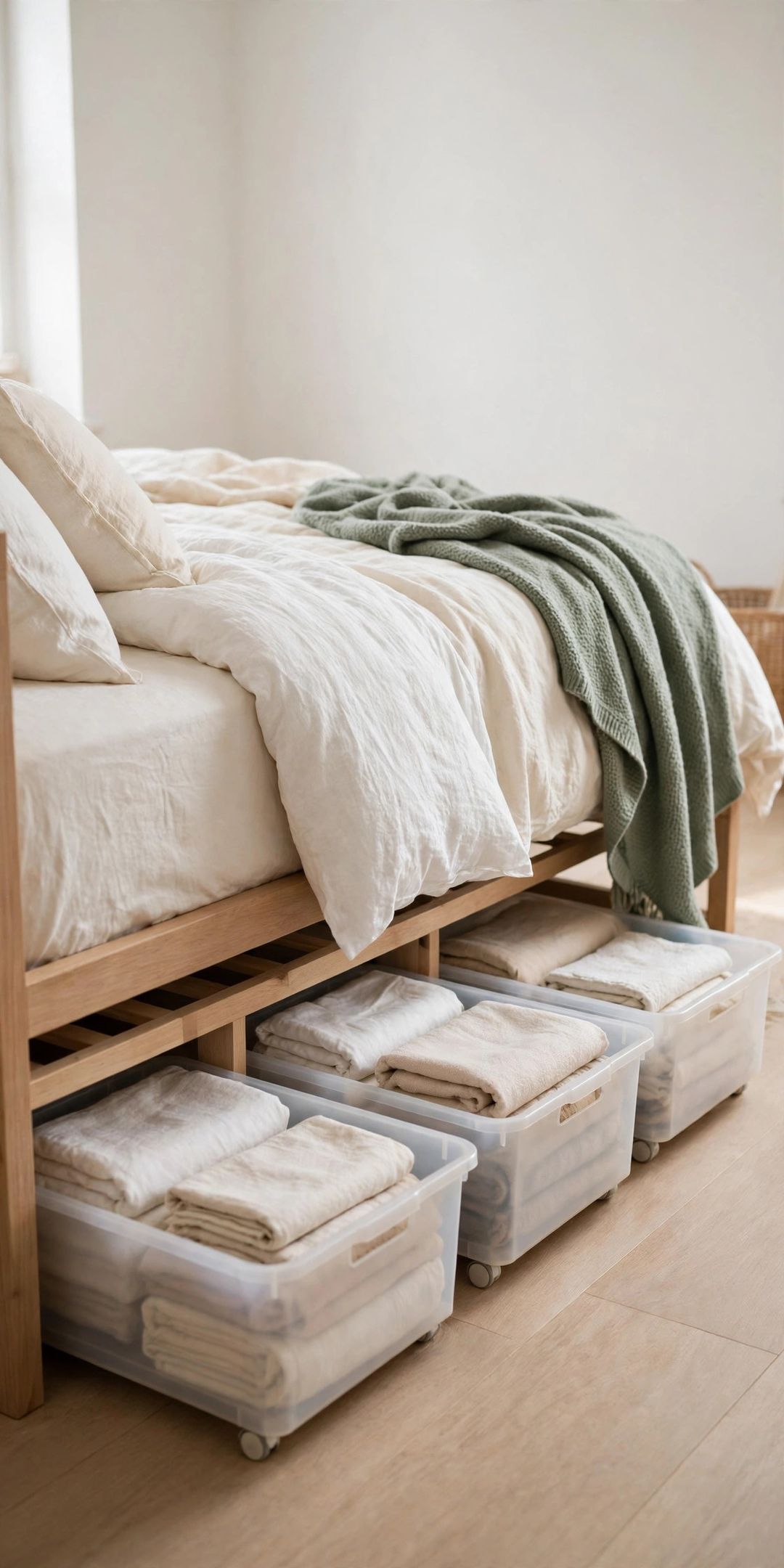
1. Rolling low-profile bins. Flat bins on small wheels, usually 5 to 6 inches tall including the wheels, slide out without dragging on carpet. Use them for shoes, bags, or clothes you still wear this season. The wheels add height, so measure with them included. Typically $20–$40.
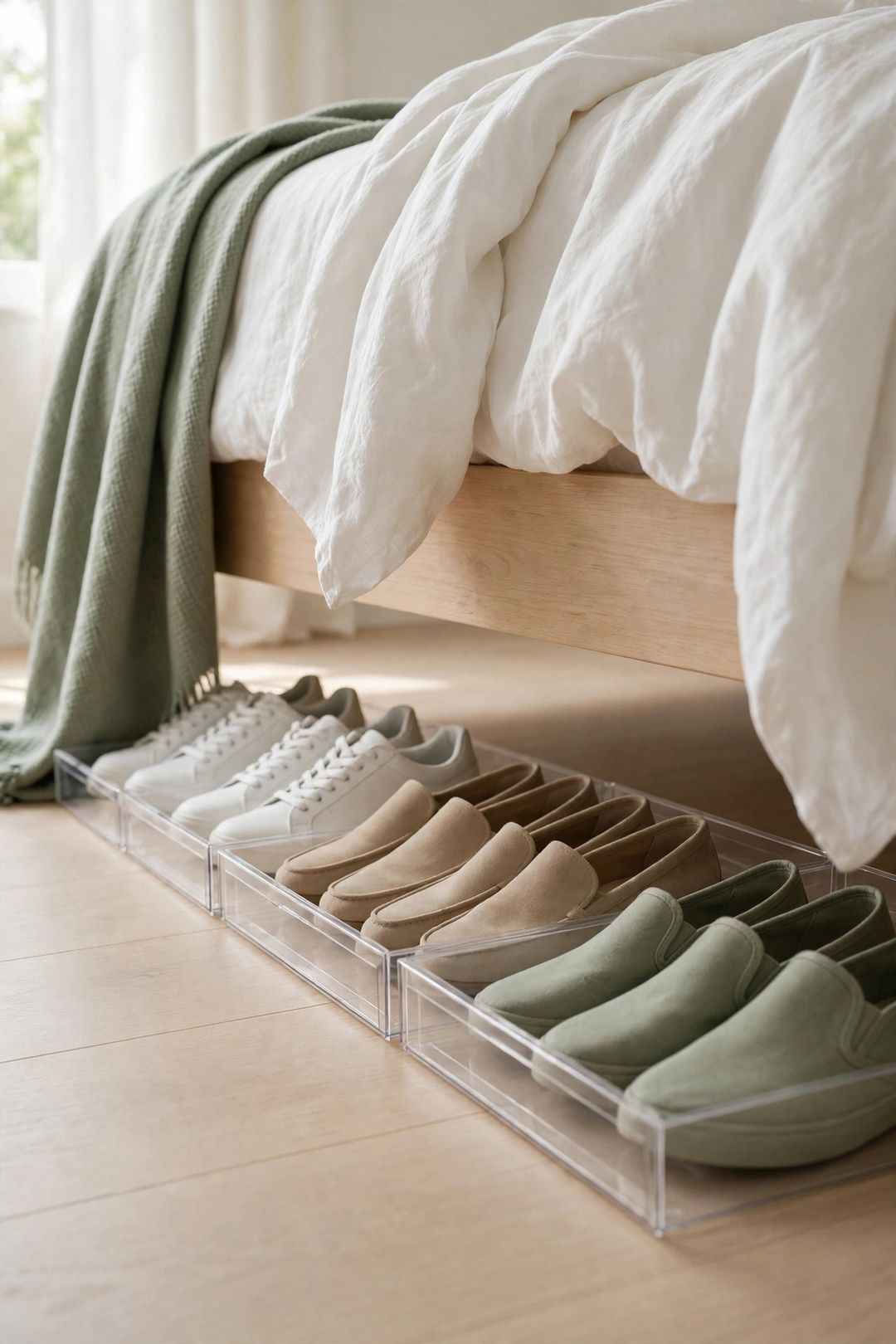
2. Under-bed shoe organizer. A soft organizer with 12 to 16 clear sections, about 5 to 6 inches tall, keeps pairs visible and dust off. Best for flat shoes and sneakers, not tall boots or heels. Typically $12–$25.
3. Low-profile drawers. Shallow drawers on runners or wheels, about 6 inches tall, give a built-in feel and open without pulling the whole unit out. They suit daily items like pajamas and workout clothes. Typically $35–$70.
4. Flat tray for books and chargers. A shallow tray or divided box, 3 to 4 inches tall, can hold a small bedside overflow kit in a guest room or a child's room. Keep it near the edge. Typically $10–$20.
2. Seasonal and Bulky Items
5. Vacuum storage bags for off-season bedding. Bulky comforters, duvets, and winter blankets shrink down to a flat pack about 3 to 5 inches thick once the air is removed. The bags can slowly leak air over months, so check them when you swap seasons. Typically $15–$30.
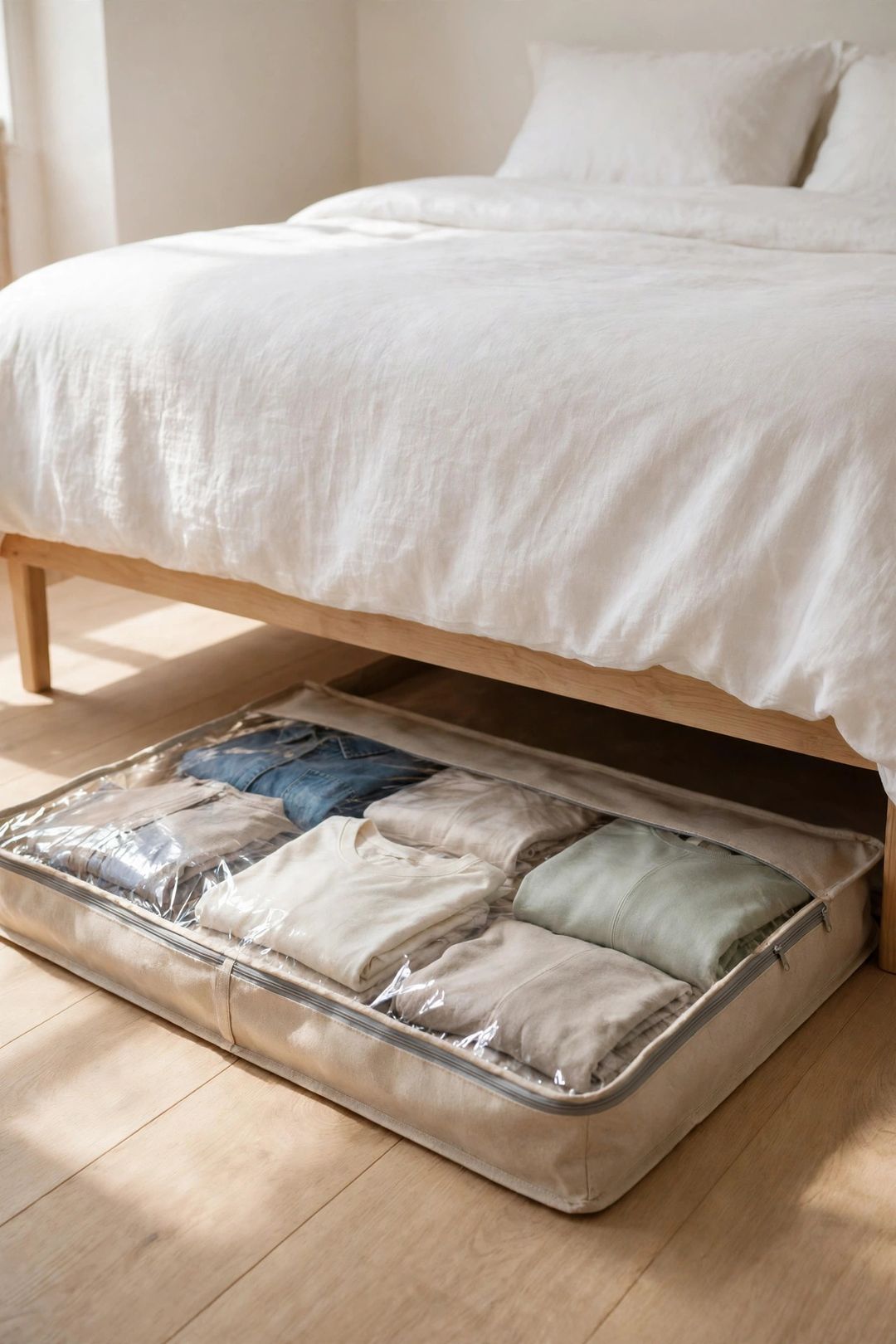
6. Seasonal clothing rotation bins. Put out-of-season clothes in two flat, lidded bins, one for each side of the bed, and swap them when the weather changes. Label the end that faces out. Typically $18–$35.
7. Soft zip bags for spare bedding. Fabric bags with handles, about 5 to 6 inches tall when not overfilled, hold a full spare sheet set, pillowcases, and a light blanket for guests. Soft sides bulge if you stuff them, which can push them over your clearance height. Typically $12–$24.
8. Holiday and gift wrap flat box. A long, flat box, about 4 inches tall and 30 to 40 inches long, keeps wrapping paper rolls, ribbons, and cards together in the center space that shorter bins leave empty. Typically $12–$22.
3. Long-Term and Forgotten Items
9. Luggage as storage inside storage. Empty suitcases already under the bed can hold keepsakes, spare cords, or out-of-season items instead of sitting empty. Label the contents inside the lid. Typically $0 if you own the luggage.
10. Keepsake and photo boxes. Flat archival-style boxes, about 4 to 5 inches tall, protect photos, letters, and school papers better than a loose pile. Keep them away from heat vents and anywhere a leak could reach. Typically $10–$25.
11. Board games and puzzles. Long, flat game boxes stack neatly in the center section under a bed, a spot that is awkward for bins you open often. Stack no more than three or four high, or the bottom box will crush under the weight. Typically $0–$15 for a flat tray to corral them.
12. Spare guest kit. A flat bin with a spare towel set, travel-size basics, and an extra phone charger keeps guest supplies in one place instead of scattered across closets. Refresh it once or twice a year. Typically $15–$30.
13. A labeled “deal with it later” box. One flat, clearly labeled box for items waiting on a decision, like cords without a device or parts for a repair, stops them from spreading across drawers. Set a date on the label, and sort or donate the contents when that date arrives. Typically $8–$18.
What to Buy
Rolling low-profile bin, typically $20–$40. Pro: wheels make heavy bins easy to pull out, even on carpet. Con: wheels add height and can snag on rug edges. Skip if: your clearance is under 5 inches, even with the lid removed.
Vacuum storage bags, typically $15–$30. Pro: they shrink bulky bedding to a fraction of its size. Con: bags can leak air slowly and need a vacuum to reseal. Skip if: the item is leather, fur, or anything the bag maker warns against compressing.
Soft zip under-bed bags, typically $12–$24. Pro: flexible sides fit uneven spaces and handles make them easy to grab. Con: they offer little protection if something heavy lands on top. Skip if: you need stackable, rigid storage or protection from moisture.
Under-bed shoe organizer, typically $12–$25. Pro: clear sections keep pairs visible and separated. Con: most cells are too small for boots and high heels. Skip if: most of your shoes are tall or wide.
Rigid lidded bins, typically $18–$35. Pro: solid sides and lids stack well and keep dust out. Con: a hard lid needs full clearance, so a bin that almost fits still will not work. Skip if: your frame has low center rails that split the space into narrow sections.
Mistakes to Avoid
- Guessing the clearance: measure floor to the lowest rail or slat, because that number, not the mattress height, decides what fits.
- Storing daily items in the center: the middle is hard to reach, so save it for seasonal and rarely used things.
- Skipping labels: flat bins all look the same from the side, so label the end that faces out into the room.
- Overfilling soft bags: a bulging bag can rise above your clearance and jam under the frame.
- Forgetting dust and moisture: use lids or zip bags, vacuum the space first, and keep important papers off a floor that could get wet.
Frequently Asked Questions
How much clearance do most beds have underneath?
Most frames give about 5 to 7 inches, but platform frames can give less and plain metal frames can give more. Measure from the floor to the lowest rail, slat, or support leg in the section you plan to use.
Are bed risers safe to use for more storage space?
Risers made for your frame type can add about 3 to 6 inches. Follow the maker's weight limits, place them on a flat floor, and test the bed for wobble before storing anything heavy underneath.
What should not go under a bed?
Avoid important documents without protection, items that moisture could ruin, heavy things you would have to drag across the floor, and anything you need every day. Food and scented items belong elsewhere too.
How do I keep under-bed storage from getting dusty?
Choose bins with lids or zip-closed bags, vacuum under the bed before you load it, and pull each bin out for a quick wipe when you swap seasonal items. A low bin on wheels is easier to move for cleaning than a soft bag you have to drag.
The space is already there — it just needs a tape measure and a plan. Start with one bin, and save this post to your bedroom organization board on Pinterest so the clearance notes are ready before you buy.