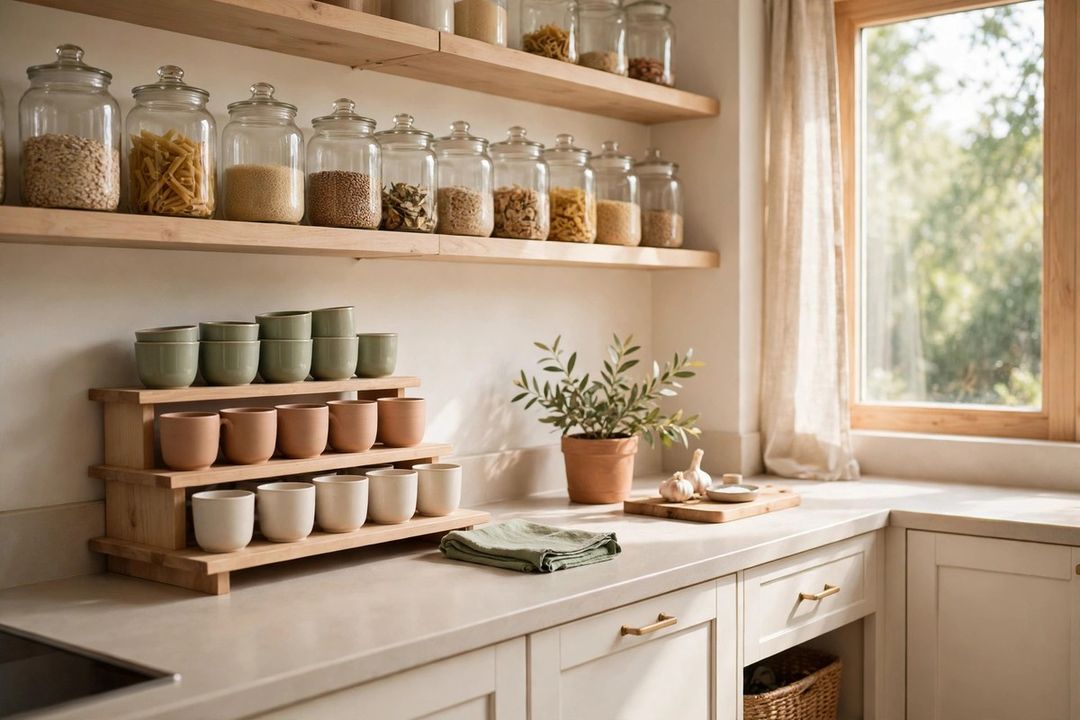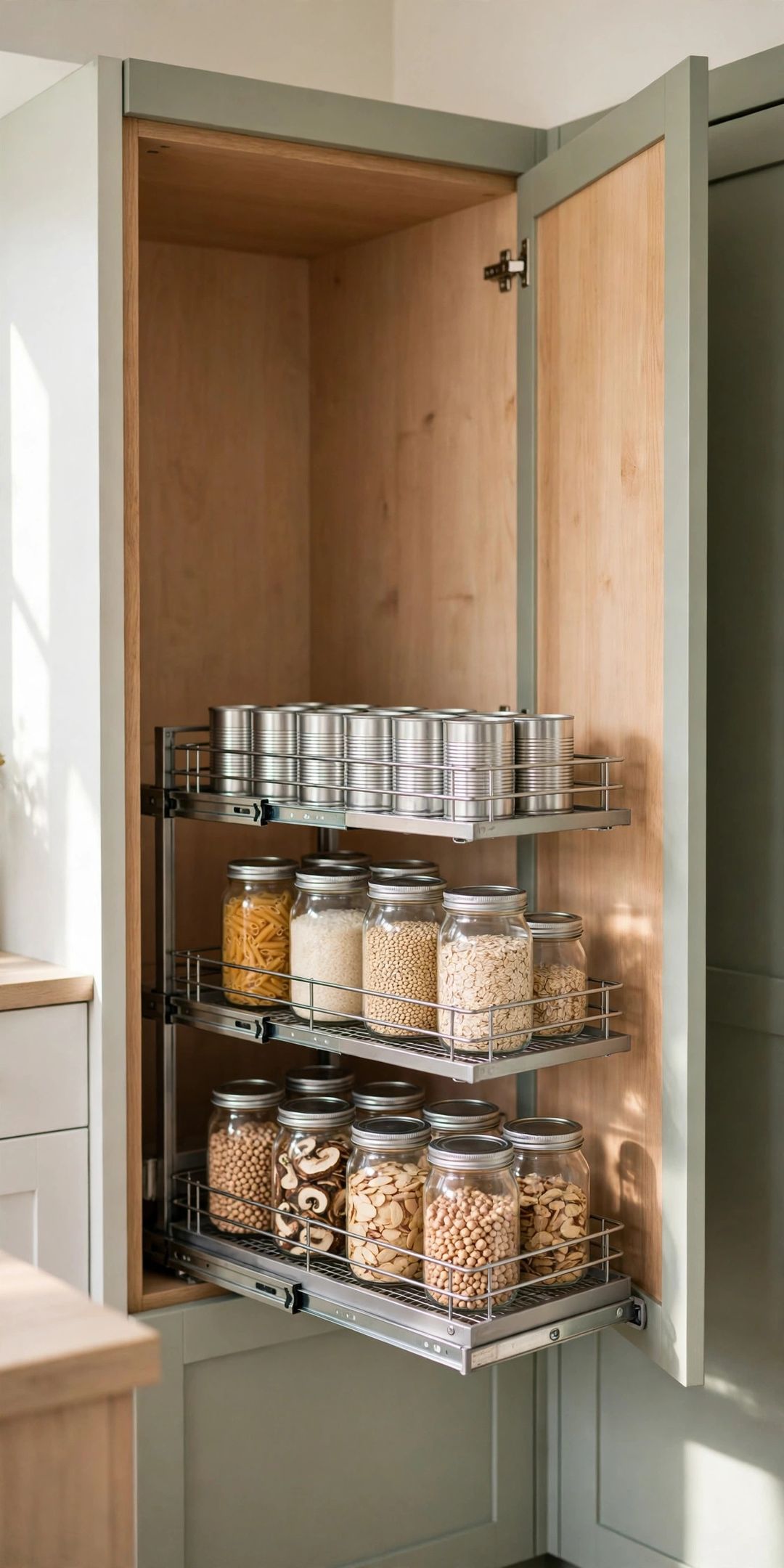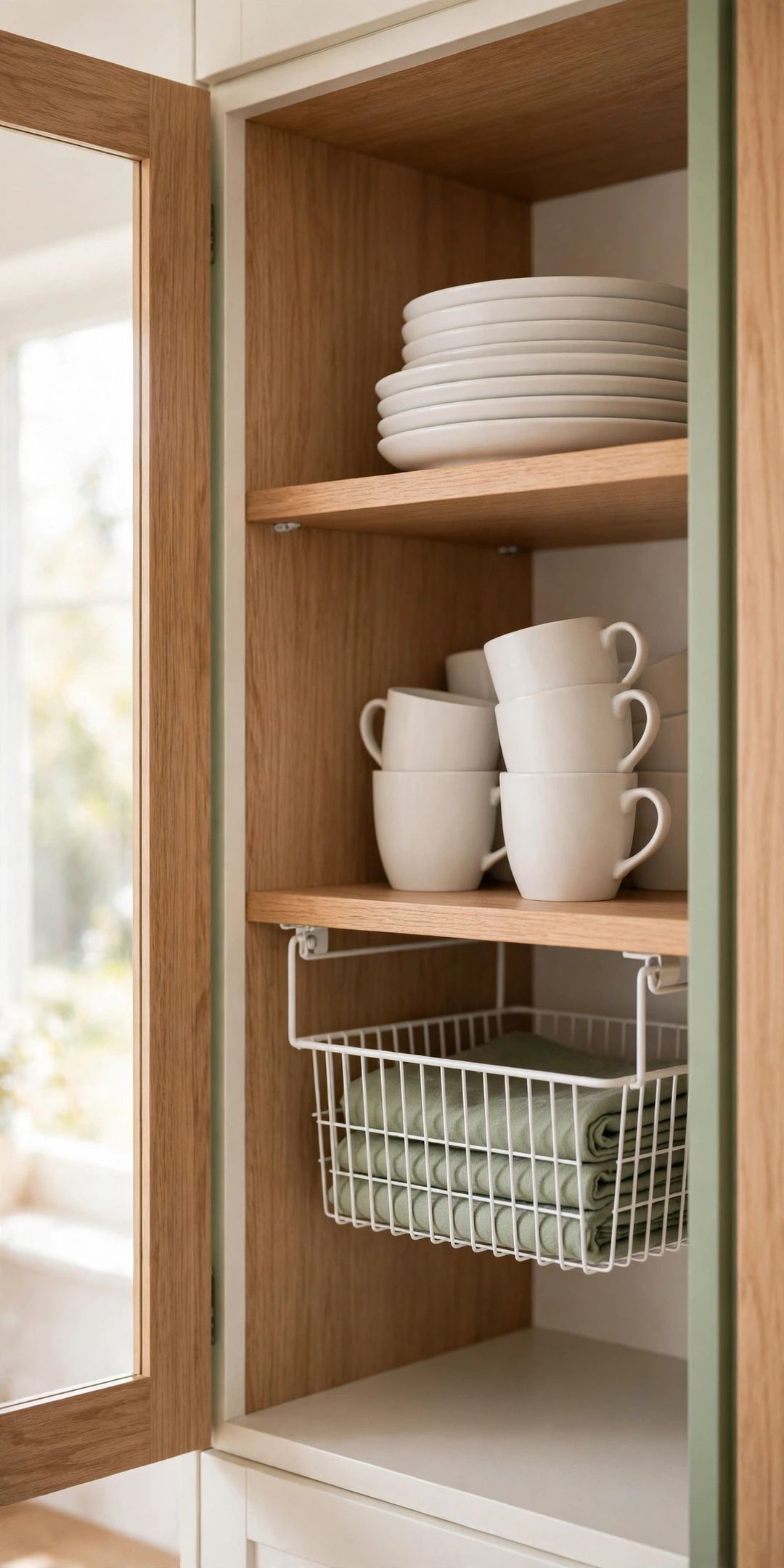
Most kitchen cabinets waste the same space: the empty gap under each shelf. Boxes and jars sit on the shelf below, while the inches above them stay empty. That gap is exactly the right size for one shallow, clip-on basket.
These under shelf baskets kitchen cabinets ideas use baskets that slide onto a shelf edge and hang below it, with no screws, no drilling, and no new furniture. Each basket adds a short second layer for light, flat, or small items that usually get buried.
Measure before buying. Check the shelf thickness, the depth from the front edge to the back wall, and the clear height below the shelf. Then pick one cabinet, try two or three baskets, and expand only where the system stays easy to use.
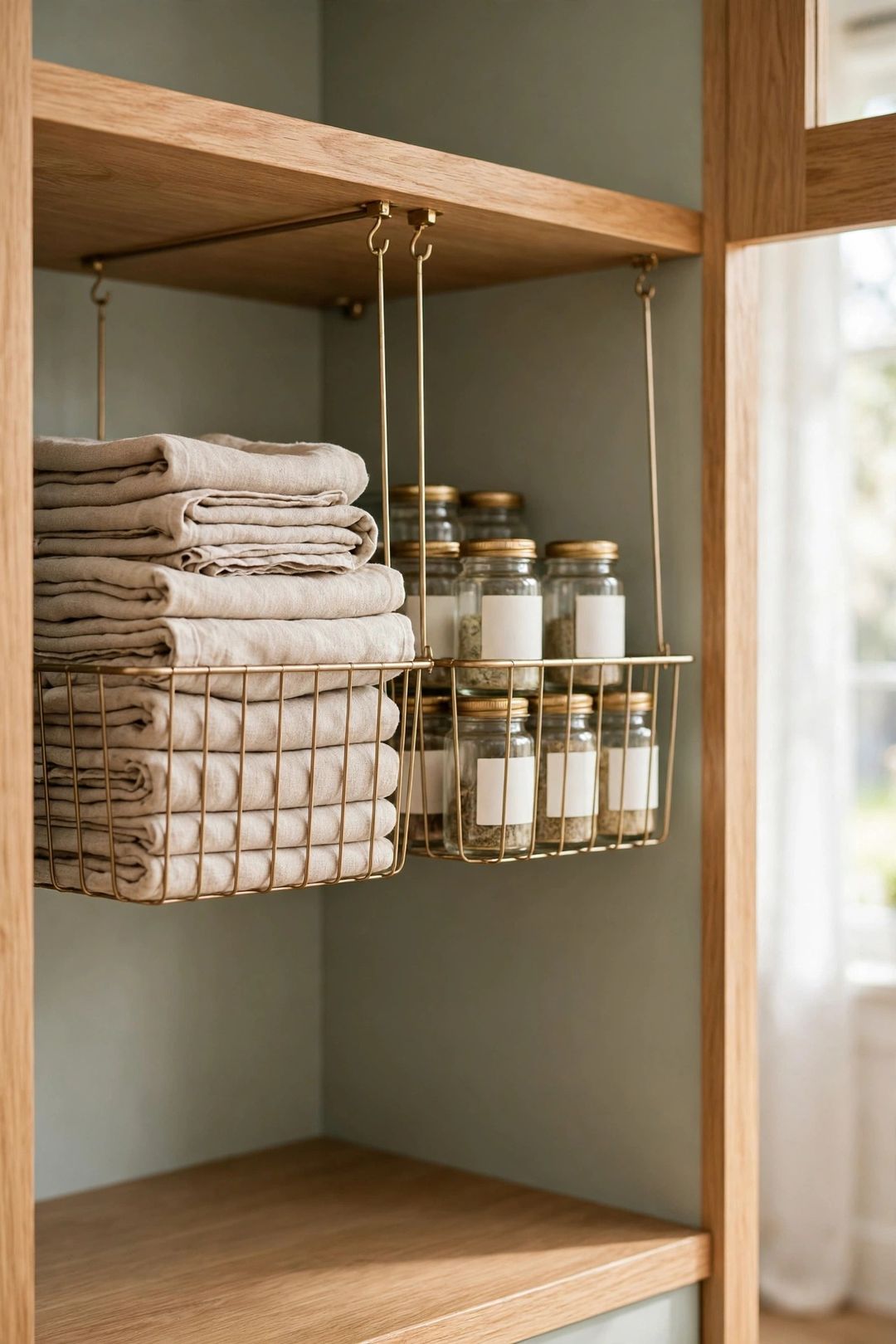
1. Hang Spices Below the Cooking Shelf
Clip a shallow basket under the shelf above the stove-side cabinet and lay spice jars or packets flat in a single row. Spices stay near cooking without taking up the main shelf, and a single layer means every label can be seen at once instead of hidden behind taller bottles.
2. Store Wraps, Foil, and Parchment Boxes
Long, flat boxes of wrap, foil, and parchment fit neatly in a wide under-shelf basket. The boxes stop sliding around a drawer or falling out of a crowded cabinet, and the basket keeps the sharp cutter edges facing one safe direction. Keep only the boxes in daily use here, and store backups elsewhere.
3. Give Mugs a Row of Their Own
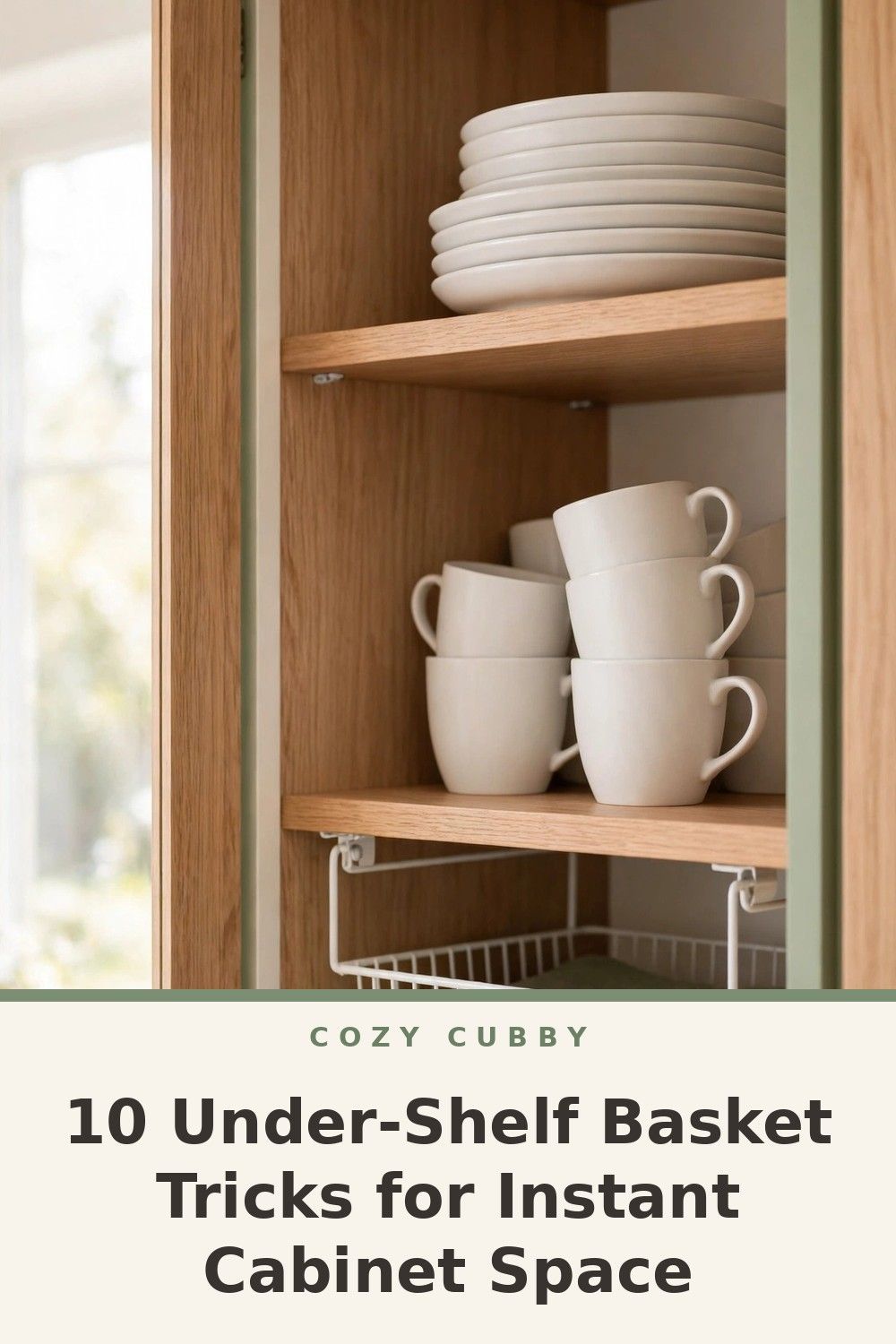
Light mugs and cups can sit in a sturdy basket hung under a shelf, freeing the main shelf for glasses and bowls. This works best with everyday mugs of a similar height. Check the basket rating and shelf fit first, and skip this idea for heavy stoneware or a shelf that flexes under weight.
4. Corral Seasoning, Soup, and Drink Packets
Loose packets are the first thing to spill out of a cabinet. A narrow basket under a shelf holds seasoning mixes, soup packets, tea bags, and drink sachets upright in one visible row. Group them by type with small dividers or folded card, so a single packet can be pulled without emptying the whole basket.
5. Hold Onions, Garlic, and Other Small Produce
A wire basket with open sides gives onions and garlic the air flow they need, while keeping them off the counter and out of a dark drawer. Keep produce in a single layer, check it during the weekly shop, and avoid this spot for anything that needs a cool, fully dark place for long storage.
6. Park Food Container Lids Upright
Container lids slide, stack badly, and vanish behind bowls. Stood upright in an under-shelf basket, lids stay sorted by size while the containers themselves nest on the shelf above or below. This split system ends the habit of keeping a container just because its lid might turn up later.
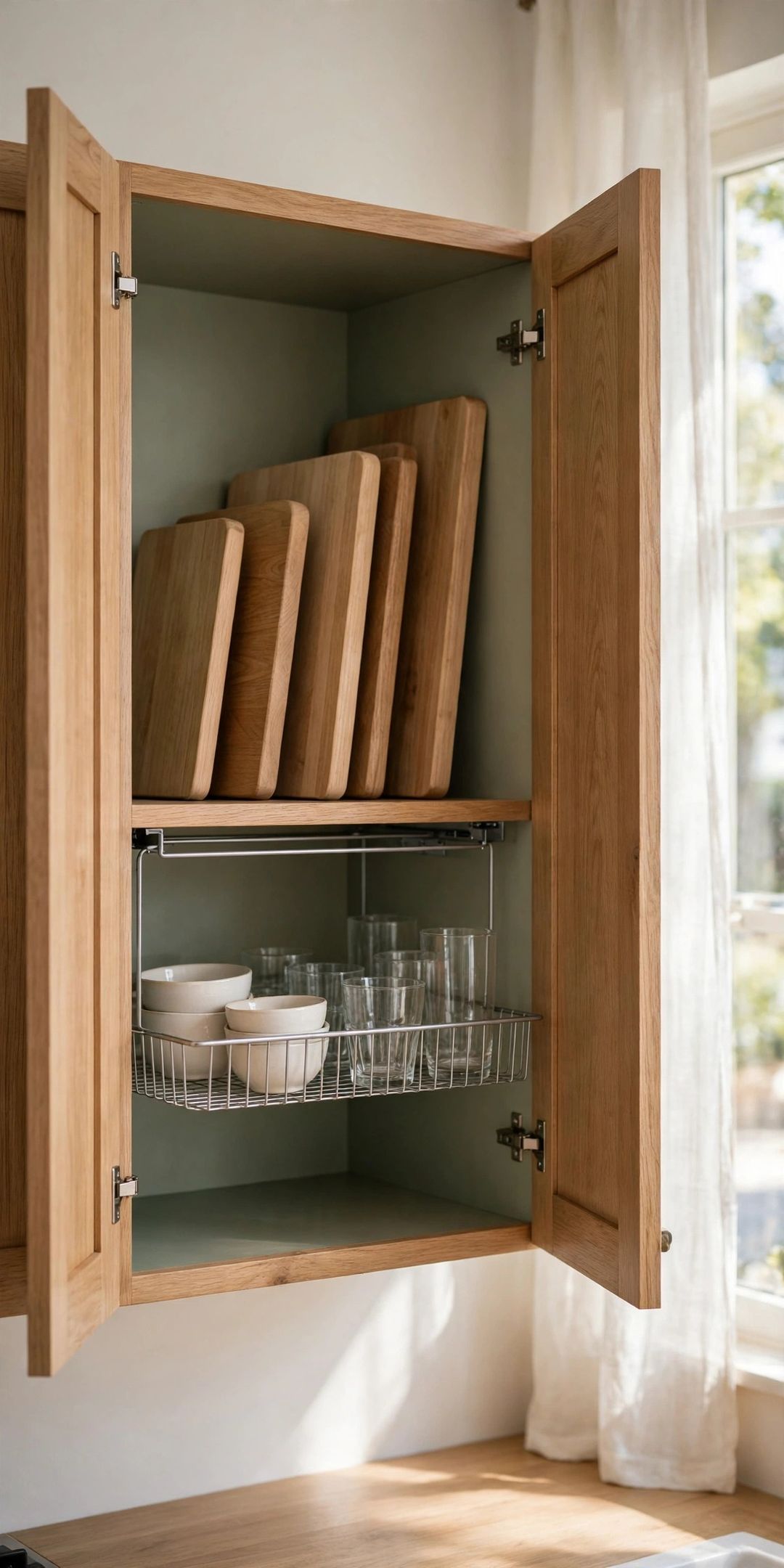
7. Tuck Away Cutting Boards and Baking Sheets
A wide, flat basket under a high shelf can hold one or two thin cutting boards, cooling racks, or baking sheets that are used less often. Lay them flat so the weight spreads across the basket. Thick boards and heavy pans belong elsewhere — this spot suits light, flat pieces only.
8. Create a Snack Row Kids Can Reach
Hang a basket under a low shelf for granola bars, fruit pouches, and small snack packs. One clear spot stops snack boxes taking over three different cabinets, and refills are simple: new items go in the basket, and empty wrappers are easy to spot. Keep the basket at a height that suits the household.
9. Store Cleaning Cloths and Sponges Under the Sink Shelf
Under the sink, a basket clipped to a shelf or the cabinet frame keeps spare sponges, cloths, and scrub brushes dry and off the cabinet floor. The open wire design lets damp items air out. Keep cleaning products themselves on the floor level or a tray, separate from the cloths above them.
10. Use the Gap Above Plates for Small Bowls and Ramekins
Small bowls, ramekins, and dip dishes are too short to use a full shelf height well. A basket hung under the shelf above the plate cabinet gives them a shallow home that uses the dead air over the plates. Stack only two or three high, so each piece stays easy to lift out.
What to Buy
A standard wire clip-on basket, about 12 to 14 inches wide, typically $10–$16. Pro: It fits most cabinets and handles packets, wraps, and light produce well. Con: Wide spacing between wires lets very small items slip through. Skip if: Your shelves are thicker than the clip opening allows.
A narrow under-shelf basket, about 8 to 10 inches wide, typically $8–$14. Pro: It suits spice packets, tea, and small cabinets where a full-width basket blocks the door. Con: It fills up fast, so it works for one category only. Skip if: The goal is storing wide boxes like foil and wrap.
A wide, flat under-shelf basket, about 15 to 16 inches wide, typically $12–$20. Pro: It holds wrap boxes, thin boards, and trays in one flat layer. Con: It needs a deep cabinet and a strong shelf to hang level. Skip if: Cabinet depth is under about 12 inches.
A two-pack of matching baskets, typically $16–$26. Pro: Two identical baskets keep the cabinet looking uniform and let one category run across both. Con: A pack only pays off if both baskets have a planned job. Skip if: Only one cabinet gap is free right now.
Mistakes to Avoid
- Skipping the shelf thickness check. Clip arms fit a limited range of shelf thicknesses. A basket that hangs loose will slide every time the door closes.
- Loading heavy cans and pans. These baskets are made for light items. Heavy loads bend the arms and can pull the basket off the shelf.
- Blocking the cabinet door. A basket hung too close to the front can stop the door closing fully. Set it back a little and test the door before filling it.
- Filling every gap at once. A basket in every cabinet makes some shelves hard to reach. Start with the two worst cabinets and live with them first.
- Storing tall items below the basket. The basket lowers the clear height of the shelf below it. Measure what still fits underneath before committing the space.
Frequently Asked Questions
Do under-shelf baskets damage cabinets?
The clip-on type hangs from the shelf edge without screws, so it leaves no holes. Felt pads or a thin strip of shelf liner under the arms can reduce scuffs on painted or delicate shelves.
How much weight can an under-shelf basket hold?
Limits vary by design, so check the product details before buying. As a general guide, treat these baskets as light storage for packets, wraps, cloths, and small dishes — not cans, jars of food, or heavy pans.
Will a basket fit a thick or framed shelf?
Not always. Measure the shelf thickness at the front edge, including any frame or lip, and compare it with the clip opening in the product details. Frameless, flat shelves are the easiest fit.
What is the best first cabinet to try?
Start with the cabinet that holds packets, wraps, or spices — the categories that spill and scatter most. One basket there shows quickly whether the height, door clearance, and reach work for daily use.
One or two baskets in the right cabinets can add a whole extra row of storage without a single screw. Save this post to your Kitchen Organization board on Pinterest so the 10 ideas and measuring tips are handy before you shop.