The space under a staircase is rarely one simple closet. It is a slope: tall at one end, dropping to a low triangle where almost nothing standard fits. Most of it stays empty, or turns into a dark pile where items go in and are rarely found again.
These under stairs storage ideas divide the slope into three zones and give each zone a job it can actually do. Measure the full run first: height at the tall end, height halfway down, depth, and where the slope drops below knee height. Note door swings, pipes, wires, and access panels too, because storage should never bury them.
Built-In Storage: Drawers, Doors, and Shelves
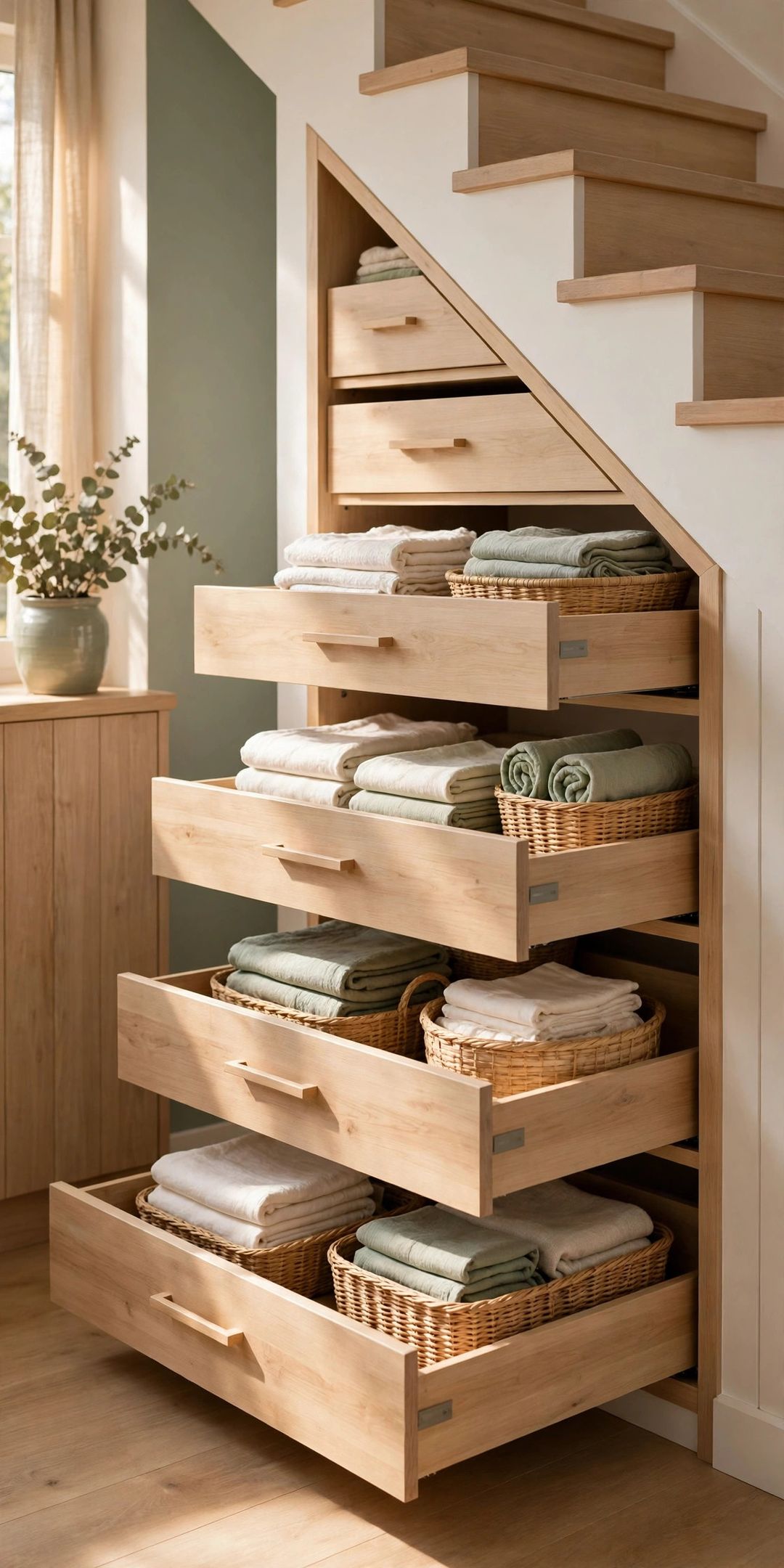
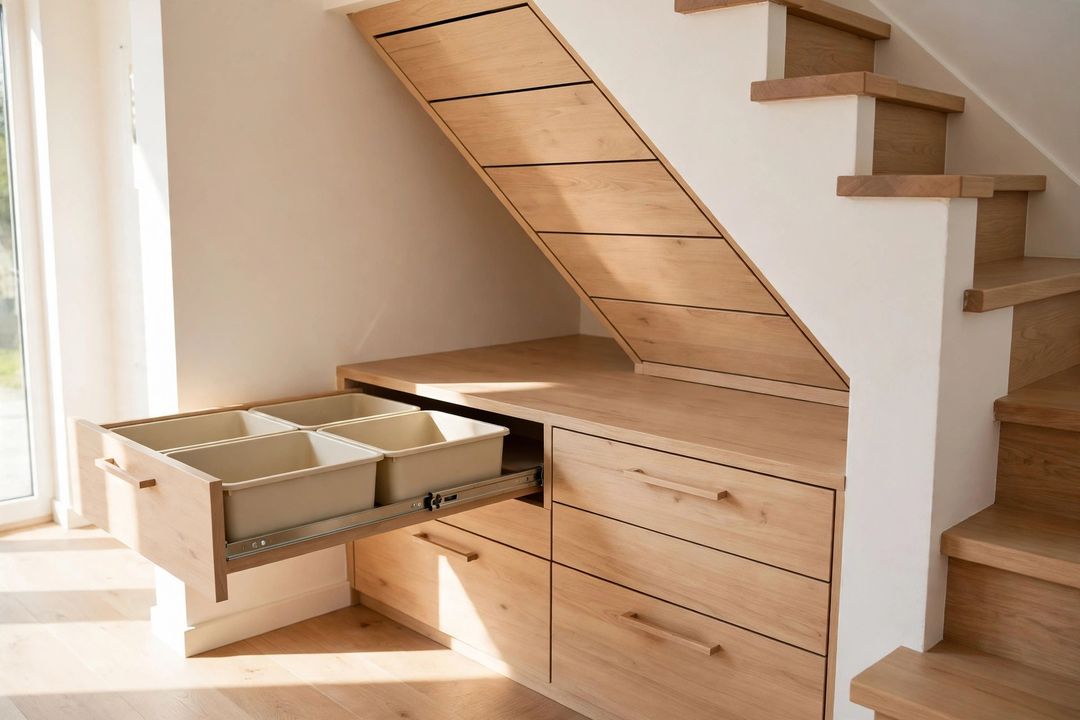
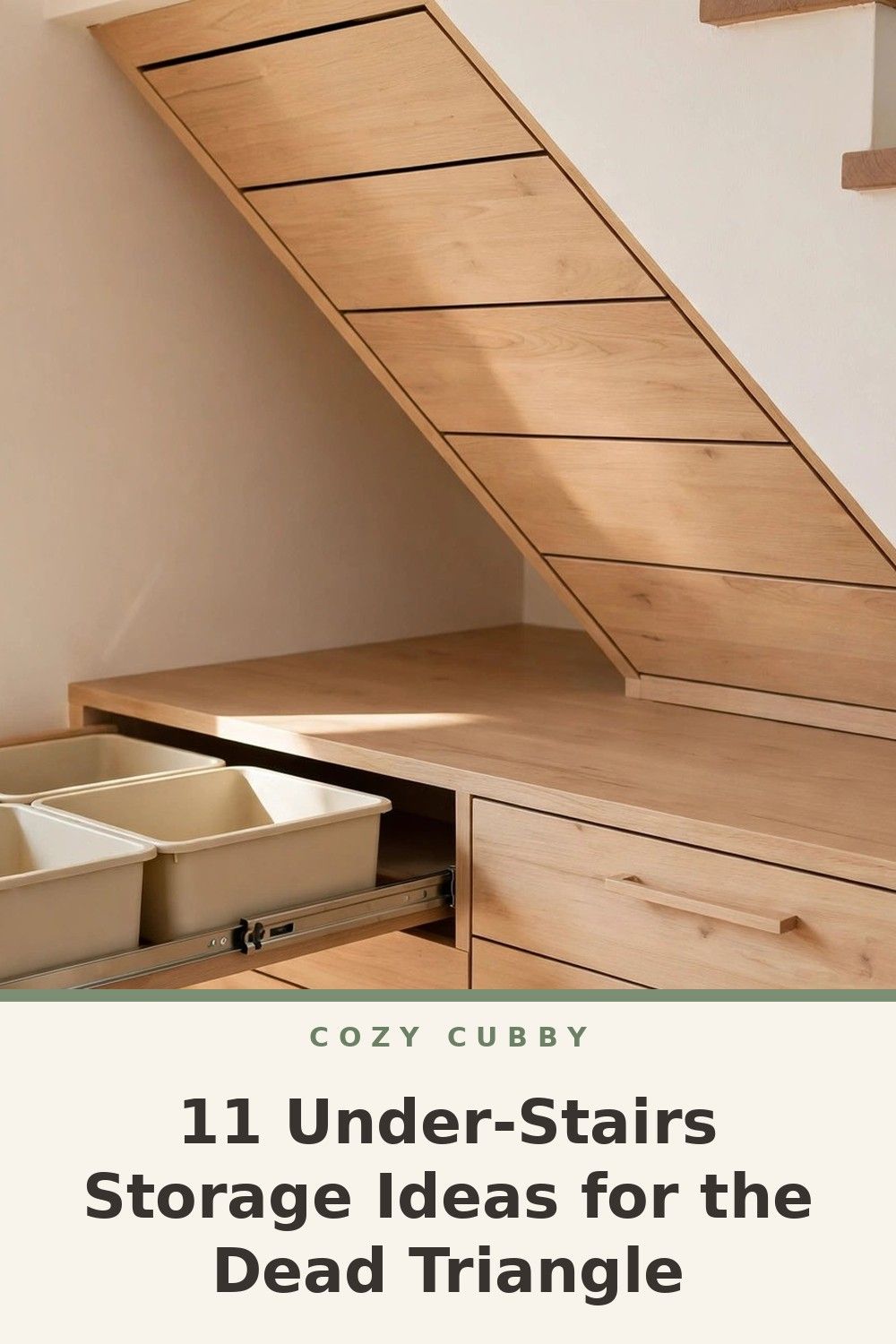
1. Pull-out drawers on the steps side. Deep drawers opening from the side wall under the slope turn dead depth into flat, visible storage for blankets, games, or craft supplies. Full-extension runners matter, because a half-opening drawer hides its back half. Cutting into the stair structure needs a professional.
2. Shoe drawers under the bottom steps. The lowest steps sit over short, wide space that suits tiered shoe drawers or a pull-out rack. Pairs stay lined up instead of piled, and drawers close flush with the wall. Measure each step zone separately, since height changes with every step.
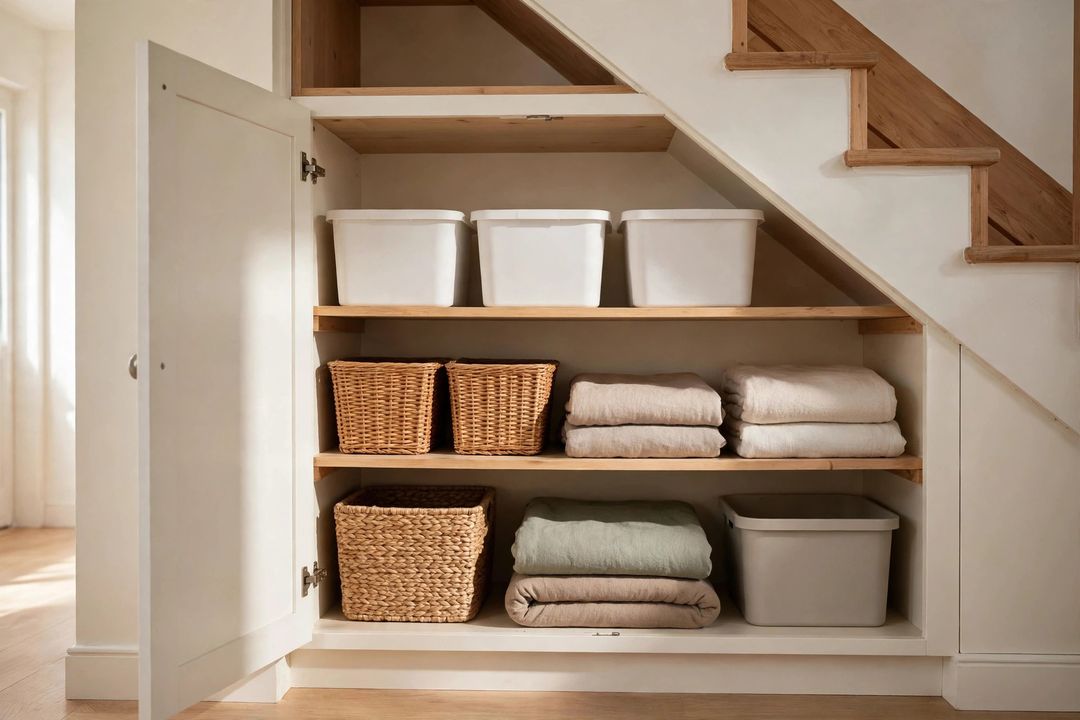
3. A door-and-shelves closet conversion. The classic fix for the tall end is a simple door, flat shelves across the width, and a battery light inside. It suits coats, a vacuum, and cleaning supplies. A louvered or vented door helps air move in a closed space.
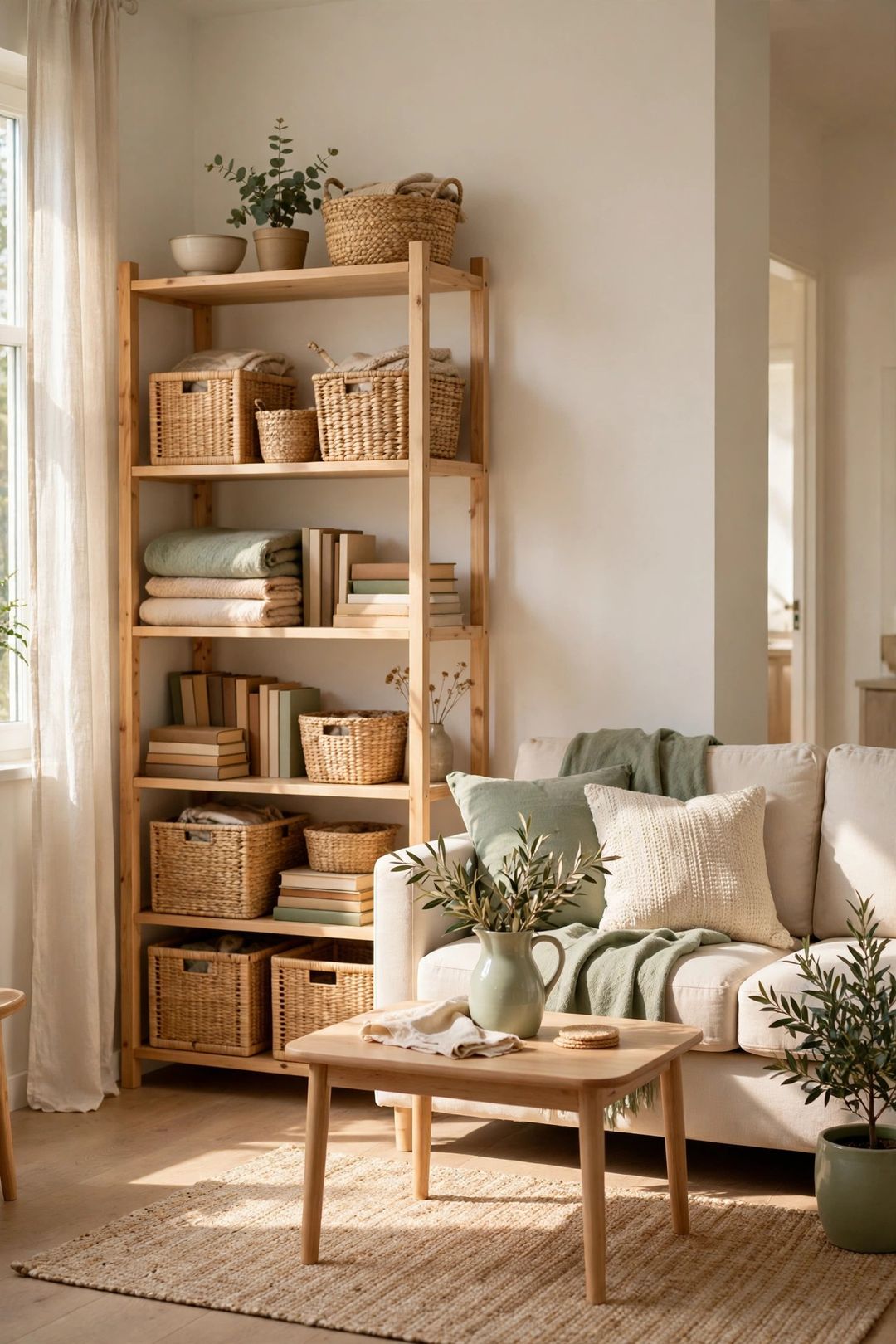
4. Open cubbies and flat shelves for daily items. Where a door will not fit, shallow cubbies hold books, baskets, linens, and board games within reach. Keep shelves level and narrow rather than following the slope, and use the lowest cubbies for light items only.
The Low Triangle and the Deep End
5. Rolling bins for the low triangle. The low, pointed end defeats fixed shelves, but low bins on casters roll straight out for access. Use them for gift wrap, pet toys, or rarely used tools. Choose bins shorter than the slope height at their back edge, not just at the opening.
6. Seasonal storage at the deep end. The far, deep end suits holiday decor, winter gear, and party supplies used a few times a year. Pack them in labeled, lidded bins, raise bins off the floor on a low platform, and leave a small air gap from outside walls to limit damp.
7. Luggage and bulky gear in the middle zone. Suitcases, sports bags, and camping gear fit the mid-height zone, where the slope still allows larger shapes. Store luggage empty and unzipped for airflow, nest smaller bags inside larger ones, and keep a clear pull-out path.
8. A cleaning and vacuum station near the opening. The most reachable spot suits the items grabbed most often: an upright vacuum, a stick broom, and a small caddy of daily cleaners. A hook rail keeps handles off the floor. Avoid sealing strong-smelling products in a tight, unvented space.
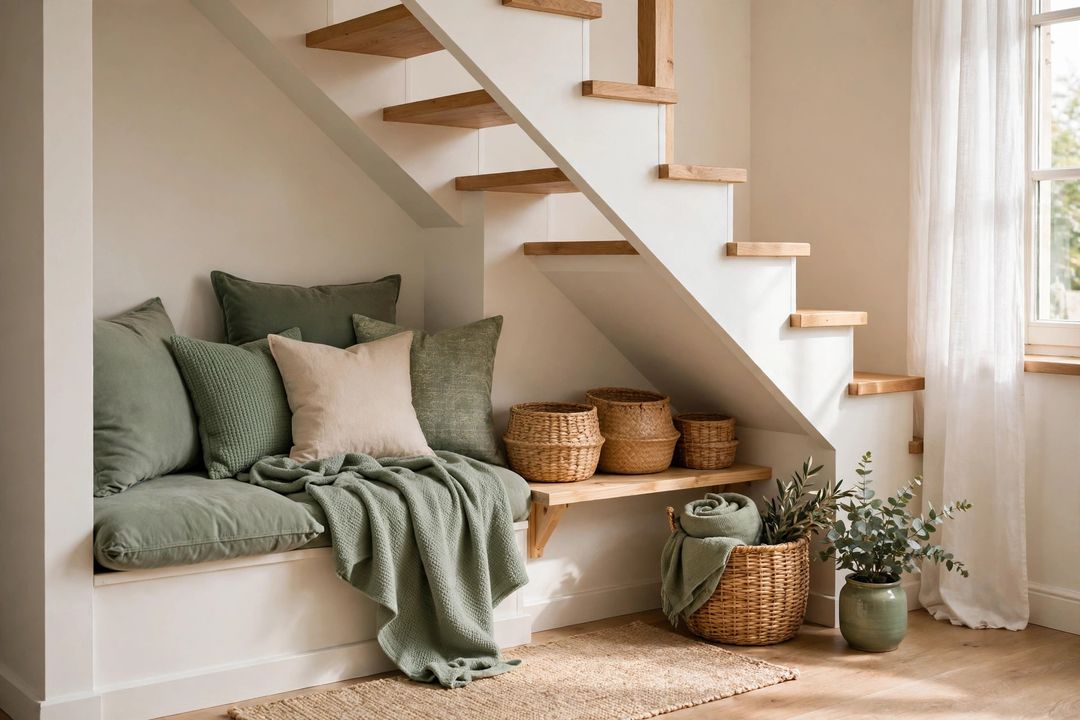
A Nook Worth Using: Reading, Pets, and Play
9. A reading nook in the tall end. If the tall end has headroom to sit comfortably, a floor cushion, a small shelf, and a battery light make a quiet reading spot. Keep it furniture-light so the space can return to storage later, and never block a nearby exit route.
10. A pet station with bed and food bins. The mid-height zone makes a calm pet corner: a washable bed, sealed food bins on a low shelf, and hooks for leashes by the opening. Washable surfaces and airflow matter most. Skip enclosed pet sleeping in a space that feels damp or hot.
11. A kids' play den or homework niche. A low table, soft seating, and open bins for toys or school supplies give children a defined space of their own. Mark or pad the slope edge where headroom drops, store nothing heavy overhead, and keep the way out clear at all times.
What to Buy
Low rolling storage bins, typically $15–$35 each. Pro: Casters make the low triangle reachable without crawling in. Con: Wheels need a fairly flat floor. Skip if: The floor is rough, sloped, or covered in deep carpet.
An adjustable shelving kit, typically $25–$60. Pro: Shelf heights can match each slope zone instead of one fixed layout. Con: It needs solid fixing points and careful measuring. Skip if: The plan cuts into walls or stairs, a professional job.
Labeled lidded storage bins, typically $10–$20 each. Pro: Lids keep dust off seasonal items at the deep end. Con: Stacked bins hide the bottom one unless labels face out. Skip if: Items are used weekly and belong in open storage.
A battery motion-sensor light strip, typically $12–$25. Pro: It lights a dark closet or nook with no wiring work. Con: Batteries or charging add small upkeep. Skip if: The space already has a safe, working light.
A tape measure and stud finder set, typically $15–$30. Pro: Accurate slope measurements prevent most fitting mistakes. Con: Readings on older, uneven walls can vary. Skip if: A professional is measuring and building the whole project.
Mistakes to Avoid
- Measuring only the tallest point. The slope drops fast. Measure height at the front, middle, and back of every planned shelf, bin, and drawer before buying.
- Cutting into the stair structure. Stringers and supports hold the staircase up. Never cut, notch, or remove them; structural changes belong to a professional.
- Sealing in damp with no airflow. A tight door on a damp space traps musty air. Fix moisture first, leave air gaps, and choose a vented door where products are stored.
- Burying pipes, wires, and access panels. Storage blocking a shutoff valve or cleanout turns a small repair into a major emptying job. Keep clear access at all times.
- Filling every inch with no pull-out path. Deep storage only works if front items move easily. Leave a clear route to the deep end, or the back becomes lost space again.
Frequently Asked Questions
How do you measure under-stairs space correctly?
Measure the full length and depth, then record ceiling height at several points along the slope, not just the tallest end. Note where height drops below knee, waist, and shoulder level. Those lines decide what each zone can hold.
When does an under-stairs project need a professional?
Bring in a professional for anything structural, plus new wiring, plumbing moves, or any work that cuts into the staircase itself. Bins, hooks, freestanding shelves, and battery lights are the simpler end of the scale.
How do you keep under-stairs storage from smelling musty?
Fix any damp at its source first. Store items dry, raise bins off the floor, leave a small air gap from walls, and favor a louvered or vented door on closed spaces. Air the space out during regular cleaning.
What should not be stored under the stairs?
Avoid flammable liquids, fuel, and anything that must stay cool, dry, and well ventilated in a warm or damp cupboard. Heavy items that are hard to lift from a low space are also a poor fit.
Start with the zone that frustrates you most, measure its slope honestly, and give that one section a clear job before touching the rest. Save this post to your Small Space Storage board on Pinterest so the zone plan is handy when you start.