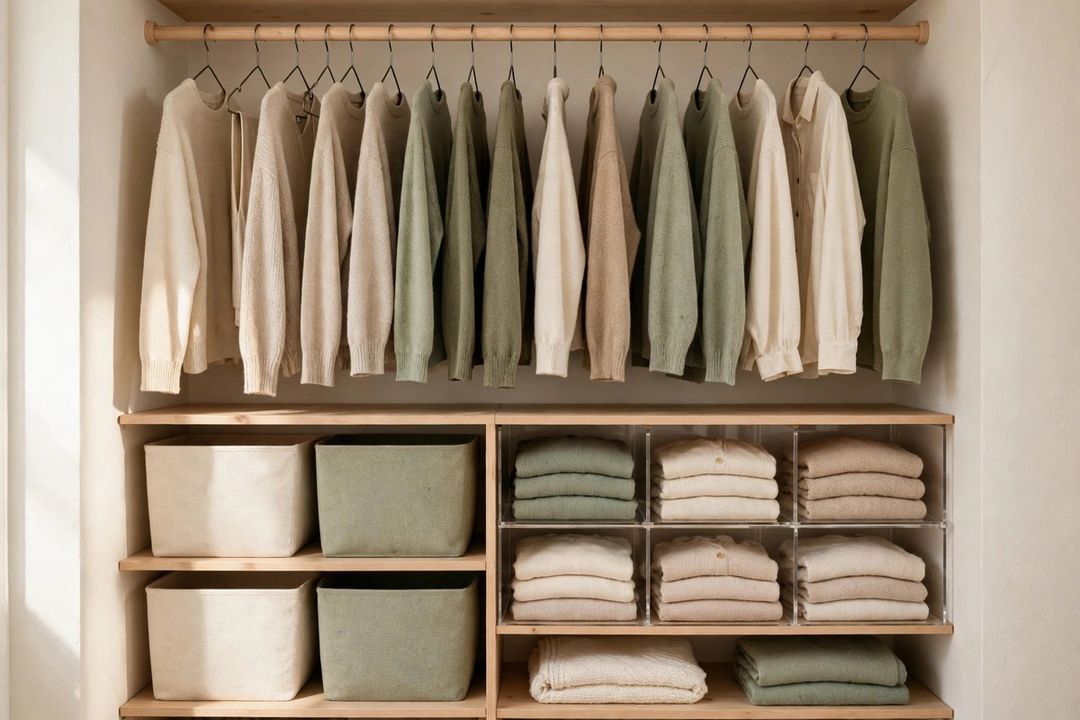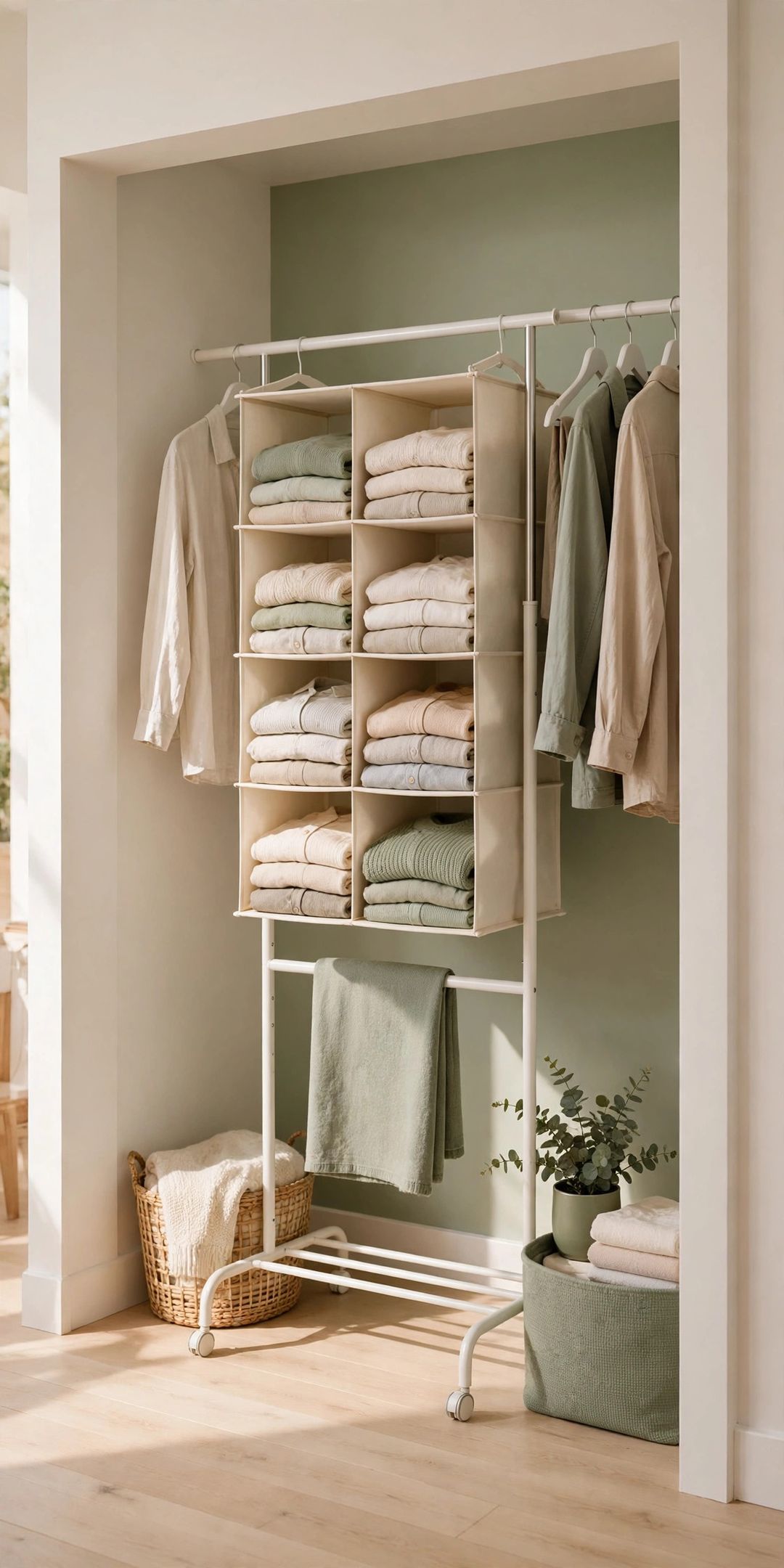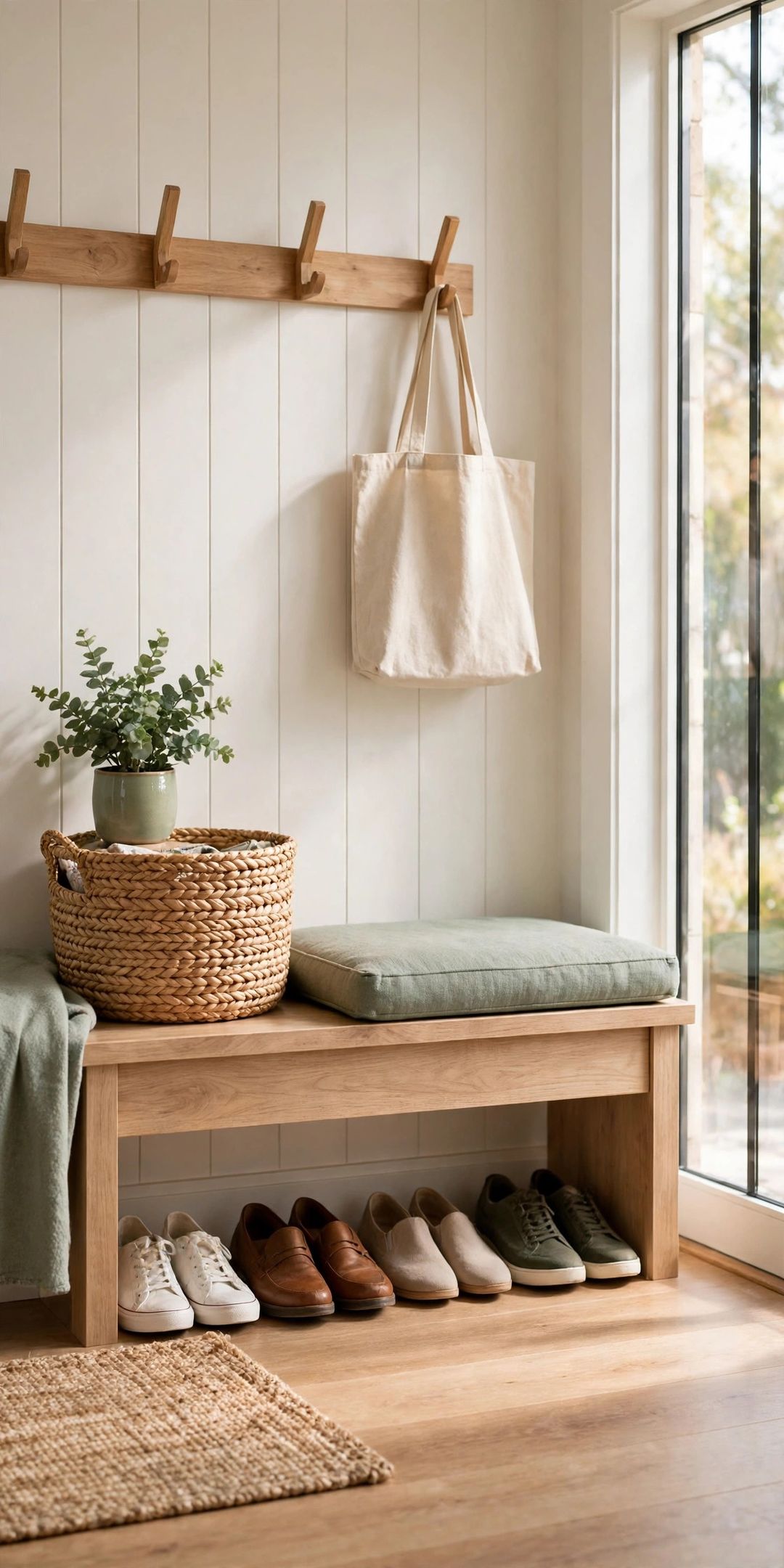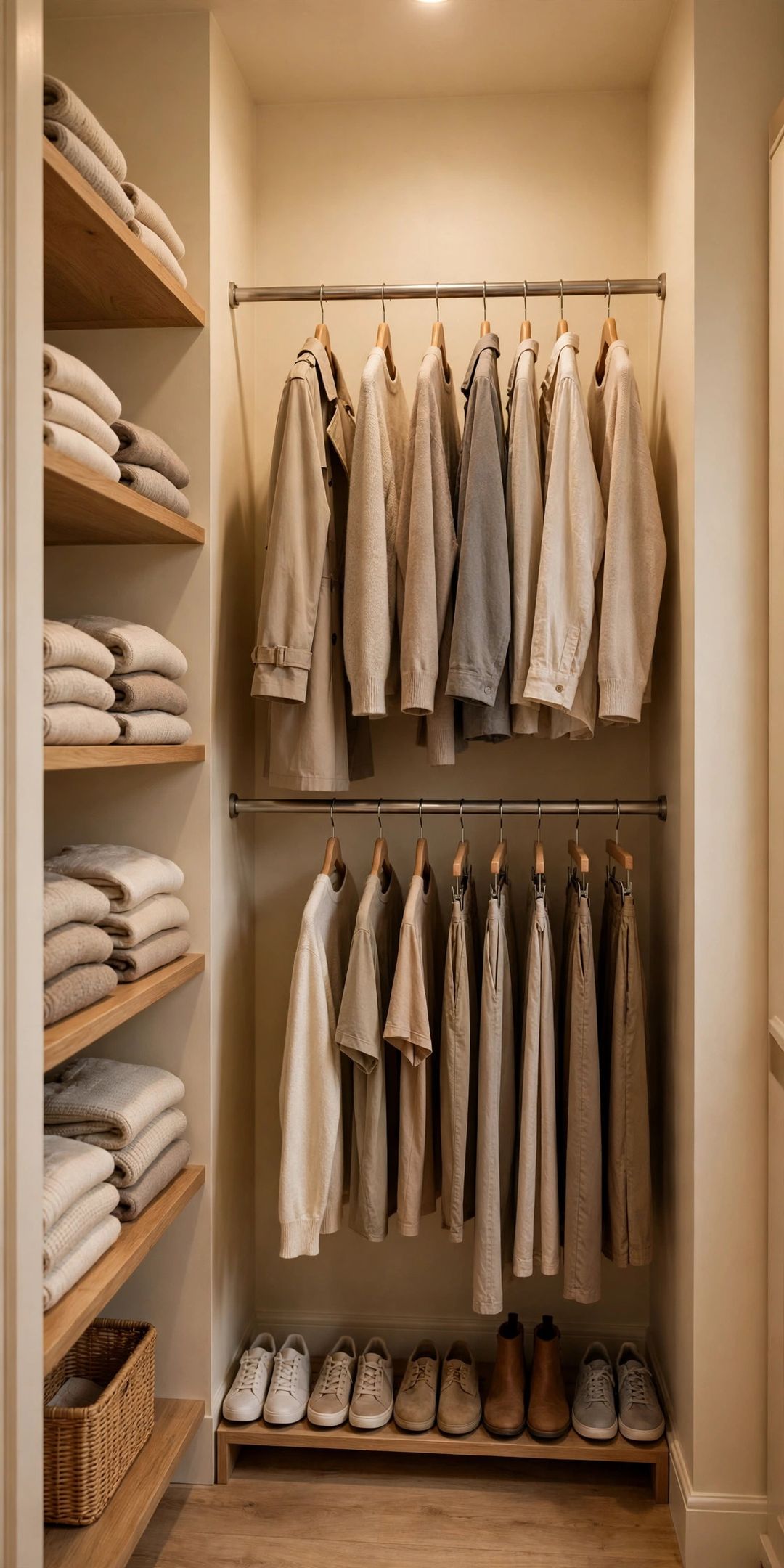
A large closet system looks great in photos, but it can eat up half the floor in a small walk-in. The best walk in closet organization ideas for a 5x5 or 6x6 foot closet are scaled down on purpose: shorter rods, narrower shelves, and zones that fit on one or two walls instead of three.
Start by protecting the walkway. Leave at least 24 inches clear in the center so doors and drawers can open and clothes can be reached without turning sideways. Everything below keeps that aisle open while using the walls, corners, and height you already have.
No full remodel is needed. Most of these ideas use one wall at a time, basic measurements in inches, and storage that can move when seasons or wardrobes change.
1. Start With Three Clear Zones
1. Daily zone at eye level. Put work clothes and everyday outfits on the wall you face when you walk in, between about 40 and 70 inches high. This is the easiest spot to reach in low light and with full hands. Keep only current-season daily items here so the zone never gets crowded.
2. Weekly and backup zone on the side wall. Use the second wall for clothes worn once or twice a week, spare hangers, and folded basics. In a 5x5 closet, one 48-inch side wall is enough for this zone if shelves stay 12 to 14 inches deep.
3. Rarely used zone up high and down low. Reserve the top shelf, usually above 72 inches, and the floor row for formal wear, off-season bins, and luggage. If an item is used less than once a month, it does not belong at eye level.
2. Double-Hang Almost Everything
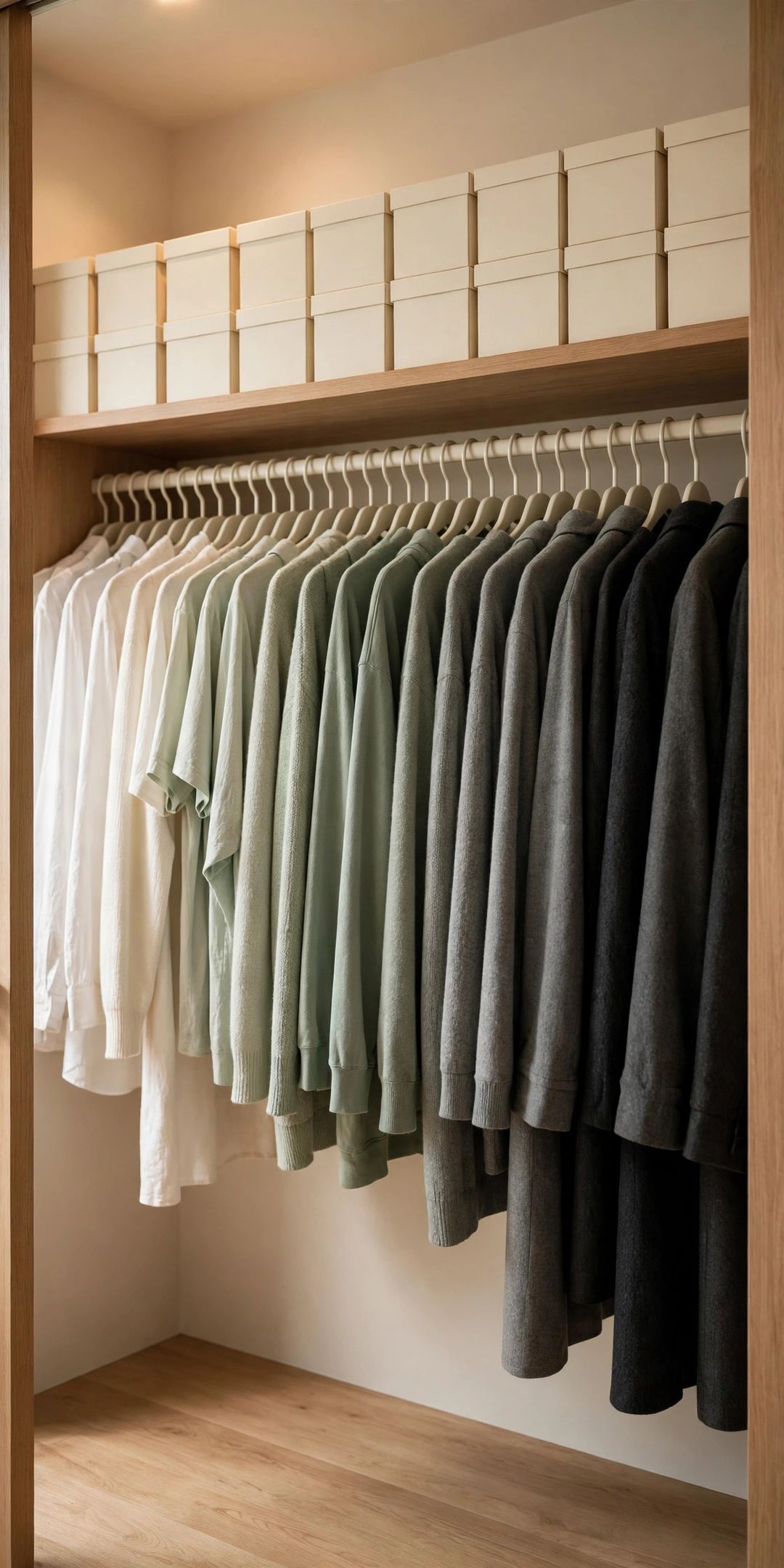
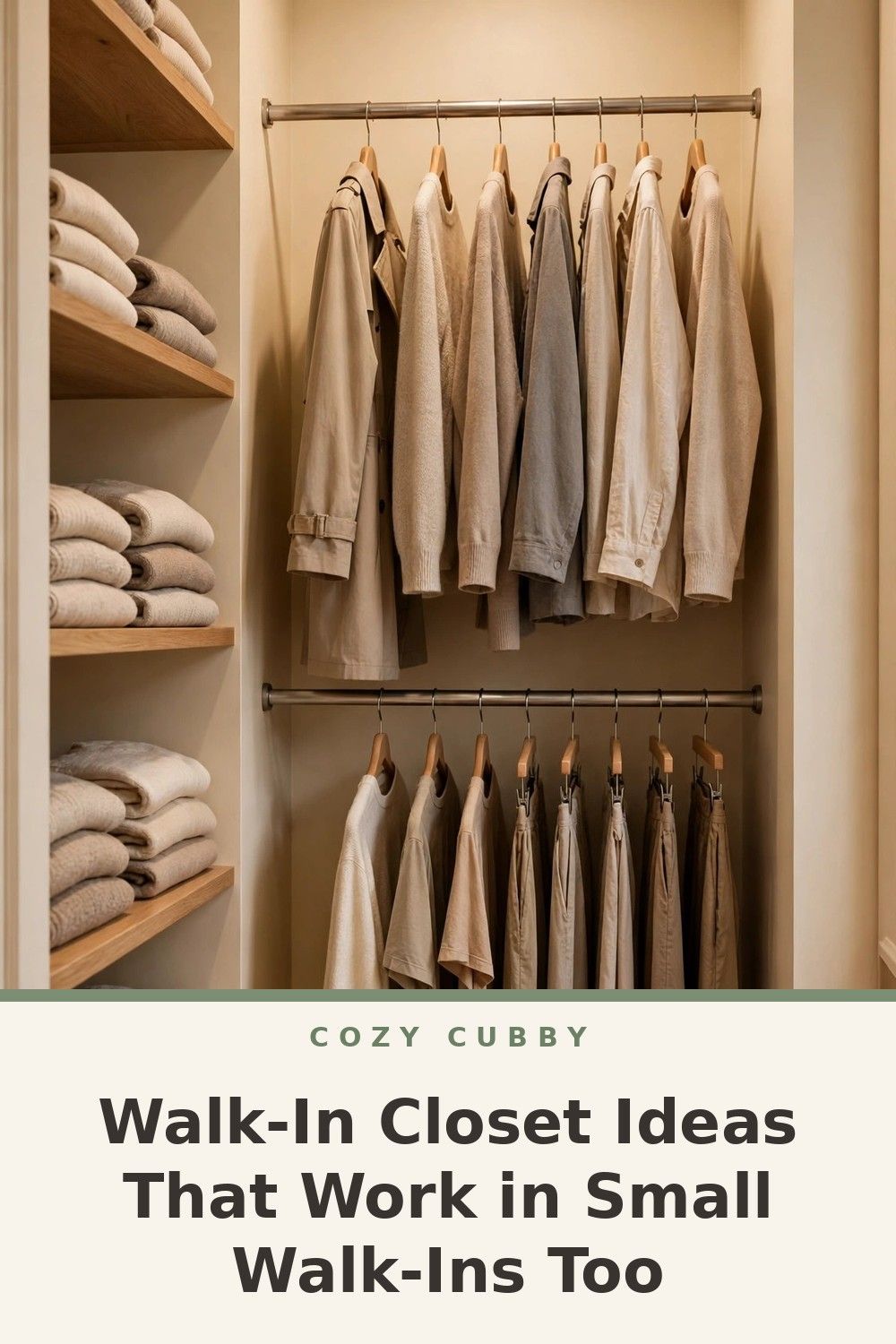
4. Double-hang shirts and pants. Set the top rod at 80 to 84 inches and the bottom rod at 40 to 42 inches. Shirts, blouses, and folded-over pants fit in both rows. This one change can nearly double hanging space on a 4- to 5-foot wall without taking any floor space.
5. Keep one short long-hang section. Leave just 18 to 24 inches of rod width with a full 60 to 66 inches of clear drop for dresses and long coats. A small walk-in rarely needs a full wall of long hang, and giving it too much space wastes the area below the shorter clothes.
6. Hang by length to free the floor. Group short items together so the space under them stays open for a low bin, shoe rack, or folded stack. Mixing long and short items on the same rod creates dead pockets that collect clutter.
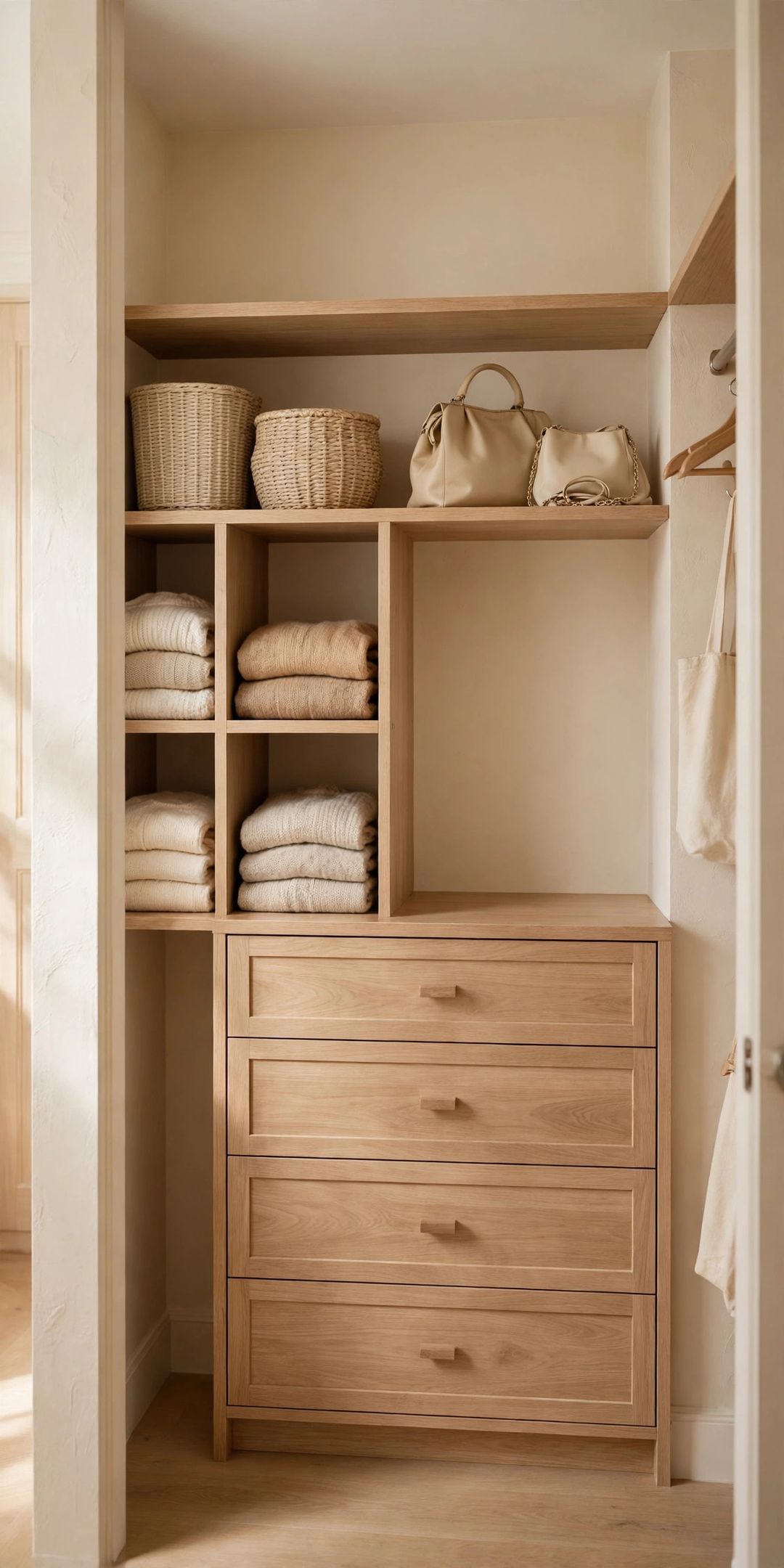
3. Make Corners Work Instead of Wasting Them
7. Use corner shelves for folded items. Two or three corner shelves, about 12 inches deep, hold sweaters, jeans, and bags that do not need hangers. Corners are poor hanging space because hangers clash, but they work well for square bins and stacks.
8. Stop rods 12 inches short of the corner. Ending each rod before the corner prevents hanger traffic jams and leaves room to reach the back. Use that end gap for a belt hook, a hanging organizer, or the corner shelves above.
4. Use the Full Height Safely
9. Add one high shelf for light, seasonal storage. A shelf at 84 to 86 inches, 14 to 16 inches deep, holds labeled bins for swimwear, winter scarves, or spare linens. Keep it to light items only, and keep a small folding step stool, about 9 inches high, inside the door.
10. Use the back of the door. A slim over-door rack, about 4 inches deep, holds shoes, belts, scarves, or hats without touching the walkway. Check that the door still opens fully and does not hit the first rod.
5. Give Shoes and Accessories One Home
11. Limit shoes to one low wall section. A two-tier rack about 36 inches wide holds roughly 6 to 8 pairs under the short-hang clothes. Extra pairs belong in clear bins on the high shelf. One fixed shoe spot stops pairs from spreading across the small floor.
12. Contain small items in shallow bins. Use bins about 11 by 6 by 4 inches for belts, sunglasses, watches, and ties on one shelf. Shallow bins matter in a small closet because deep bins become dig pits where small items disappear.
What to Buy
Adjustable double-hang closet rod, typically $20–$35. Pro: adds a second row at 40 to 42 inches without a full system. Con: needs solid wall fixings to hold a full row of clothes. Skip if: the wall is already fully covered with shelves.
Corner closet shelves, 2-pack, typically $25–$40. Pro: turns dead corner space into folded storage about 12 inches deep. Con: corner sizes vary, so measure both walls first. Skip if: both corners are needed for long-hang clothes.
Slim velvet hangers, 50-pack, typically $25–$40. Pro: slim profile, about 0.2 inches thick, fits more clothes per foot of rod. Con: can snap under very heavy coats. Skip if: most of the wardrobe is heavy outerwear.
Two-tier shoe rack, typically $18–$30. Pro: keeps 6 to 8 pairs in a 36-inch-wide footprint under short clothes. Con: tall boots rarely fit on the lower tier. Skip if: shoes are already stored in an entryway system.
Clear stackable bins with lids, typically $20–$35. Pro: off-season items stay visible on the high shelf and stack safely. Con: bins over 16 inches deep can block a narrow walkway if used on the floor. Skip if: open shelves already hold everything in current use.
Mistakes to Avoid
- Building on all three walls at once. Deep units on every wall can shrink a 5x5 closet to an aisle under 18 inches, which is too tight to use comfortably.
- Using 16- to 18-inch-deep shelves everywhere. Shelves that deep hide clothes at the back in small closets; 12 to 14 inches is easier to keep visible.
- Skipping measurements. Rod height, shelf depth, and door swing need checking in inches before buying, or new storage often blocks the door or the walkway.
- Storing daily clothes up high. Everyday items above 72 inches slow down mornings and lead to piles on the floor instead.
- Filling every inch. A closet packed to capacity has no room for laundry returns, so leave about 10 percent of rod and shelf space empty.
Frequently Asked Questions
How do I organize a very small 5x5 walk-in closet?
Use two walls only, double-hang one of them, and keep the center aisle at least 24 inches clear. Put daily clothes at eye level, shoes under the short-hang section, and off-season bins on one high shelf.
What is the best rod height for double hanging?
Set the top rod at 80 to 84 inches and the bottom rod at 40 to 42 inches. Most shirts and folded-over pants need about 38 to 40 inches of drop, so this spacing fits two full rows in most closets with an 8-foot ceiling.
Should a small walk-in closet have drawers?
Only if the aisle stays clear. A narrow drawer unit, about 14 inches deep, can work on one wall. If drawers would cut the walkway below 24 inches, use open bins on shelves instead.
How do I organize a walk-in closet one wall at a time?
Finish the daily wall first, use it for a week, then do the side wall. This order shows what storage is actually still needed and prevents buying a full system that does not fit real habits.
A small walk-in works when the walkway stays clear, daily clothes sit at eye level, and every corner has a simple job. Start with the double-hang wall, then add corner shelves. Save this post to your closet board on Pinterest for later, so the measurements are handy when you start.