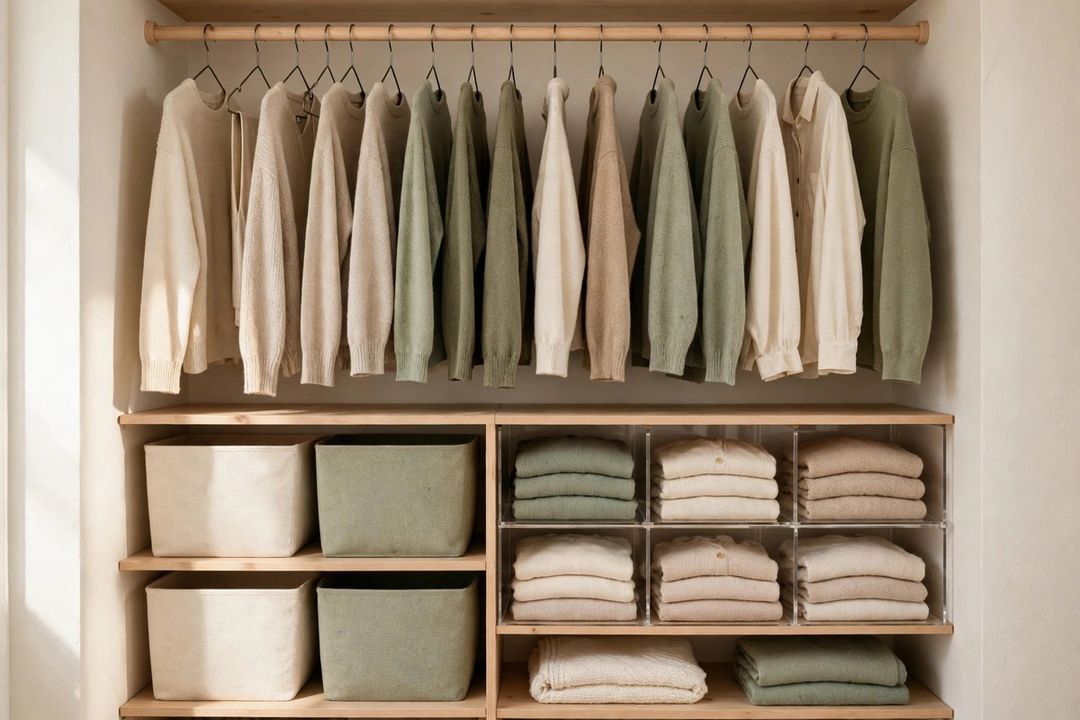
Renting a room with no closet leaves one big question: where does a full wardrobe live? Piles on a chair and bags on the floor are the usual answer, and both make getting dressed slower.
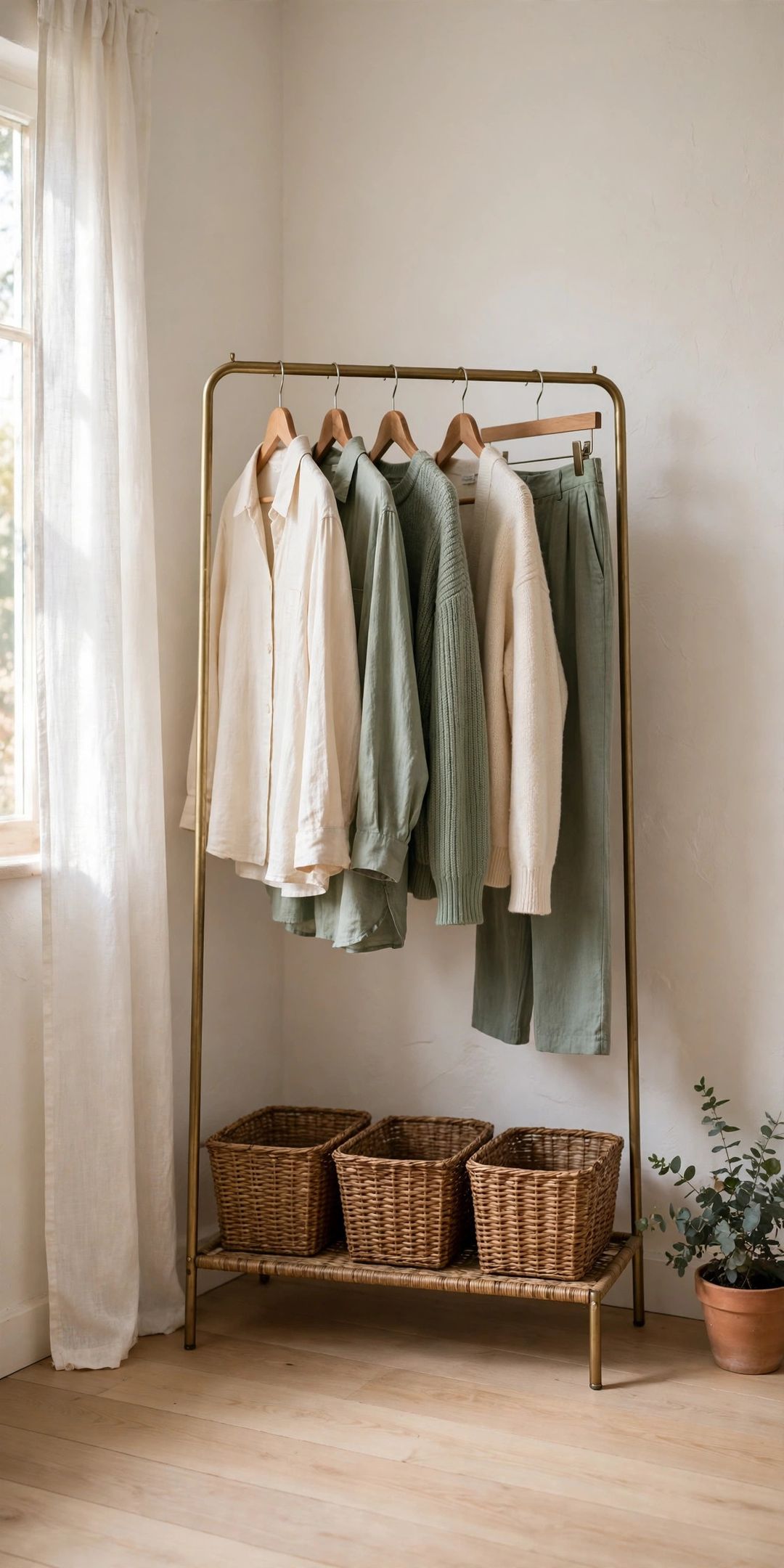
These wardrobe organization ideas no closet setups can rely on all start with one piece: a sturdy freestanding garment rack. Around it, add zoning, shelves, shoe storage, and a simple cover so the corner works like a small, open wardrobe.
Treat the rack as furniture, not a temporary stand. Choose it carefully, load it within its limits, and give every category a set place. The 13 ideas below build the system step by step.
Choose and Set Up the Rack
1. Choose a sturdy rack with a real weight rating. Check the stated weight limit before buying, and favor thick metal tubing, a wide base, and locking wheels or level feet. A rack that wobbles when empty will lean once it holds coats and denim.
2. Respect the weight limit honestly. Heavy coats and jeans add up fast. Spread the heaviest items evenly across the bar, and keep the total load below the rated limit. If the bar bows or the frame leans, remove items right away and split the load.
3. Anchor the setup on flat, clear floor. Place the rack on a hard, level surface, lock any wheels, and leave a clear path in front. Keep it out of direct sun to reduce fading, and away from heat vents that dry out leather and elastic.
Zone the Rack Like a Closet
4. Zone the bar by category, left to right. Give each section a job: daily work clothes at the front end, casual clothes in the middle, and coats or occasion pieces at the far end. Keep the order the same every day, so you dress by section instead of scanning the whole rack.
5. Hang in one direction, shortest to longest. Face all hangers the same way and group short items — shirts and folded-over pants — at one end. That leaves open floor space below for shoes or a small bin. Use matching slim hangers; bulky mixed hangers waste bar space and snag.
6. Keep only the current season on the rack. A freestanding rack has no door to hide overflow, so limit it to what you wear now. Pack off-season clothes in a labeled bin under a bed or on a high shelf elsewhere.
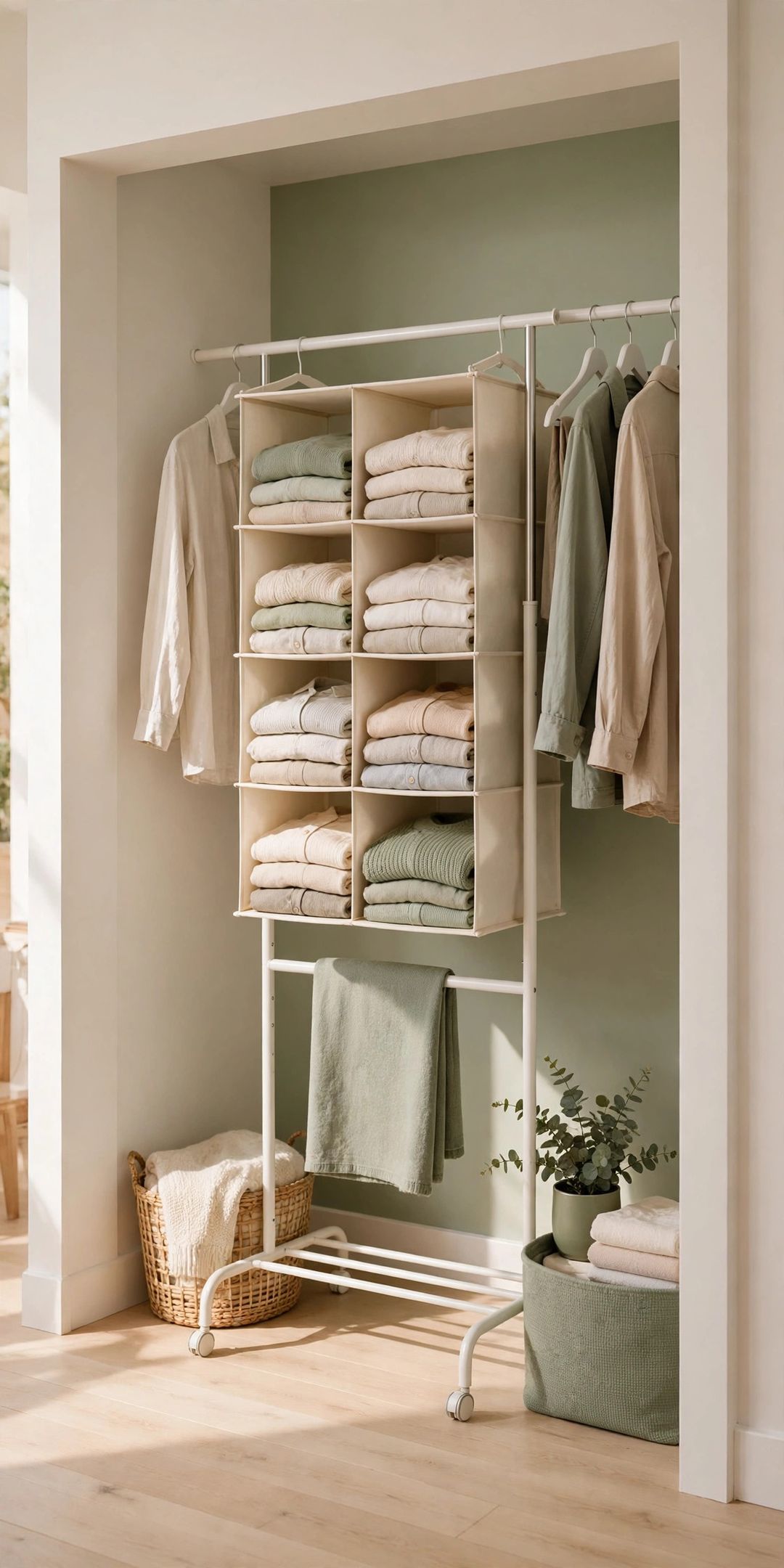
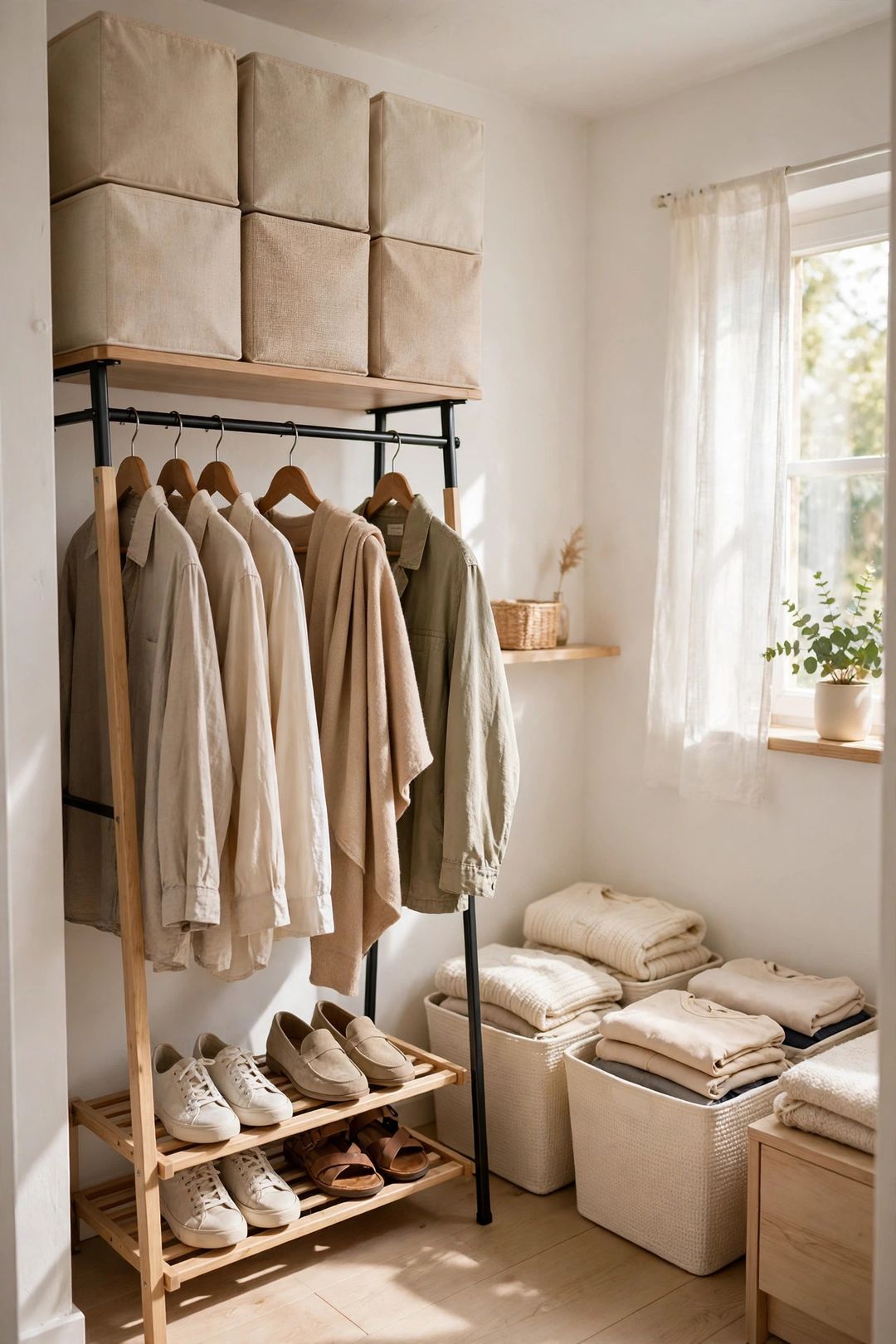
7. Add a top shelf or hanging organizer for folded items. If the rack has a top shelf, use it for folded knitwear, bags, or a basket of accessories. If not, hang a fabric shelf organizer from one end of the bar for tees and pajamas. Keep this add-on light — folded stacks get heavy quickly.
Add Storage Around the Rack
8. Place cubbies or a small shelf unit beside the rack. A narrow cube unit next to the rack acts as the dresser half of the wardrobe. Assign each cubby a category: undergarments and socks in one, workout clothes in another, folded jeans in a third. Bins inside keep small items from drifting.
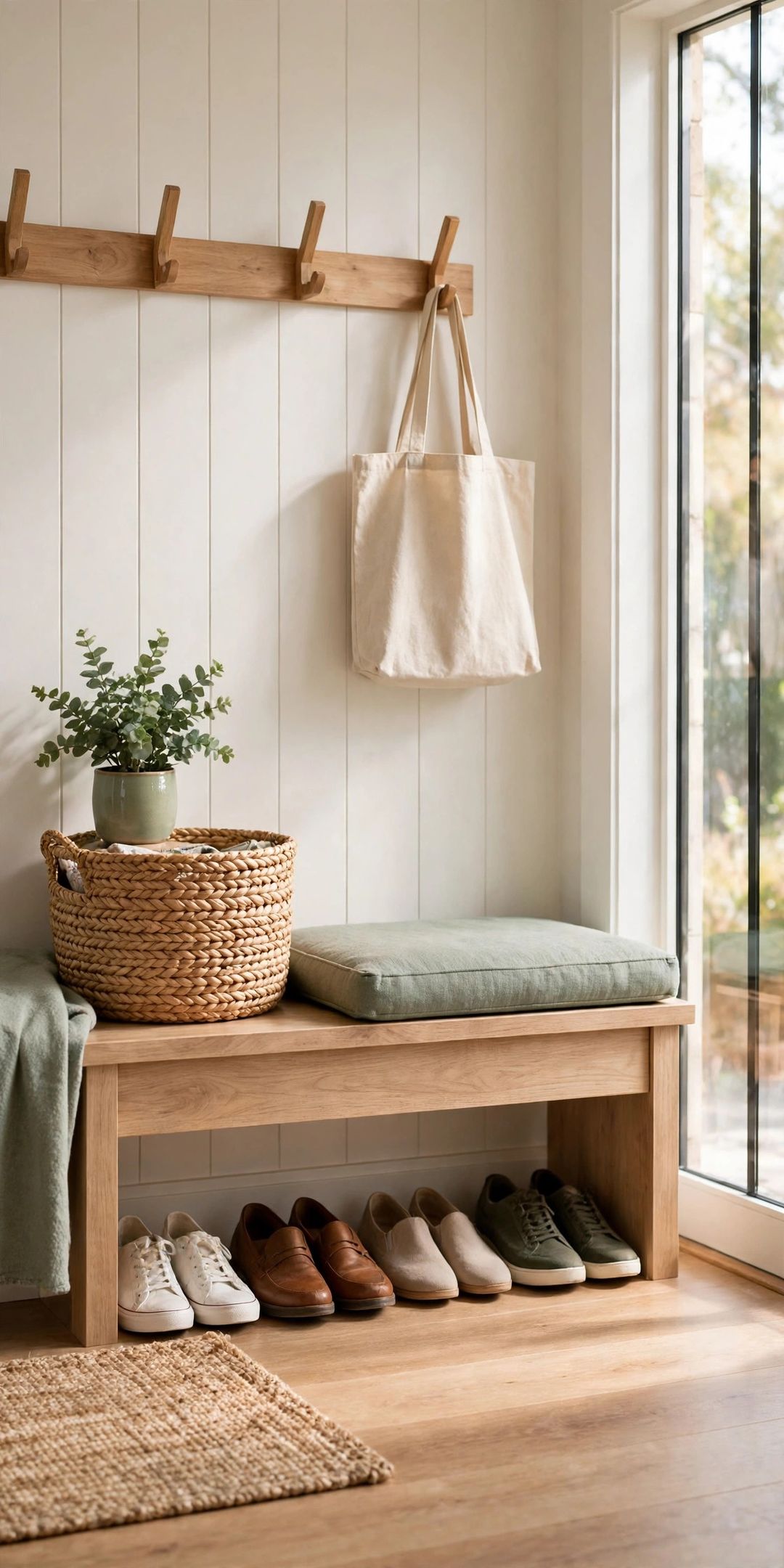
9. Run a shoe row along the floor below. Line up everyday shoes in a single row under the short-hanging section, or add a low shoe rack that fits the frame width. Keep only pairs worn weekly here. Extra shoes belong in a bin nearby, not in a pile.
10. Use the ends of the rack for daily hooks. The side frames can hold a hook or tomorrow's outfit. Reserve one end for the next day's clothes and a tote bag, and the other for a belt or scarf hanger. Daily gear on the ends stays off the chair and bed.
Make It Look Intentional and Keep It Tidy
11. Add a cover or curtain only when you need one. A breathable fabric cover or a curtain in front of the rack can calm visual clutter and block dust. Choose a light color that matches the room, and leave air flow around the clothes — avoid sealing garments in plastic for long periods.
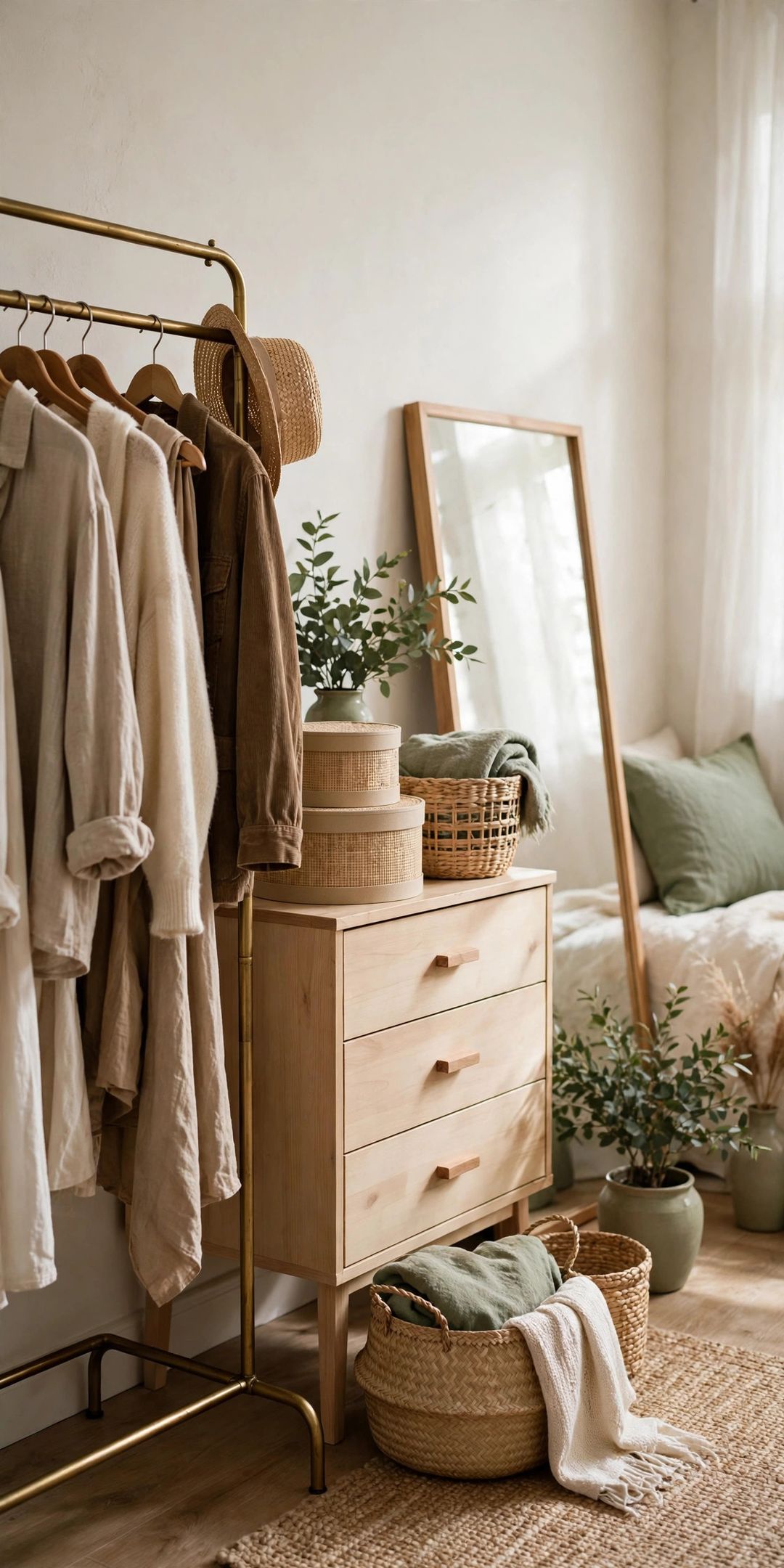
12. Style the corner like part of the bedroom. Place the rack flat against a wall, align the side shelf with it, and add one finishing touch, such as a small mirror. Matching hangers make the corner read as planned, not improvised.
13. Do a two-minute daily reset. Each evening, hang up anything draped over the rack ends, return shoes to the floor row, and slide hangers back into their zones. Small daily upkeep prevents the slow drift back into piles.
What to Buy
A heavy-duty freestanding garment rack, typically $45–$90. Pro: It is the core of the whole wardrobe and holds a full hanging load. Con: Cheap thin-tube racks lean and bow under coats, so the sturdy end of the range is worth it. Best for: Building a no-closet wardrobe from scratch.
Slim matching hangers, typically $12–$22 for a large pack. Pro: Uniform hangers save bar space and stop clothes slipping. Con: Very thin hangers can mark heavy knitwear, which is better folded. Best for: Shirts, blouses, and light pants.
A narrow cube storage unit, typically $30–$60. Pro: Cubbies with bins replace a dresser for folded clothes. Con: It adds floor footprint, so measure the corner first. Best for: Folded clothes and accessories beside the rack.
A low shoe rack, typically $15–$28. Pro: It keeps the floor row tidy and each pair visible. Con: It only helps if it fits the rack width; an oversized one crowds the corner. Best for: Everyday shoes under short hanging clothes.
A breathable garment cover or curtain panel, typically $14–$26. Pro: It reduces dust and visual clutter. Con: It adds a step every morning, and heavy covers can trap moisture in humid rooms. Best for: Open racks in bright or dusty rooms.
Mistakes to Avoid
- Overloading the bar past its rating. A bowed bar and leaning frame damage clothes and the rack. Split heavy loads.
- Keeping every season out at once. An overfull open rack always looks messy. Store off-season clothes in a labeled bin elsewhere.
- Using mixed, bulky hangers. They eat bar space and catch on each other. One slim style keeps the row compact.
- Letting the floor become overflow. Bags and shoes piled under the rack hide the system. Use the shoe row and cubbies instead.
- Choosing looks over stability. A wobbly decorative rack is a daily frustration. Check tubing, base width, and the weight rating first.
Frequently Asked Questions
How much weight can a freestanding rack hold?
It depends on the model, so check the stated rating and stay under it. If the bar bows or the frame leans, the rack is overloaded. Spread heavy coats evenly and move extras elsewhere.
How do you keep an open rack from looking messy?
Limit the rack to one season, use matching hangers, zone the bar by category, and keep a clear floor row. A side cubby unit with bins hides small items, and a daily reset stops clutter building up.
What clothes should not hang on the rack?
Fold heavy knitwear and sweaters, because hanging can stretch them at the shoulders. Fold jeans if bar space is tight, and store off-season pieces in a bin away from direct sun.
Can a garment rack replace a closet long term?
Yes, if the rack is sturdy, loaded within its limit, and paired with folded storage. The system works best when clothing matches the space — one rack, one cubby unit, and one shoe row cover most everyday wardrobes.
A single sturdy rack, zoned with care and backed by a shelf and a shoe row, can do the daily work of a closet well. Save this post to your Small Space Organization board on Pinterest so the setup is handy when you build yours.