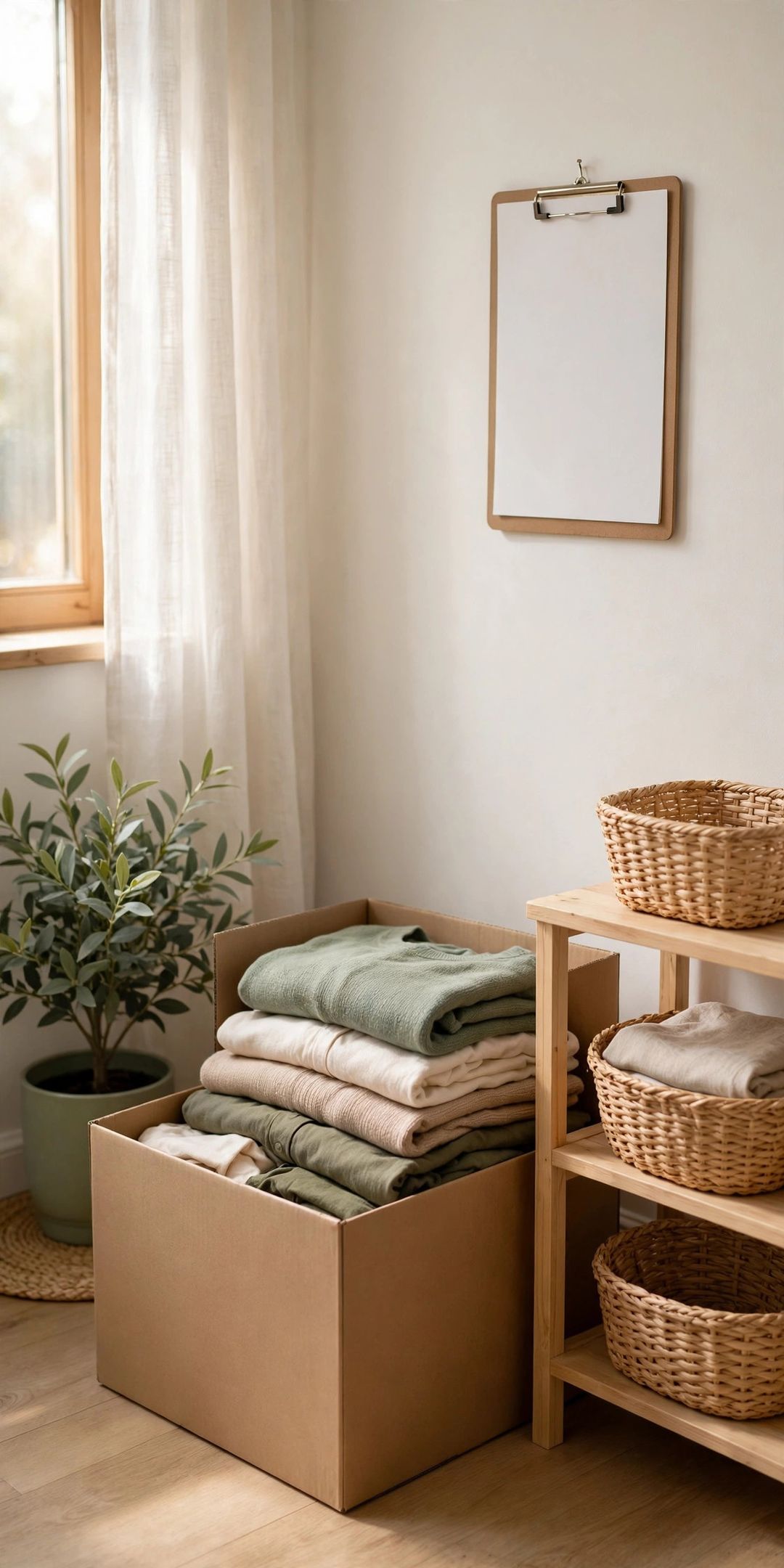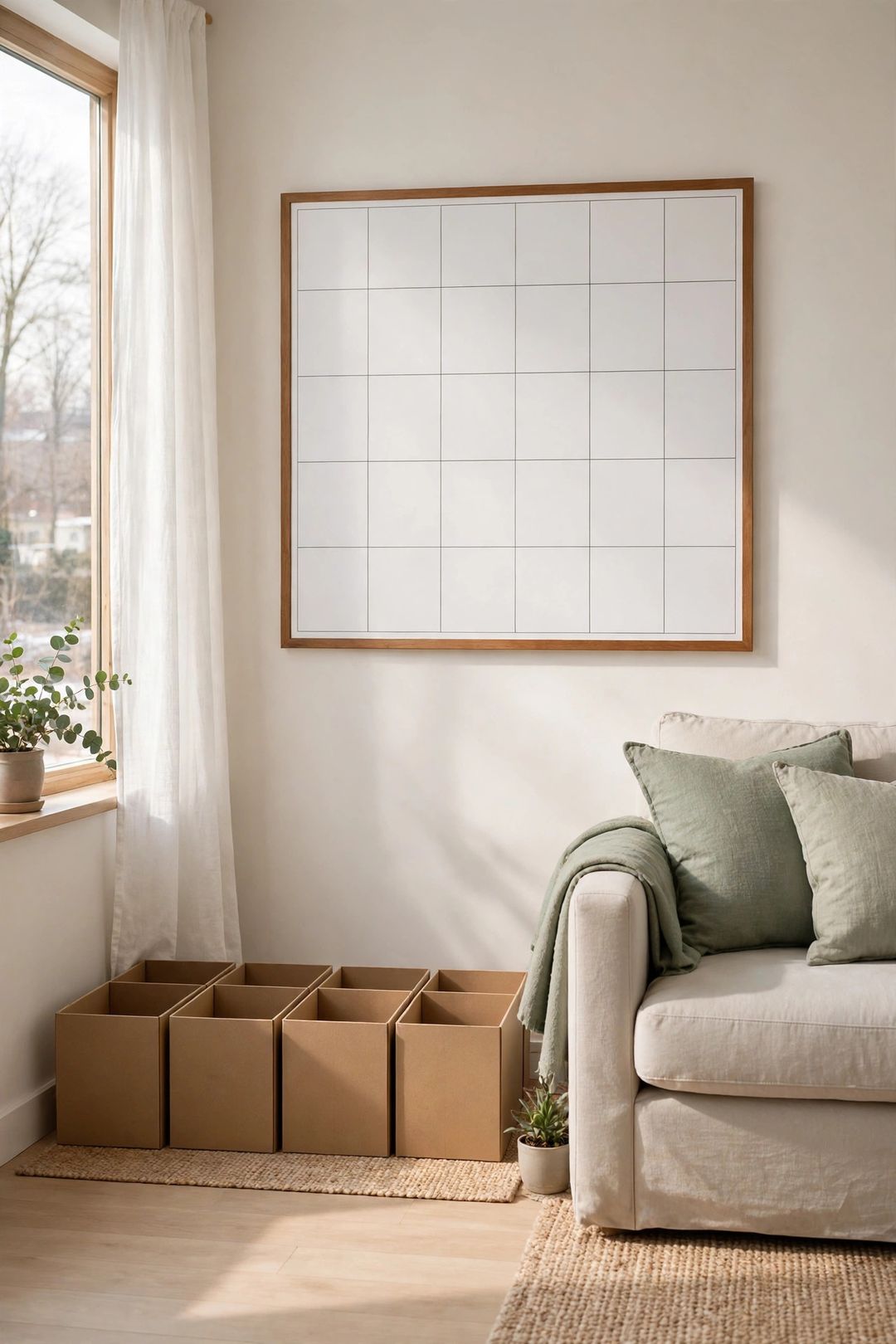
January is a natural reset point, but a whole home can feel too big to start. The fix is to shrink the job: one room group per week, short sessions, and a clear rule for every item touched.
This whole home declutter challenge january plan runs for four weeks. Sessions take about 20 to 30 minutes, five days a week, with rest days built in for catching up or doing nothing at all.
Three rules run the challenge. Use the three-box method: one box for donate, one for relocate, and one bag for trash or recycling. One bag out per session: a bag leaves the home, or goes to the car, before the session counts as done. And decide fast: no home, no use in a year, or a duplicate means it goes.
Week 1: Kitchen & Pantry
Week 1 comes first because kitchen wins are visible every day. The goal: clear counters, cabinets that close easily, and food stored by date, with nothing expired hidden at the back.
- Fridge and freezer toss. Remove expired food and mystery leftovers, and wipe one shelf as each section empties.
- Pantry food check. Pull expired cans and boxes, group what stays by type, and put the oldest dates in front.
- Duplicate tools drawer. Keep one of each everyday tool. Extra peelers, spatulas, and openers go in the donate box.
- Tupperware and lids. Match every container to a lid. Orphan lids and warped containers go to recycling.
- Counters and one cabinet. Clear the counters, return only daily-use items, then declutter the most crowded cabinet.
- Mugs, glasses, and junk drawer. Keep the mugs that get used, then sort the junk drawer into keep, relocate, and trash.
Week 2: Bedrooms & Closets
Week 2 tackles clothes and surfaces. The goal: a closet that fits without forcing, a clear nightstand, and under-bed space holding only planned storage.
- Closet quick pass. Remove anything torn, stained, or unworn in a year, and bag the definite no pile.
- Dresser drawers. Empty one drawer at a time, keep what fits the category, and file the rest so every item is visible.
- Shoes and bags. Keep pairs in good shape that match real life. Singles and broken straps go out.
- Nightstands and surfaces. Clear the nightstand and dresser top down to daily items, each with one defined spot.
- Under the bed. Pull everything out. Only labeled out-of-season storage goes back; forgotten boxes get sorted.
- Kids or guest room pass. A smaller repeat: outgrown clothes, broken toys, and spare bedding beyond one extra set.
Week 3: Bathroom, Laundry & Paper
Week 3 handles the small, fast-cluttering zones. The goal: a bathroom shelf with only current products, a laundry area that works in a few steps, and paper sorted into action, file, and recycle piles.
- Medicine and first aid check. Remove expired medicine for safe drop-off, and group what stays by type in one container.
- Bathroom products purge. Toss empty bottles and dried-out makeup. Keep daily items in one tray and backups together.
- Towels and linens. Keep two good towel sets per person plus one guest set. Worn extras go to donation or rag duty.
- Laundry area reset. Recycle empty bottles, clear the folding surface, and give small finds one basket with a one-month limit.
- Paper sort, round one. Gather all loose paper into one box, then sort into action, file, and recycle. Shred anything sensitive.
- Paper sort, round two. File the keep pile into simple folders: home, money, health, school or work. Set a weekly 10-minute paper slot.
Week 4: Living Room, Entryway & Storage Spots
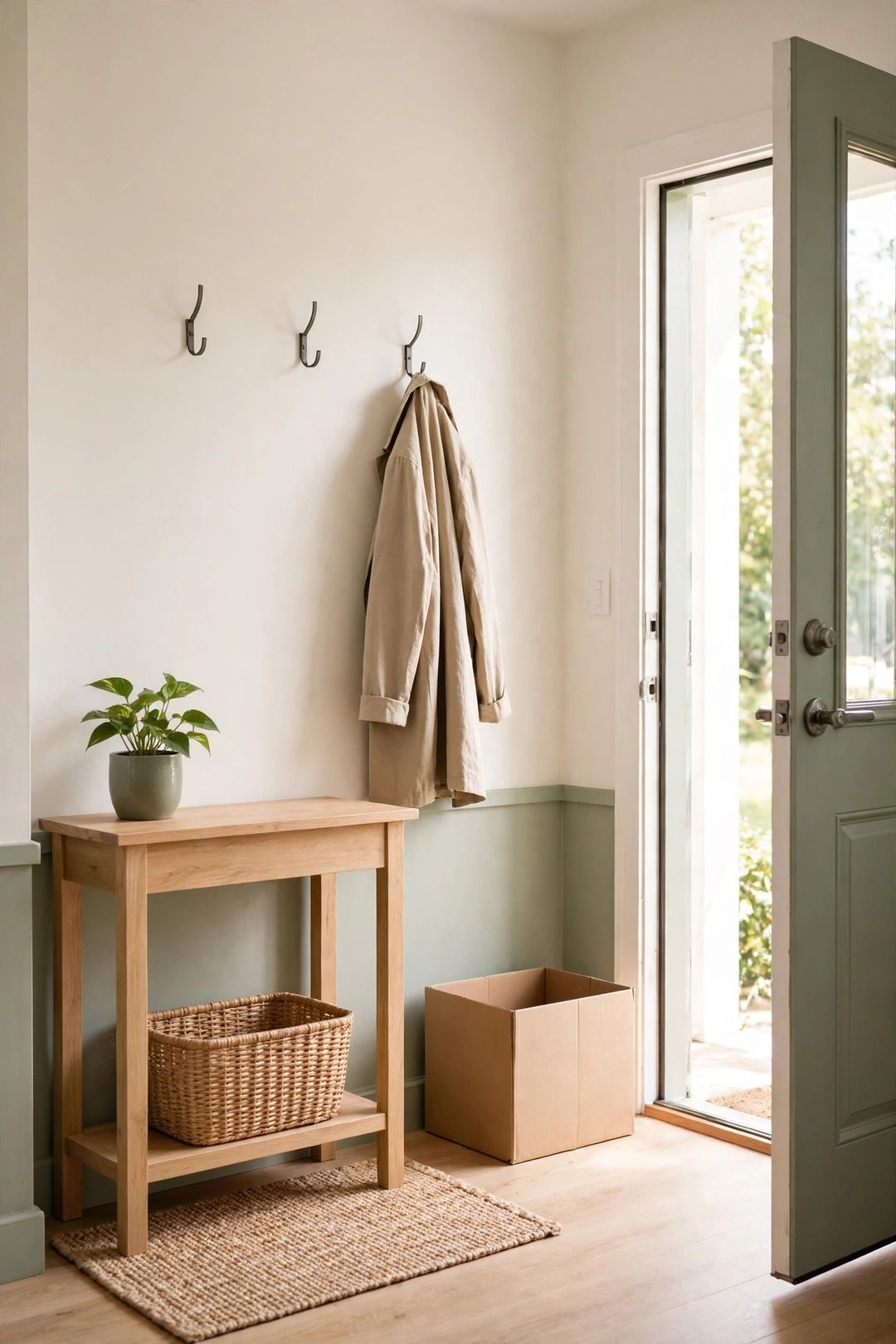
The final week covers shared spaces and storage spots. The goal: clear living room surfaces, an entryway that catches only daily items, and labeled storage that stays reachable.
- Living room surfaces. Clear the coffee table, side tables, and shelves. Return only items used weekly.
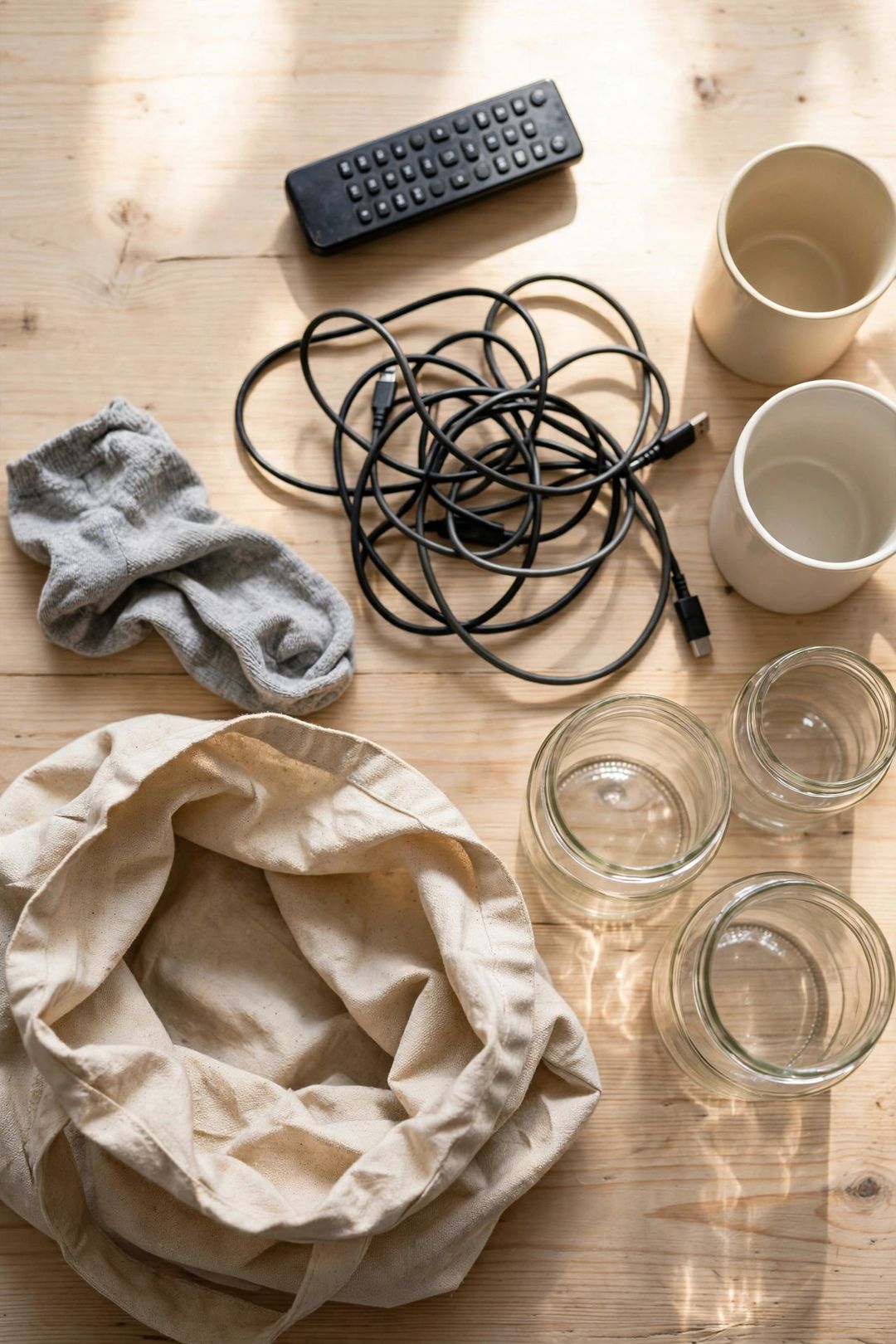
- Media and cords. Sort discs, games, remotes, and chargers. Recycle dead cords and keep one small cord basket.
- Entryway reset. One pair of daily shoes per person, one spot per coat, and a small tray for keys and mail.
- Storage spot one. Pick the worst closet or corner. Sort with the three boxes, label what stays, and leave reaching space.
- Storage spot two and decor. Repeat the sort, then review seasonal decor: broken items out, keepers in one labeled bin per season.
- Final walk-through. Walk the home with a bag, collect anything missed, drop donations off, and note one watch spot per room.
Rest Days and Catch-Up
Each week plans five working days and two rest days. Use rest days to rest, drop off donation bags, or repeat one missed session. A missed session never doubles the next day. If a whole week slips, skip to the current week and cover the missed room in the final walk-through, or add one week in February.
What to Buy
This challenge needs nothing new. Buy storage only after decluttering, for items that earned a place, and measure before buying bins.
Heavy-duty trash bags, typically $10–$18. Pro: Strong bags handle books and kitchenware and make the one-bag-out rule easy. Con: Mixed-size boxes can sit half-used. Skip if: A full roll of sturdy bags is already at home.
Medium donation boxes, typically $12–$22 for a pack. Pro: Uniform boxes stack for the three-box method and carry donations in one trip. Con: They take floor space during the challenge. Skip if: Reusable bags or laundry baskets can serve as the boxes.
Stick-on labels or a label maker, typically $8–$25. Pro: Clear labels keep the new system readable for everyone. Con: Labels made before sorting often need redoing. Skip if: Painter's tape and a marker are already on hand.
Clear storage bins with lids, typically $18–$35 for a set. Pro: Clear sides suit the Week 4 storage spots and stack safely. Con: A big set bought early fills with clutter. Skip if: Existing boxes are sturdy, dry, and labeled.
Mistakes to Avoid
- Buying organizers before decluttering. Bins bought first just store clutter neatly. Sort first, then buy only for what stays.
- Pulling everything out at once. A room emptied at once kills motivation. One drawer or shelf per session keeps it finishable.
- Keeping a maybe pile. Maybes stall every session. Decide in the session and let the donate box leave with the bag.
- Letting donation bags sit. Bags by the door creep back into rooms. Drop them off on a rest day or put them in the car.
- Decluttering someone else's things without asking. Sort personal spaces by owner. Unagreed tossing breaks trust in the whole system.
Frequently Asked Questions
What if a whole week gets missed?
Skip ahead to the current week instead of doing double work. Use the final walk-through for the missed room's worst spots, or add one catch-up week after January. Three solid weeks still change how the home works.
How long does each day take?
Most sessions take about 20 to 30 minutes, and a hard stop helps more than extra time. Set a timer, finish the one drawer or shelf, and get the bag out.
Can renters do this challenge?
Yes. Every task uses sorting, bags, and labels only, with no drilling, painting, or built-in changes. Focus on portable storage, follow building rules for bulk trash days, and the system moves with you.
What should happen to everything that leaves?
Donate usable items in good shape, recycle paper and dead cords where local programs accept them, and trash only what cannot be reused. Expired medicine goes to a pharmacy take-back spot, not the trash.
A calmer home does not need a perfect home, just four steady weeks of small sessions and bags going out. Save this post to your Declutter board on Pinterest, print the week list, and start Week 1 with the fridge toss.