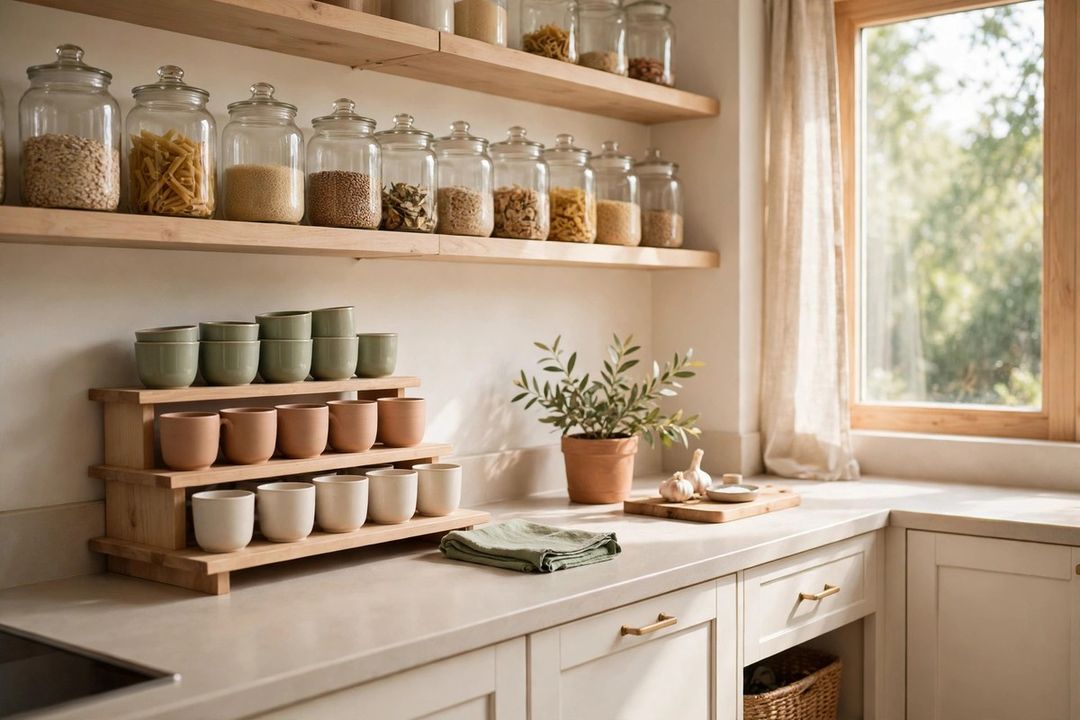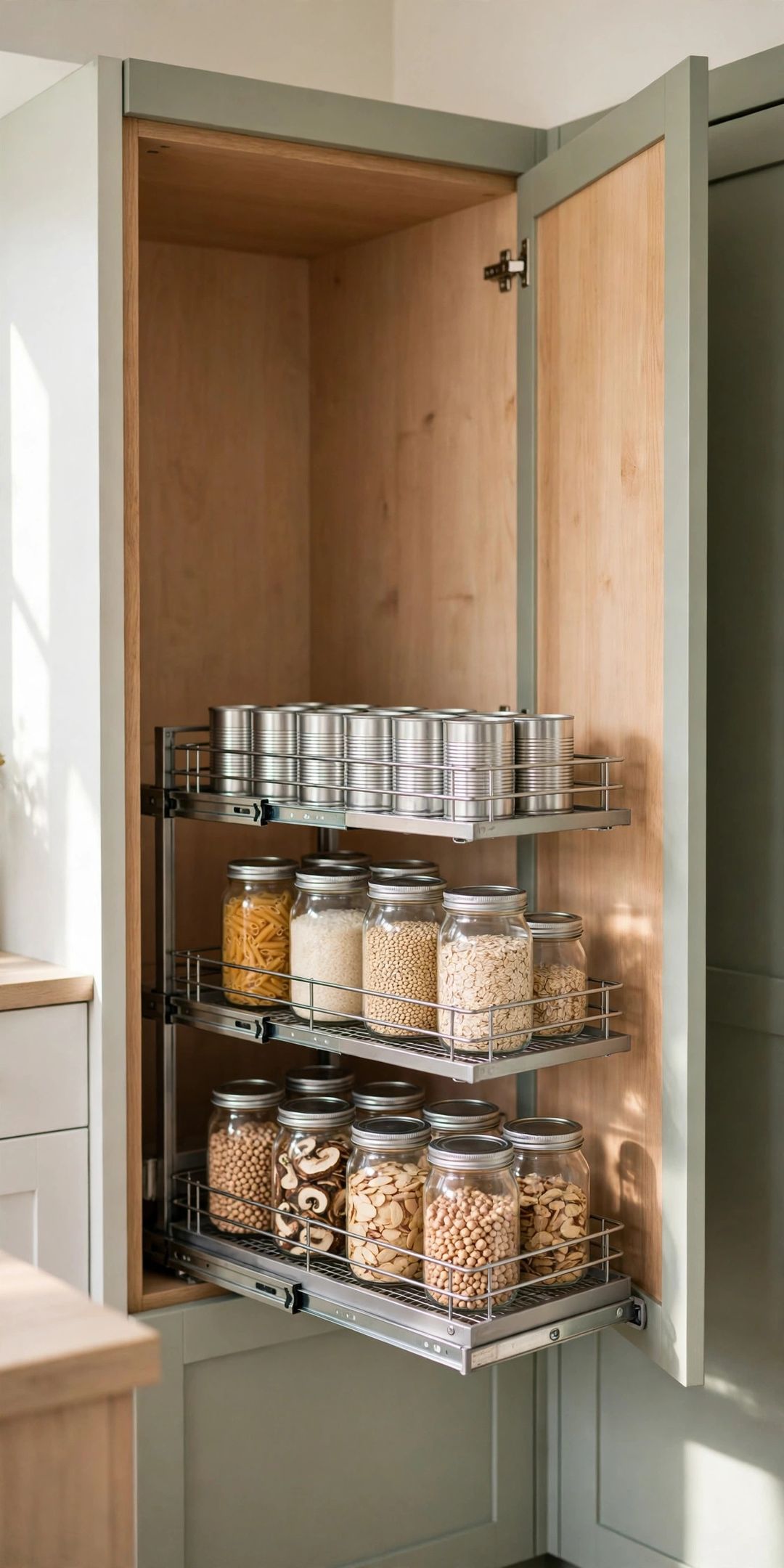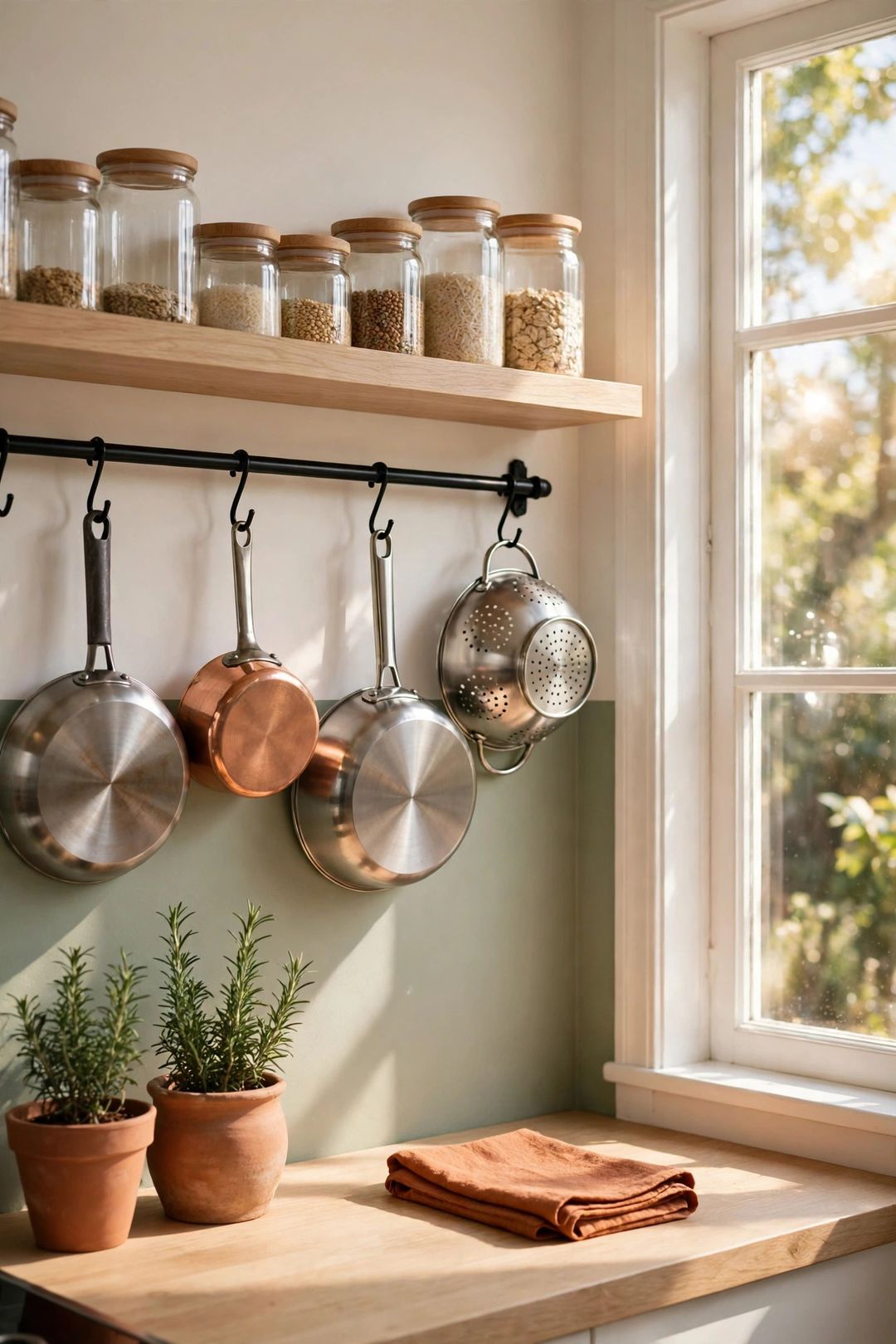
Stemware is the hardest glassware to store in a small kitchen. Tall stems tip easily, rims chip when glasses touch, and a full set can swallow an entire cabinet shelf that everyday glasses also need.
These ideas for wine glass and stemware storage small kitchen owners can use focus on protection first and space second. You will hang glasses where cabinets have dead space, divide shelves so glasses never knock together, and store each glass by how often it is actually used.
Start by counting what you own and grouping it by use: daily glasses, weekly wine glasses, and special-occasion stemware. Once each group has a home, the cabinet stays tidy because every glass has a spot that fits its shape.
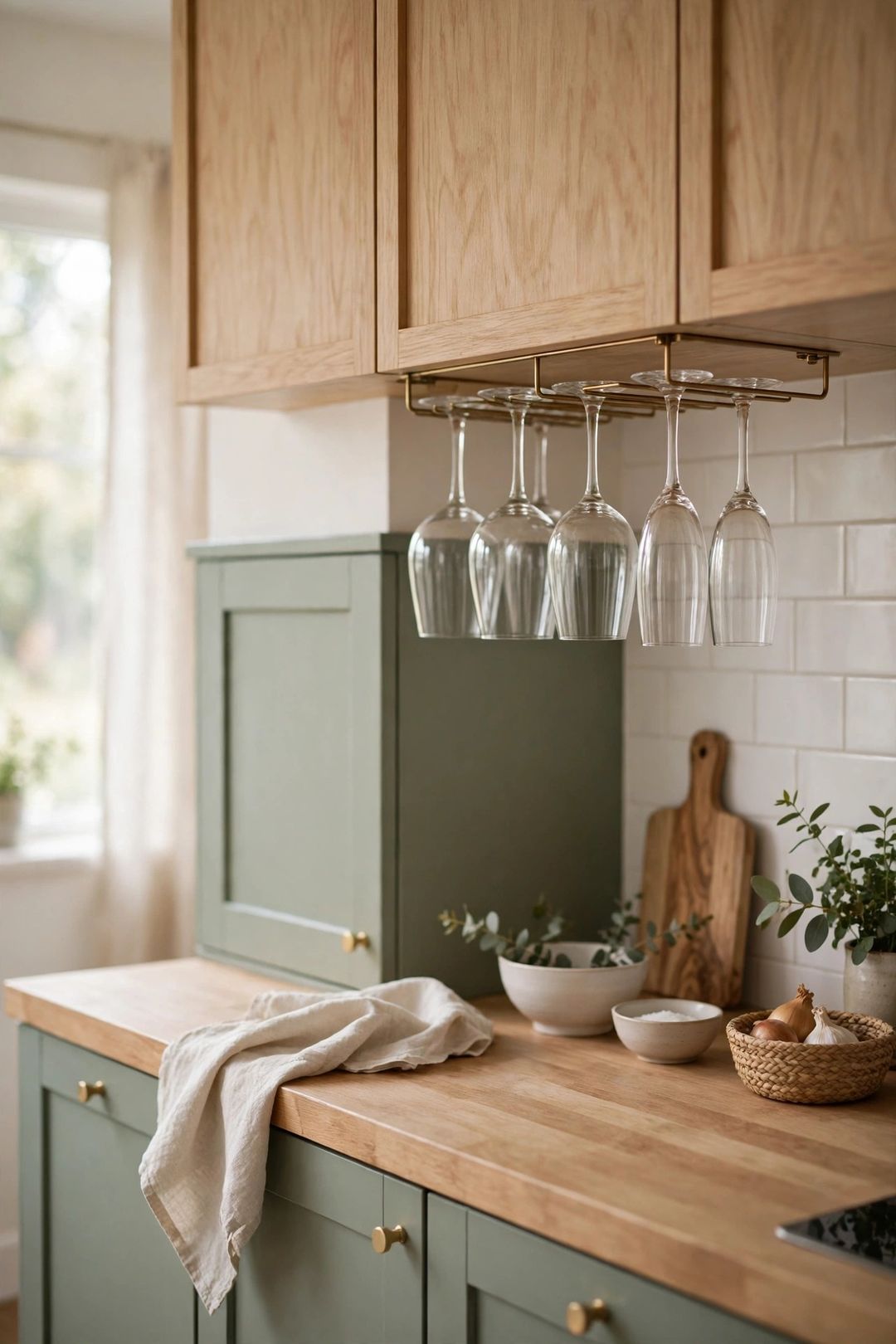
1. Hang Glasses Under a Cabinet
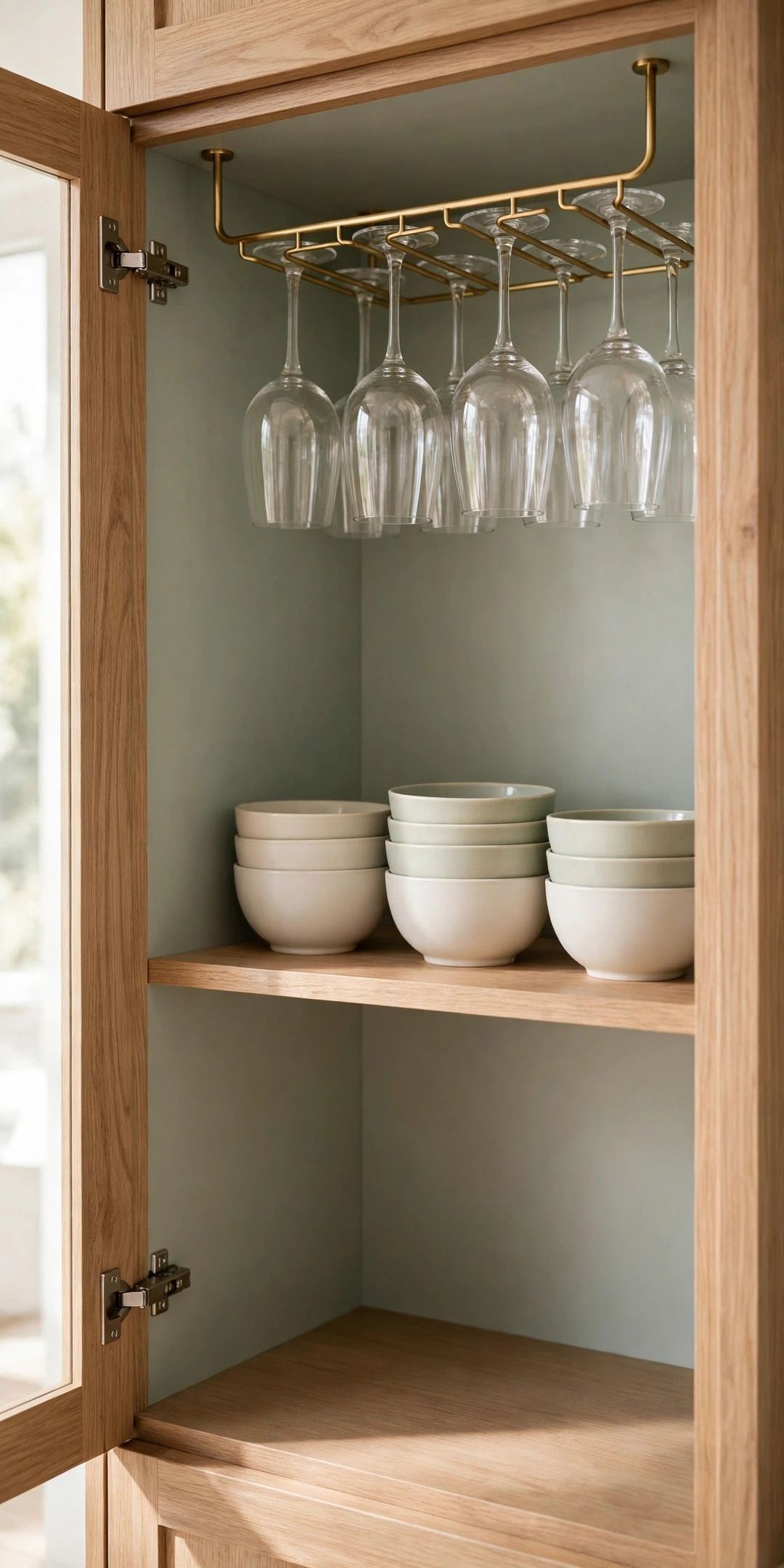
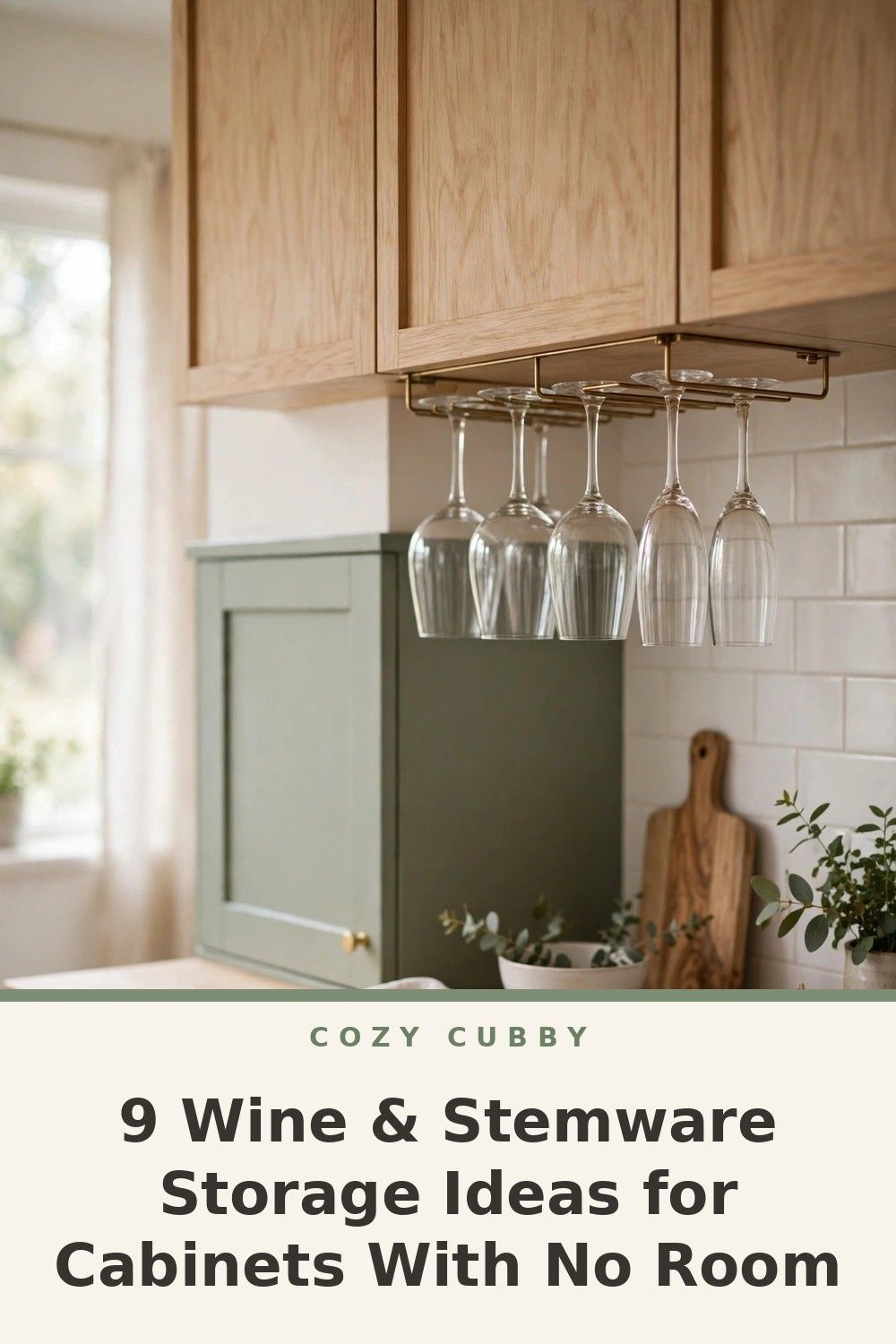
Mount an under-cabinet rack beneath an upper cabinet. The rack holds glasses by their stems, so bowls hang free and rims never touch a shelf or another glass. This uses the empty space under a cabinet and frees a full shelf for everyday glasses. Measure the clearance below the cabinet first so tall stems hang without hitting the counter.
2. Add a Stemware Holder Inside a Cabinet
Fit a stemware holder to the underside of a cabinet shelf. The holder slides glasses in by the base, keeping the set in one neat row instead of a crowded cluster. It works well for a small set of matching wine glasses and keeps them separate from mugs and tumblers stored beside them.
3. Use a Shelf Riser for Shorter Glasses
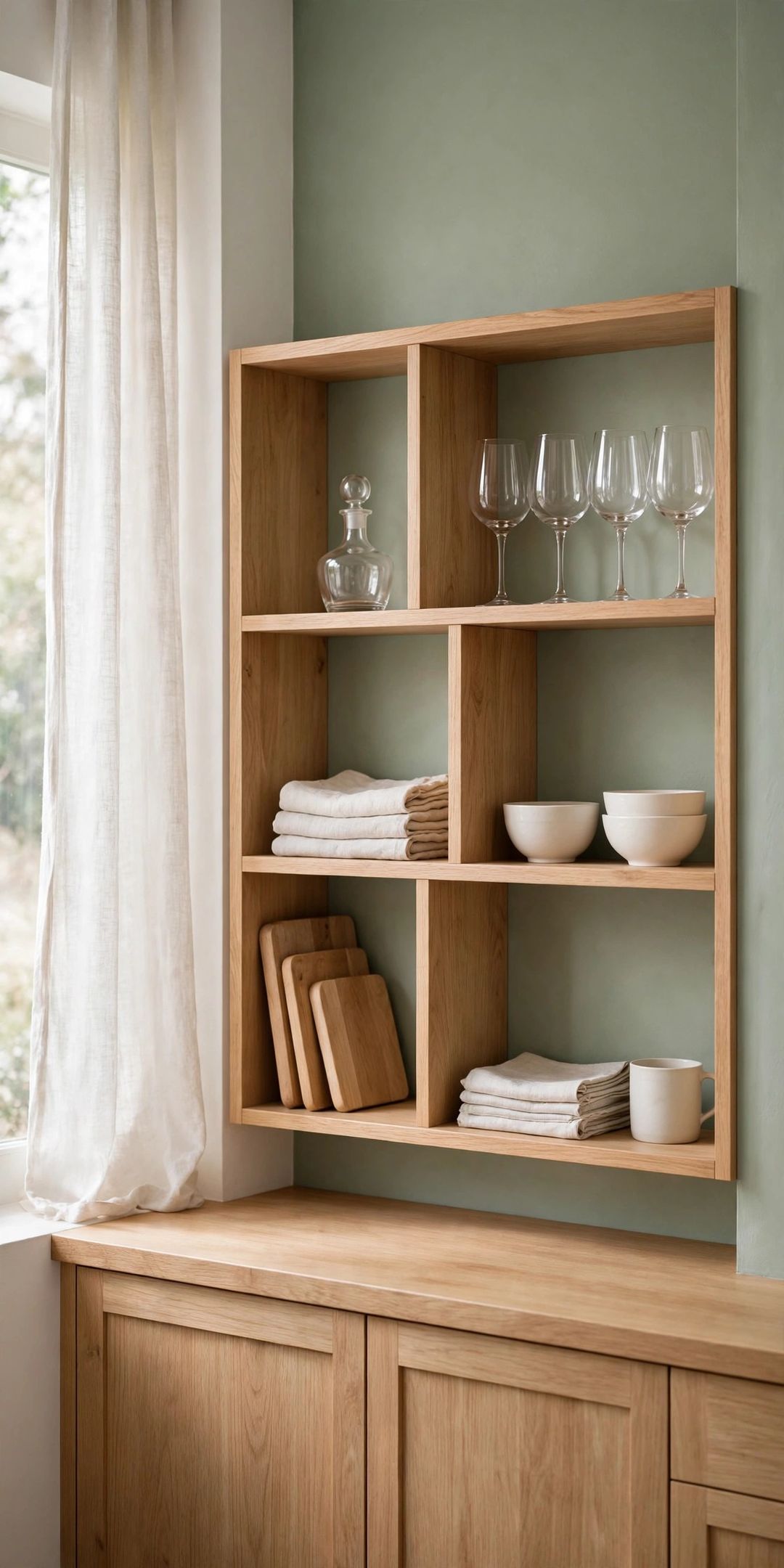
Raise shorter glasses on a shelf riser inside the cabinet. A riser creates a second level, so short tumblers sit above or below the taller stemware without crowding it. Measure the height between shelves before buying, since stemware needs more headroom than most risers provide.
4. Divide a Bin for Tall Glasses
Store tall or unusual glasses upright in a divided bin. Dividers hold each glass in its own slot, so glasses cannot slide and knock together when the cabinet door opens. Choose a bin that fits the shelf depth and leaves a small gap at the front for a grip.
5. Separate Rows with Shelf Dividers
Place vertical shelf dividers between rows of glasses. Dividers stop a row from toppling sideways and keep wine glasses apart from water glasses and tumblers. They are especially useful on deep shelves, where a bump at the front can send glasses sliding at the back.
6. Store by Frequency, Not by Set
Put daily glasses at eye level and occasion glasses higher up. The glasses used most often should be the easiest to reach, while special-occasion stemware can live on a top shelf in its own row. Storing by frequency means the fragile glasses are handled less often, which lowers the chance of a chip.
7. Protect Rims with Soft Separators
Slip a soft separator between glasses that must sit close together. A thin cloth sleeve, a felt divider, or a soft liner between bowls stops rims from clinking when a shelf is bumped. Separators are a simple fix for cabinets where glasses cannot each have their own slot.
8. Keep Special-Occasion Stemware on the Top Shelf
Give rarely used stemware its own top-shelf zone. A single row on the highest shelf, kept in a shallow tray or divided bin, keeps delicate glasses out of daily traffic. Because the set is used only a few times a year, it can sit higher without slowing down everyday routines.
9. Use a Tray to Keep a Set Together
Store a matching set on a low tray inside the cabinet. The tray keeps the set together as one unit, stops glasses from drifting across the shelf, and lifts out in one move for a dinner party. Choose a tray with a low rim so glasses slide in and out without catching.
What to Buy
An under-cabinet stemware rack, typically $12–$25. Pro: It frees a full shelf and keeps rims apart. Con: Tall stems need enough clearance below the cabinet. Skip if: Your upper cabinets sit low over the counter or hold no spare underside space.
A shelf riser, typically $10–$18. Pro: It doubles a shelf for shorter glasses. Con: Tall stemware may not fit beneath it. Skip if: Your cabinet shelves are already tall enough for two rows without a riser.
A divided storage bin, typically $10–$20. Pro: Each glass gets its own slot and cannot slide into another. Con: Fixed dividers may not fit very wide bowls. Skip if: Your glasses vary widely in size and need adjustable spacing.
Vertical shelf dividers, typically $12–$20 for a set. Pro: They keep rows upright and separated on deep shelves. Con: They take up a small amount of shelf width. Skip if: Your glasses already sit in bins or a rack.
Soft glass separators, typically $8–$14 for a set. Pro: They protect rims when glasses sit close together. Con: They add a step every time a glass is put away. Skip if: Every glass already has its own slot or hanging spot.
Mistakes to Avoid
- Crowding glasses rim to rim. Glasses stored touching each other chip when the door closes or a shelf is bumped. Leave a gap, add a divider, or hang the set instead.
- Storing tall stemware on a low shelf. A stem that barely clears the shelf above it will catch and tip. Measure headroom first and move tall glasses to a shelf with room to spare.
- Mixing everyday and occasion glasses. Daily glasses handled often knock against delicate stemware stored beside them. Keep the two groups in separate zones.
- Stacking glasses inside each other. Nesting wine glasses traps rims together and makes them hard to separate without force. Store each glass upright or hanging, never nested.
- Buying a rack before measuring. Cabinet depth, shelf height, and counter clearance decide what fits. Measure all three first, or the rack ends up stored elsewhere.
Frequently Asked Questions
Can wine glasses hang under any upper cabinet?
Most upper cabinets with a solid underside and enough clearance can hold a rack, but measure first. Tall stems need room to hang without touching the counter, and the rack needs a firm surface to mount to. Low cabinets over a coffee station may suit shorter glasses better.
Is it better to store wine glasses upright or hanging?
Both work when glasses do not touch each other. Hanging suits small cabinets because it frees shelf space, while upright storage in a divided bin suits wide bowls and glasses with short stems. Choose the method that gives each glass its own space.
How do I store stemware if I have no spare cabinet?
Use the underside of an existing cabinet for a hanging rack, and move daily glasses to a shelf riser or a divided bin. If every cabinet is full, a small set on a tray on the top shelf keeps occasion glasses together without taking a whole shelf.
How can I stop rims from chipping in a crowded cabinet?
Separate glasses with dividers or soft separators, store by frequency so delicate glasses are handled less, and avoid nesting glasses inside each other. Even a small gap between rims lowers the chance of a chip when the cabinet is bumped.
Fragile stemware does not need a bigger kitchen, just a spot where each glass stands apart and the daily glasses stay out of its way. Save this post to your Kitchen Organization board on Pinterest so the ideas are handy the next time the cabinet gets crowded.