Winter is hardest on a small entryway. Heavy coats are bulky, boots arrive wet, and hats and gloves need a home that is not the floor. Without a coat closet, all of it lands in one damp pile.
Good winter coat and boot storage entryway setups split the work into three zones: hooks for coats, a wet zone for boots, and a bench or bin for small gear. Together, they do the job a closet would do.
Measure the wall beside the door, the door swing, and the floor depth you can use without blocking the walkway. Most ideas below need 14 inches of depth or less, and renter-friendly options need no drilling.
Hooks and Racks That Replace the Closet Rod
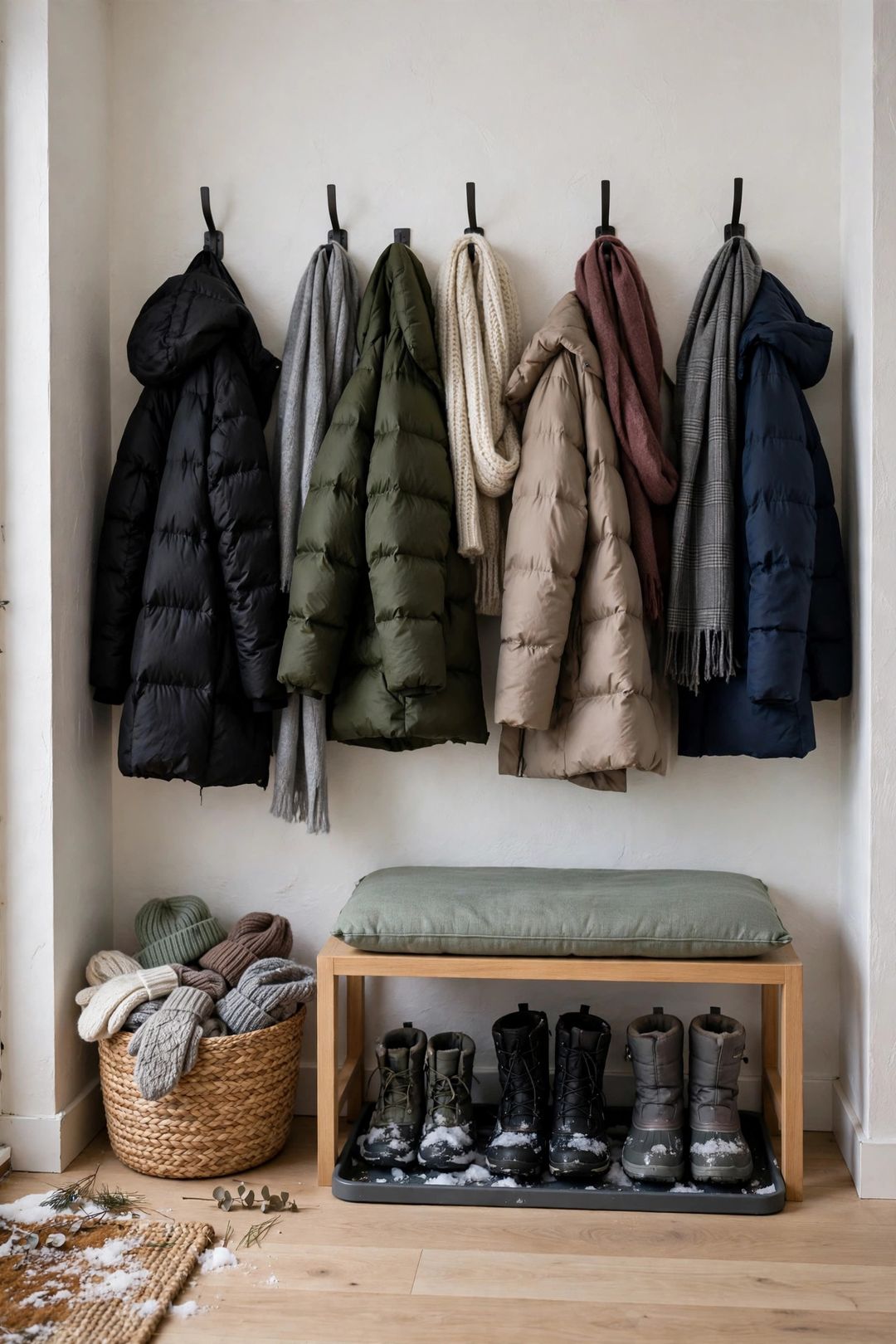
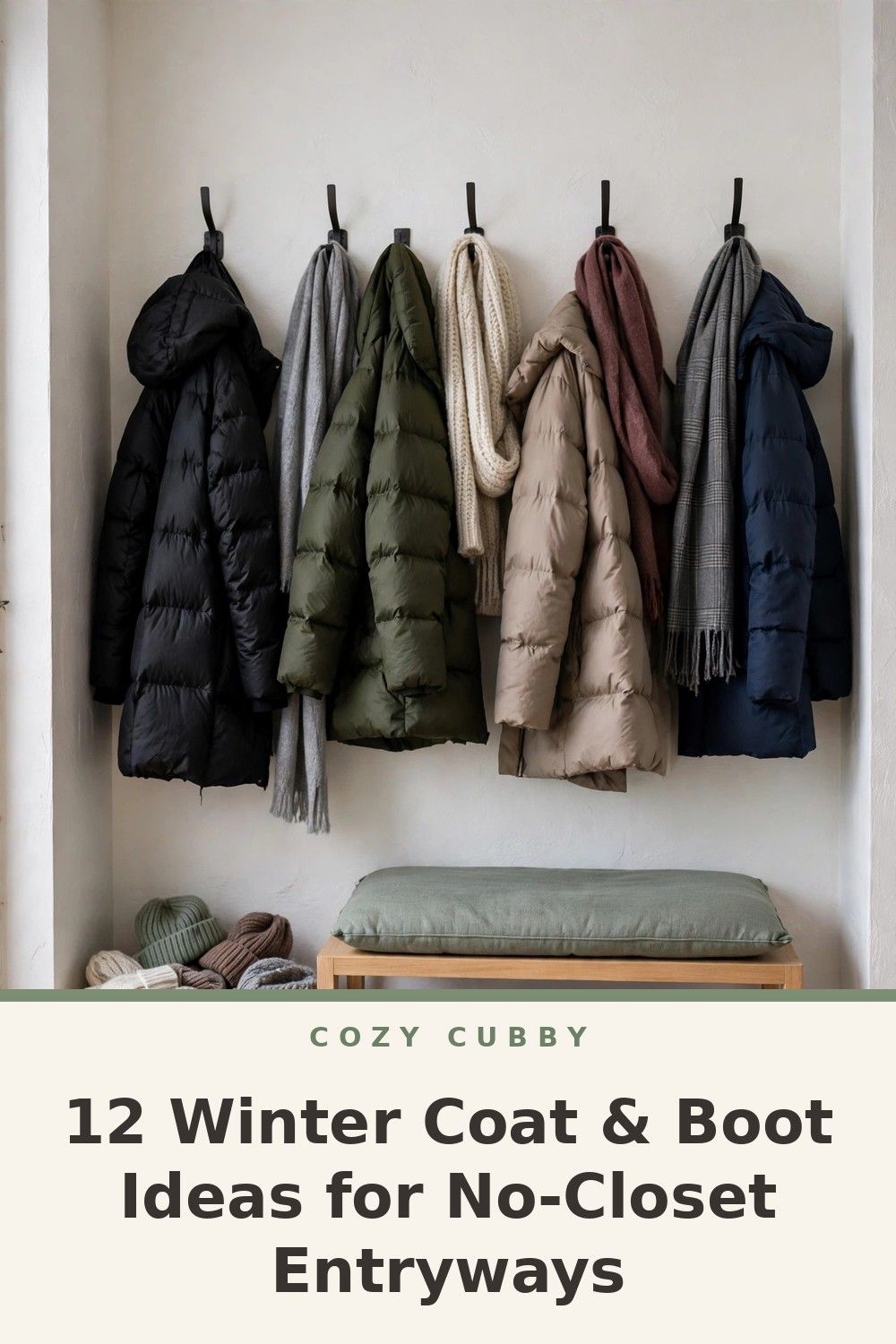
1. Mount a wall hook rail at adult height. Set a rail 24 to 36 inches long at about 60 to 66 inches high for long coats. Space hooks about 6 inches apart so bulky sleeves are not crushed, and anchor into studs or use rated anchors, since wet coats are heavy.
2. Add a second, lower rail for kids and short gear. A lower rail at about 40 to 44 inches holds children's coats, short jackets, scarves, and the dog leash. Two heights stop shorter items piling on the floor, and everyone can reach a hook.
3. Use over-door hooks for guest coats. A rack that slips over a door adds five or six hooks with no holes, which suits renters. Test that the door still closes fully, and use it for visitors or the coat worn most often.
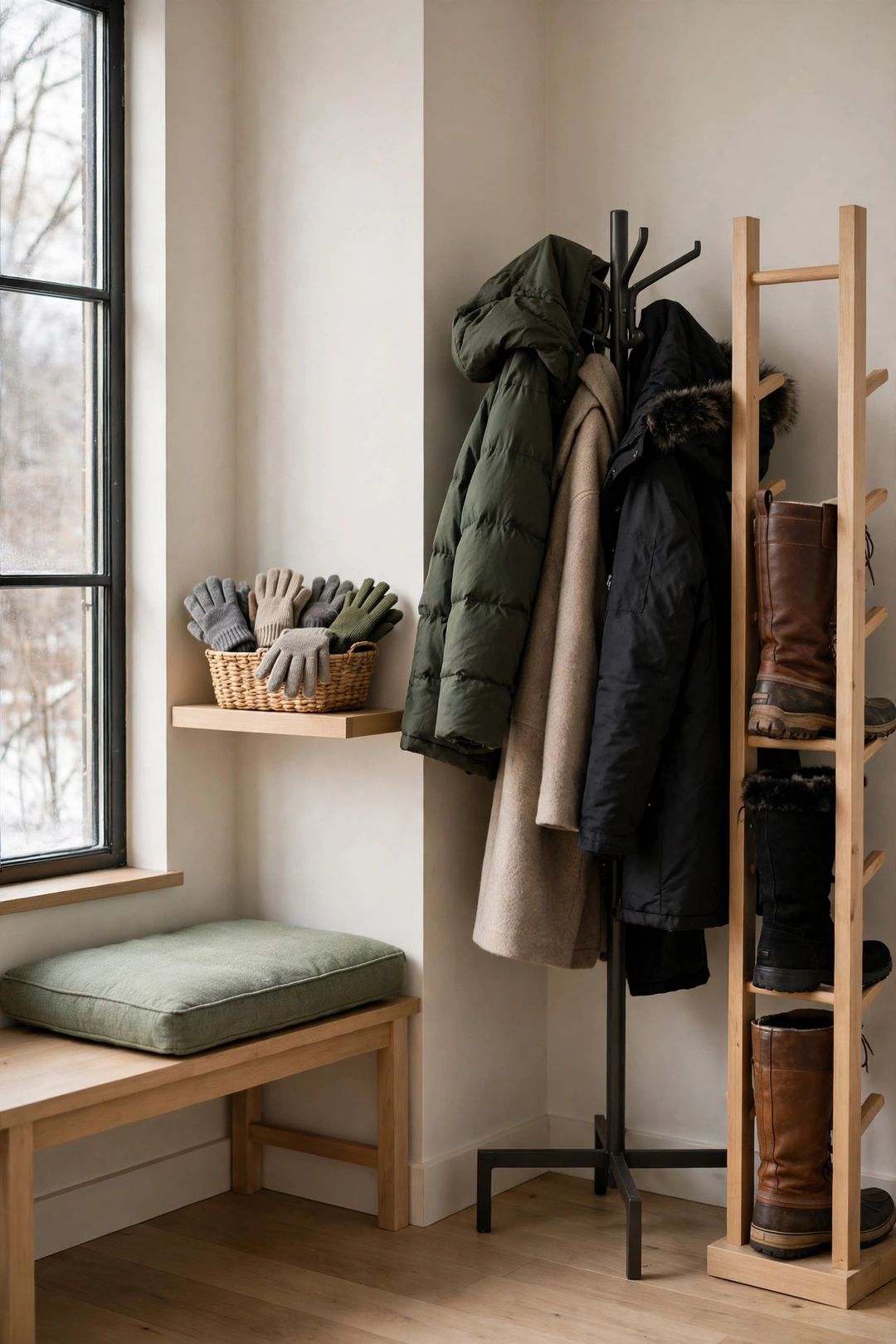
4. Stand a freestanding coat rack in a corner. Choose a rack with a weighted base, typically 12 to 17 inches across, placed where the door swing clears it. A corner rack uses about 1 square foot, holds several coats, and can move rooms if the entry feels crowded.
A Wet Zone That Protects Your Floors
5. Set a boot tray directly under the hooks. A tray about 28 to 32 inches long and 14 to 16 inches wide, with a raised lip near 1 inch high, catches meltwater and coat drips in one spot. Choose hard plastic or metal that rinses clean.
6. Layer a washable runner behind the tray. A low-pile, washable runner under and beyond the tray catches the slush that misses. Pick one with a non-slip backing, sized to clear the door swing, and wash it often so grit does not spread.
7. Add a boot scraper or stiff mat outside the door. A coarse mat or scraper at the threshold removes snow and grit before boots cross the floor. This cuts most mess at the source, so the indoor tray handles drips only.
8. Keep a small towel and boot brush in the wet zone. A dark towel on a hook at tray height handles wipe-downs, and a stiff brush clears salt from soles before it dries on the floor. Keep both in the wet zone so the habit happens at the door.
Benches, Bins, and Small Gear Storage
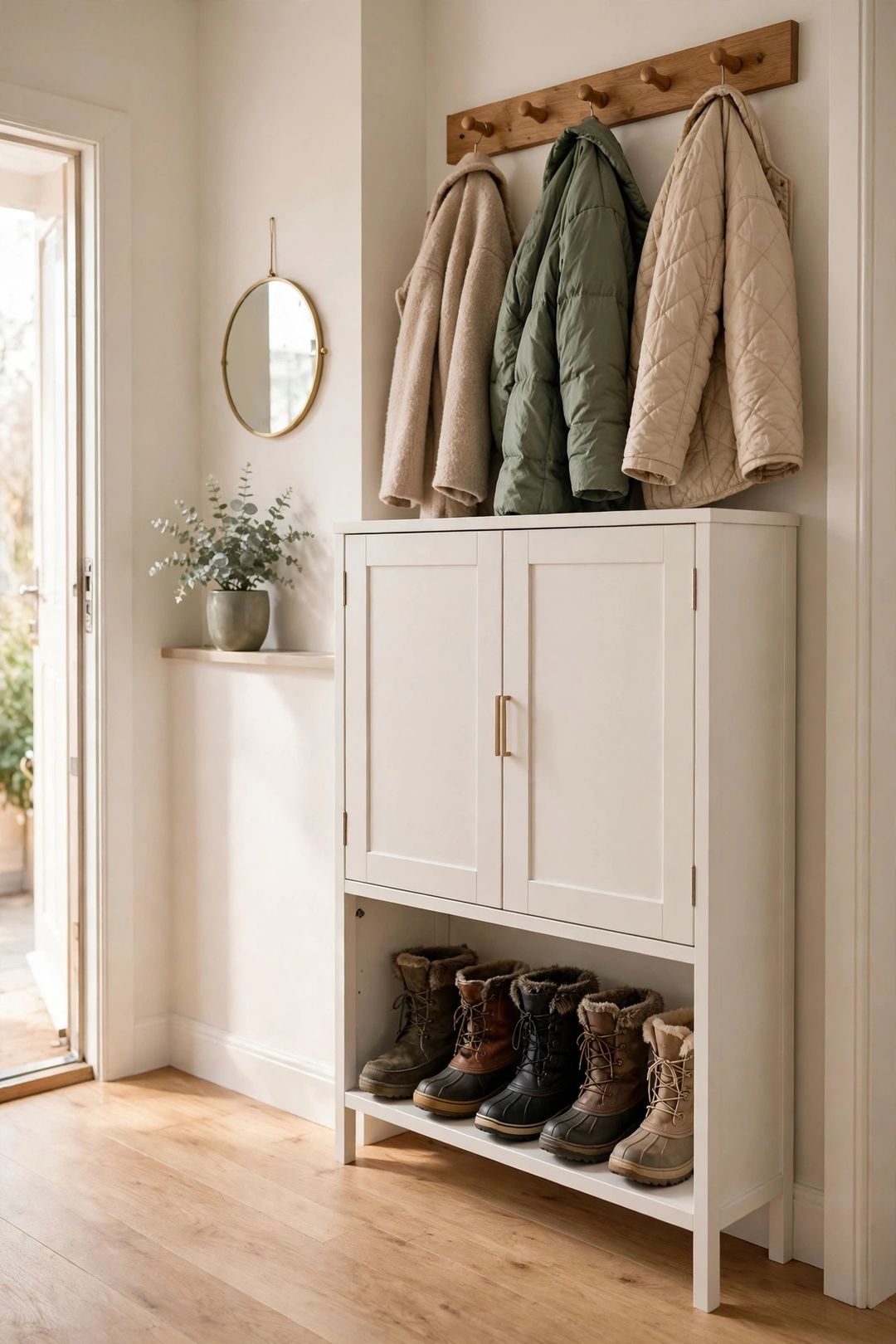
9. Use a slim bench with storage underneath. A bench about 28 to 36 inches long and 12 to 14 inches deep gives a seat for pulling boots on and off. The space below fits a boot tray, baskets, or a low shoe shelf.
10. Give hats and gloves a lidded bin each. One bin per person, roughly 10 to 12 inches wide, keeps gloves in pairs and hats off the hooks. Place bins on or under the bench, and label them so damp gloves stay separate from dry spares.
11. Hang a small over-door organizer for extras. Clear pockets inside a nearby door hold spare gloves, ice scrapers, lip balm, and hand warmers. Do not overload the top pockets, which strain the hinges.
12. Set a drying spot away from direct heat. Wet boots and gloves dry best with air moving around them, not pressed against a heater. Leave a few inches between pairs, tip boots open, and move dry pairs to the bench so the wet zone holds only one day of gear.
What to Buy
Wall hook rail, typically $15–$35. Pro: Holds several heavy coats and frees the floor below for the boot tray. Con: Needs studs or proper anchors for wet winter weight. / Skip if: Drilling is not allowed and an over-door rack already gives enough hooks.
Boot tray with raised lip, typically $10–$25. Pro: Contains meltwater, salt, and grit in one washable spot. Con: A tray that is too short leaves the largest boots dripping past the edge. / Skip if: Boots are stored in a garage or porch and never enter the living space wet.
Slim storage bench, typically $40–$90. Pro: Adds seating plus hidden storage in 12 to 14 inches of depth. Con: Takes more floor than hooks alone, so tight entries feel narrower. / Skip if: The walkway is under 36 inches wide and a wall rail alone meets the need.
Freestanding coat rack, typically $25–$60. Pro: Needs no drilling and moves easily between rooms or homes. Con: Tips if coats hang on one side only, so balance the load. / Skip if: No corner clears the door swing, since a rack in the walkway becomes a daily obstacle.
Mistakes to Avoid
- Hooks at only one height. A single high rail leaves kids, bags, and short jackets on the floor. Two heights give every item a reachable spot.
- No wet zone by the door. Wet boots set straight on wood, laminate, or carpet spread meltwater and salt, which can stain and swell flooring over one winter.
- A tray smaller than the boots. Measure the longest boots first. A tray that is too small in length or width cannot contain the drips it was bought for.
- Storing damp gloves in a closed bin. Sealed damp gear stays damp and develops odor. Dry gloves and hats fully before they go into a lidded bin.
- Keeping every coat at the door all winter. Occasion coats and spares crowd out daily gear. Move rarely worn coats to a bedroom closet and keep only daily coats on the rail.
Frequently Asked Questions
How many hooks does a winter entryway need?
Plan on one hook per daily coat, plus one for a bag and one spare for guests. For two adults, five to six hooks across two rails usually cover daily use without crowding.
How can renters add coat storage without drilling?
Use an over-door rack, a freestanding rack with a weighted base, and a tray and bench that sit on the floor. Adhesive hooks suit light hats only, since wet coats can pull them off.
How do boots dry without damaging the floor?
Keep boots on a lipped tray, leave space between pairs, and tip them open so the insides dry. Avoid placing boots against a heater, which can crack leather and warp soles, and empty the tray often.
Where should wet coats drip?
Hang wet coats on the rail directly above the boot tray, so drips land in the tray, not on the floor. Once dry, a coat can move to any hook.
A closet-free entry can still handle winter when coats hang at two heights, boots stay in one washable wet zone, and small gear has a bin of its own. Start with the tray and hooks, then add the bench. Save this post to your entryway board on Pinterest so all 12 ideas are ready before the first snow.